East of Suez Fuel Availability 9 Dec
Bunker demand low in Singapore
VLSFO and HSFO availability tight across several Japanese ports
VLSFO and LSMGO availability good in Oceanic ports
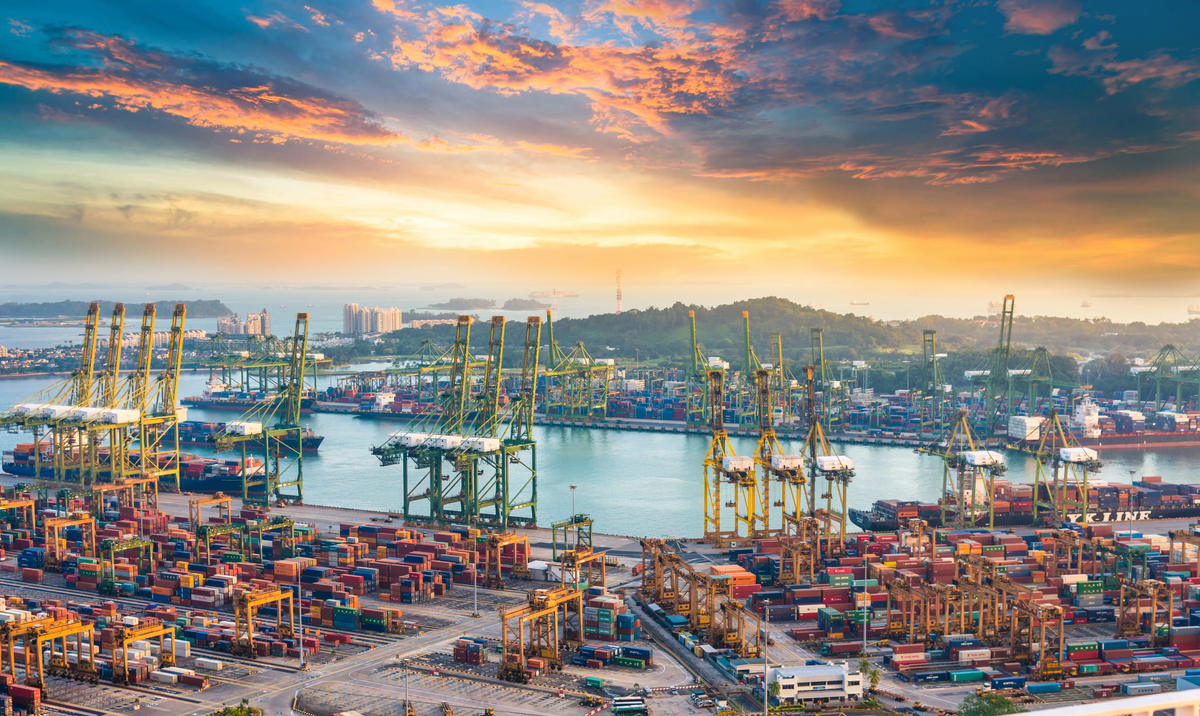
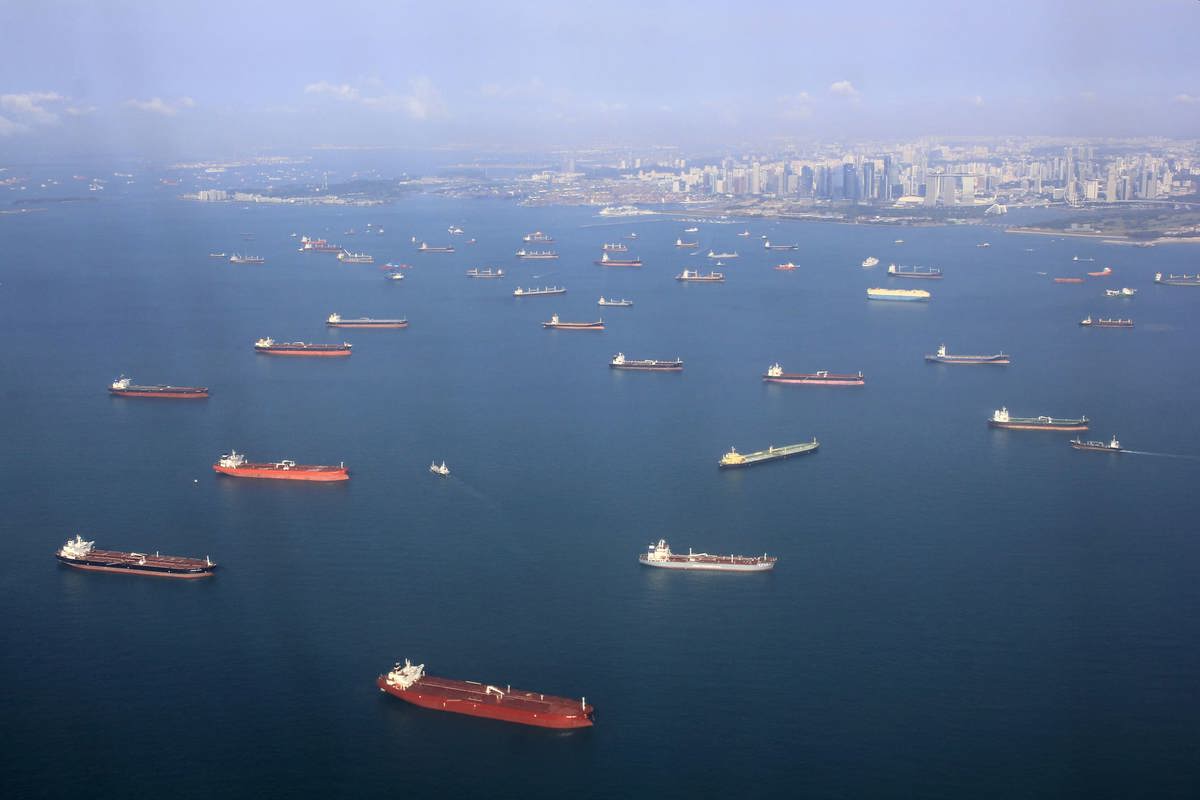 IMAGE: Dense rows of vessels on the waters of Singapore. Getty Images
Singapore and Malaysia
Even with “slow” bunker demand, Singapore’s VLSFO lead times remain erratic at 4–12 days, almost unchanged from last week’s 4–11 days. HSFO now needs 7–10 days of advance notice, up from 3–9 days previously.
LSMGO availability remains healthy, with suppliers advising 5–8 days of lead time, slightly longer than last week’s 3–7 days.
At Malaysia’s Port Klang, both VLSFO and LSMGO remain easy to secure — particularly for smaller prompt orders — while HSFO continues to face limited availability.
East Asia
Zhoushan’s bunker demand remains weak, with suppliers still recommending 4–7 days of lead time for all grades, unchanged from the previous week.
Fuel availability across northern China remains mixed. Dalian and Qingdao can meet VLSFO and LSMGO demand, though HSFO stays tight in Qingdao. Tianjin continues to face shortages across all grades. Shanghai has limited VLSFO and HSFO, while LSMGO supply remains steady.
Farther south, Fuzhou is short of both VLSFO and LSMGO, and Xiamen offers enough VLSFO but has restricted LSMGO availability. Delivery options for both grades remain limited in Yangpu and Guangzhou.
In Hong Kong, lead times remain stable at roughly seven days for all grades.
Taiwan’s CPC Corporation had temporarily halted VLSFO liftings at Taichung until 4 December due to pipeline work, but bunkering has since resumed and supply conditions have normalised. Across Taiwan’s major ports — Keelung, Taichung, Hualien, and Kaohsiung — VLSFO and LSMGO are generally available within two days, consistent with last week.
Bunker availability has improved across all grades in South Korea as demand stays sluggish, with most suppliers now recommending 2–5 days of lead time — a clear improvement from last week’s 5–9 days.
Weather may complicate operations in the coming days. A trader reports that Busan and Ulsan could face disruptions from 11–16 and again on 18 December; Yeosu from 11–15 and 18 December; and Daesan from 11–15 and 17–18 December.
In Japan, prompt VLSFO remains tight at key ports including Tokyo, Chiba, Yokohama and Kawasaki. The 21 November fire at Idemitsu Kosan’s Yokkaichi refinery has reduced output and left inventories severely depleted. As a result, supply is expected to stay strained in Osaka, Kobe and Mizushima through late December.
LSMGO supply is mostly steady, though securing prompt stems in Mizushima is difficult. The grade is also tight in Nagoya and Yokkaichi. B24-VLSFO continues to be available only on request in Tokyo, Chiba, Kawasaki and Yokohama. HSFO remains scarce across most ports, with Nagoya, Yokkaichi and Tokuyama short of all grades.
A powerful 7.5-magnitude earthquake struck northeastern Japan late Monday, prompting tsunami warnings for Hokkaido, Aomori and Iwate. The alerts were scaled back early Tuesday. Initial reports indicated no major damage or casualties, according to Reuters, citing NHK.
In Indonesia, VLSFO supply remains stable across Jakarta, Surabaya, Balikpapan and Cigading, where suppliers are generally working with lead times of 2-3 days. LSMGO shows a similar availability trend in Jakarta, Benoa, Surabaya and Batam. HSFO is also well stocked in Jakarta, Surabaya and Balikpapan, according to a trader.
Oceania
VLSFO and LSMGO remain readily available in Western Australia, with Kwinana and Fremantle operating on roughly seven-day lead times. Most deliveries come by barge from a single supplier, though LSMGO can also be trucked. Strong afternoon winds still cause occasional schedule disruptions.
In New South Wales, Port Kembla can supply VLSFO via both truck and pipeline — pipeline batches start around 70 mt, while smaller volumes go by truck. Sydney has one working barge and can deliver by truck or, at select berths, by pipeline. Schedules are frequently adjusted around naval and cruise ship activity. VLSFO and LSMGO inventories remain healthy, but HSFO is tight, and suppliers generally request about seven days’ notice. Seasonal cruise traffic in Sydney, Cairns and Darwin from December through February may add pressure.
Brisbane and Gladstone continue to provide VLSFO and LSMGO with similar seven-day lead times. HSFO is on-request in Brisbane, while Gladstone still sees occasional weather-related delays. Access constraints at Brisbane’s AAT terminal persist. Two barges are now operating in Brisbane — each run by different suppliers — offering VLSFO and LSMGO, with HSFO available only on enquiry.
Victoria’s Melbourne and Geelong hold strong VLSFO and LSMGO stocks. HSFO is tight for prompt delivery, though Melbourne currently has enough supply. Both ports rely on a single barge, and Bass Strait conditions can slow operations. Lead times remain around seven days, while LSMGO can be trucked to smaller ports like Portland and Port Welshpool in 2–3 days.
Overall, Australia’s bunker market is steady, with seven-day lead times still the norm. Deliveries within 3–4 days are often achievable, thanks to solid inventories. Even in ports with pipeline infrastructure — such as Darwin and Dampier — suppliers continue using trucks to support distribution.
In New Zealand, supply remains stable. VLSFO is widely available at Tauranga and Auckland, with pipeline access at certain Tauranga berths. Marsden Point can supply both VLSFO and LSMGO via pipeline to cargo vessels. Truck availability is limited across South Island ports.
Cyclone season in northern Australia, running from November to April, is expected to bring intermittent disruptions, with 9–11 cyclones forecast this year.
South Asia
Rough weather is forecast in Sri Lanka’s Colombo from 9–13 December, and bunker deliveries at the port may be disrupted during this period.
Middle East
Prompt bunker supply in Fujairah remains tight across all grades, with several suppliers facing squeezed delivery schedules. Most are still recommending 5–7 days of lead time, although urgent stems can sometimes be arranged at a premium, a source noted. Conditions in nearby Khor Fakkan mirror this tightness.
In Iraq’s Basrah, VLSFO and LSMGO remain readily available, while HSFO continues to be limited. Saudi Arabia’s Jeddah has seen an improvement in VLSFO and LSMGO supply, though port congestion is still slowing deliveries.
Egypt’s Port Suez is dealing with the opposite situation: stocks of VLSFO, LSMGO and HSFO are nearly depleted. Qatar’s Ras Laffan is also tight on VLSFO and LSMGO.
Djibouti is under considerable strain, with VLSFO and HSFO almost exhausted and LSMGO close to running out.
Oman’s ports — Sohar, Salalah, Muscat and Duqm — remain stable, consistently offering LSMGO with prompt delivery windows.
By Tuhin Roy
Please get in touch with comments or additional info to news@engine.online