Americas Market Update 17 Nov
Bunker prices have mostly fallen across the Americas, while Balboa’s prices have risen for all three grades.
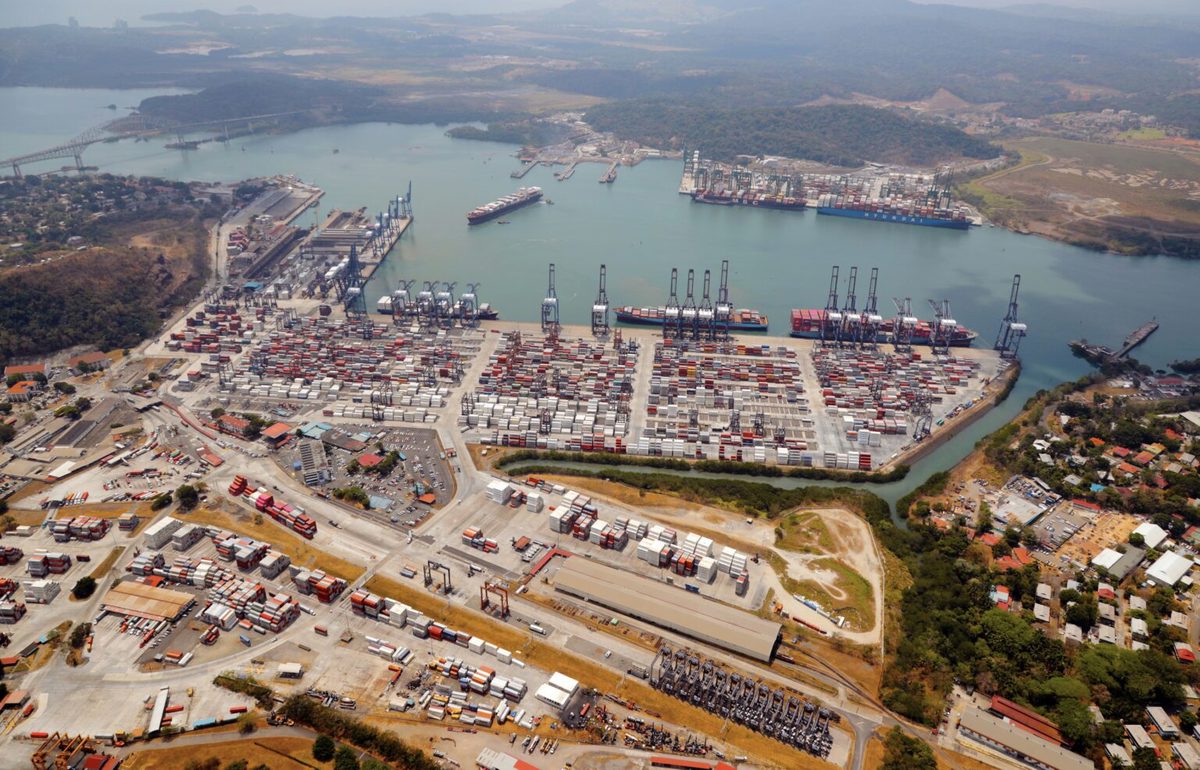 IMAGE: The Port of Balboa in Panama. Panorama Marítimo y Logístico
Changes on the day to 07.00 CST (13.00 GMT) today:
- VLSFO prices up in Balboa ($5/mt) and Houston ($4/mt), and down in Los Angeles ($15/mt), New York ($8/mt) and Zona Comun ($4/mt)
- LSMGO prices up in Balboa ($2/mt), and down in Houston ($44/mt), Zona Comun ($43/mt), Los Angeles ($23/mt) and New York ($20/mt)
- HSFO prices up in Balboa ($26/mt), and down in Los Angeles ($13/mt), Houston ($6/mt) and New York ($2/mt)
Houston’s and Zona Comun’s LSMGO prices have posted the steepest falls across major ports in the Americas. Balboa’s prices have gained for all three grades.
Houston’s VLSFO has been quoted in a wide $718-763/mt range over the past day, and a stem was fixed at $719/mt for delivery 3-7 days out. LSMGO has been quoted at $1,214-1,283/mt and fixed at $1,211/mt.
Prompt availability of both grades is tight at the port, and at least four suppliers cannot deliver within 2-4 days, while one supplier can.
Cristobal’s VLSFO has been quoted at $1,000-1,075/mt for 500-1,500 mt with non-prompt delivery. At least two suppliers can deliver the grade with seven days of lead time. Two others cannot, but have better availability in Balboa. One supplier’s earliest LSMGO delivery date in Cristobal is 14 days out.
In Balboa, one supplier cannot deliver LSMGO with 9-14 days of lead time, while another can deliver it within three days. HSFO is available 20 days out at the earliest from one supplier.
Brent
The front-month ICE Brent contract has lost $1.58/bbl on the day, trading at $93.13/bbl at 07.00 CST (13.00 GMT) today.
Upward pressure:
Brent crude’s price has found some support from fresh Iranian attacks in the Persian Gulf and a drop in oil flows through the Strait of Hormuz.
Iran launched drones at a US air defence site at Bahrain’s Riffa base on Sunday, its second attack on Bahrain in three days, the BBC reported.
Meanwhile, effective oil throughput via the Strait of Hormuz has fallen to 49% of pre-conflict levels, down from 56% last week, ANZ Bank’s senior commodity strategist Daniel Hynes said.
“Persian Gulf crude exports have dropped to 12.5mb/d [12.5 million b/d], with ship-tracking data suggesting the decline accelerated after 13 November,” Hynes added.
“Another hit to shipping or export infrastructure would therefore produce a larger and more persistent supply shock,” Hynes warned.
Downward pressure:
Brent’s price has come under downward pressure as rising Middle Eastern output eased supply concerns and speculators cut their bullish bets on Brent futures.
Total crude oil production by OPEC+ members averaged 41.23 million b/d last month, about 2.04 million b/d higher than in September.
Saudi Arabia and Iraq ramped up oil production by 1.2 million b/d and 496,000 b/d last month, to about 9.2 million b/d and 4.5 million b/d, respectively.
OPEC member Kuwait hiked production by 232,000 b/d last month, to about 2 million b/d. OPEC+ member Russia hiked production by 41,000 b/d to about 8.7 million b/d.
Moreover, money managers and hedge funds sold over 48,000 lots in the week to 10 November, cutting their net-long positions in ICE Brent futures to more than 133,000 lots, according to futures and options data from ICE Futures Europe.
When speculators reduce their net-long positions, oil prices tend to decline.
By Erik Hoffmann and Aparupa Mazumder
Please get in touch with comments or additional info to news@engine.online