Americas Market Update 25 Sep
Fuel prices have mostly moved in the downwards direction, and bunker demand is good in Houston.
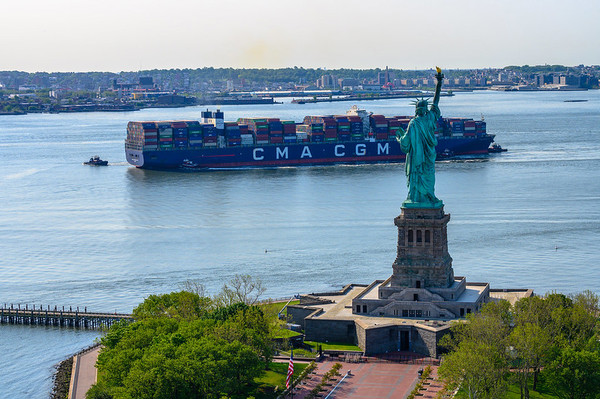
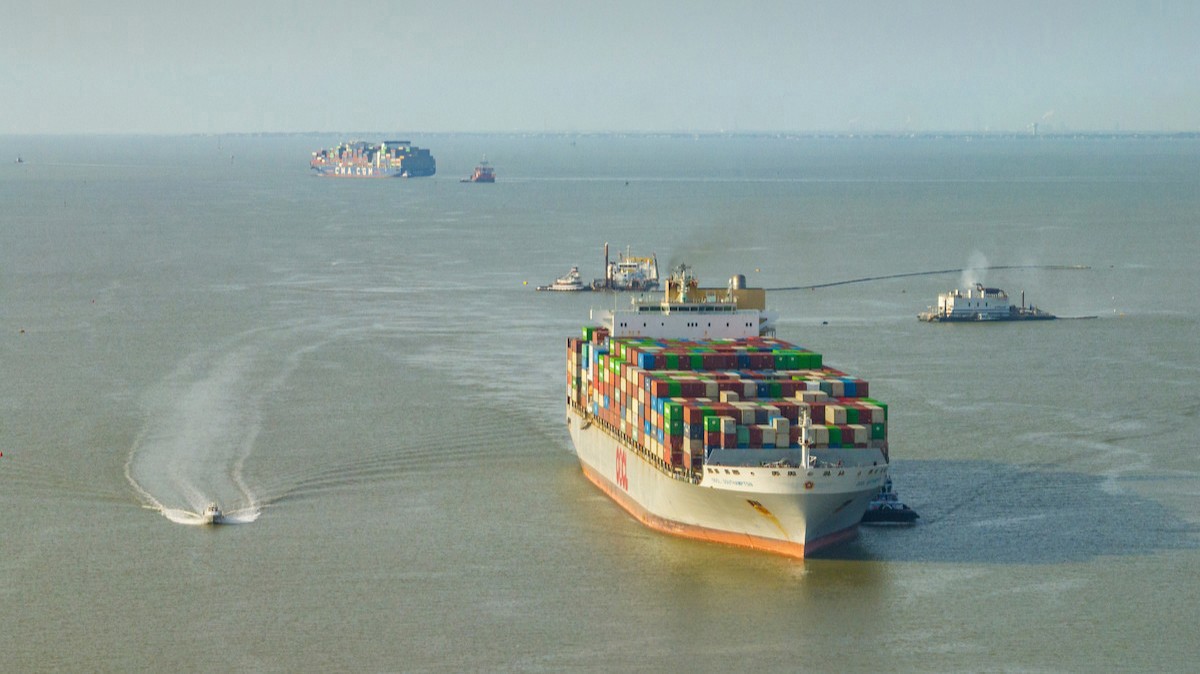 IMAGE: Container ship near Houston. Port Houston
Changes on the day to 08.00 CDT (13.00 GMT) today:
- VLSFO prices down in Balboa ($52/mt), Houston ($44/mt), Zona Comun ($41/mt), New York ($12/mt) and Los Angeles ($7/mt)
- LSMGO prices down in New York ($121/mt), Zona Comun ($55/mt), Balboa ($32/mt), Houston and Los Angeles ($26/mt)
- HSFO prices unchanged in New York, and down in Los Angeles ($11/mt), Houston ($5/mt) and Balboa ($4/mt)
Houston's VLSFO price has declined over the past day. A lower-priced, 500-1,500 mt stem, fixed at $745/mt, may have weighed the benchmark down.
In comparison, the port's HSFO price has fallen by only $5/mt. These price movements have narrowed Houston's Hi5 spread to $178/mt today, from $217/mt on Thursday.
Bunker demand in the US Gulf port is strong, and prompt availability of all three conventional grades is tight. HSFO and LSMGO require lead times of 6-8 days, while VLSFO requires around five days, a source said.
Brent
The front-month ICE Brent contract has lost $0.24/bbl on the day, trading at $104.94/bbl at 08.00 CDT (13.00 GMT) today.
Upward pressure:
Brent’s price is poised to end the week higher than it began, as commercial vessels continue to come under incessant air assaults.
Another incident was reported within the Strait of Hormuz on Wednesday, according to the United Kingdom Maritime Trade Operations (UKMTO) agency.
The cargo vessel was hit by an unknown projectile, the UKMTO reported. The vessel is currently on fire and adrift.
“All crew have been evacuated with two casualties reported,” the agency said.
As of yesterday, only 12 vessels attempted to transit the Strait of Hormuz - 10 inbound, two outbound, market intelligence provider Windward reported.
Although this number was one more than the 11 transits recorded on 23 September, vessel traffic remains well below the pre-war average of 140 daily transits.
The slump in maritime traffic in the region stems from drone and missile attacks, and also the compounding impact of the US naval blockade of Iranian ports.
So far, the US Central Command (CENTCOM) has redirected 115 commercial vessels, disabled more than three, and boarded two, to prevent ships from entering or departing Iranian ports, it said earlier.
Downward pressure:
Brent crude’s price has moved lower amid hopes of a diplomatic breakthrough between the US and Iran.
Negotiators from both countries are exploring a phased way out of the conflict, which is now in its sixth month.
As part of the agreement, Tehran will reopen the Strait of Hormuz and Washington is to lift its economic sanctions and release frozen Iranian assets, Reuters reported citing sources.
“We have introduced a plan to the United States through the mediators that if certain conditions are met... the strait will be open in seven days,” Financial Times cited Iranian foreign minister Abbas Araghchi as saying on the sidelines of the United Nations General Assembly meeting in New York.
The Strait of Hormuz has emerged as the core bargaining chip in negotiations to resolve the Middle East conflict – Tehran is pressing to dismantle the US blockade that is strangling its economy, while Washington is demanding the reopening of the narrow waterway currently blocked by Iranian forces.
By Gautamee Hazarika and Aparupa Mazumder
Please get in touch with comments or additional info to news@engine.online