Atlanteo courts shipping sector for Brazilian e-methanol offtake
German-Brazilian startup Atlanteo is in talks with potential e-methanol offtakers, including shipping companies and bunker suppliers, in Europe and Brazil, chief executive Andreas Eisfelder told ENGINE.
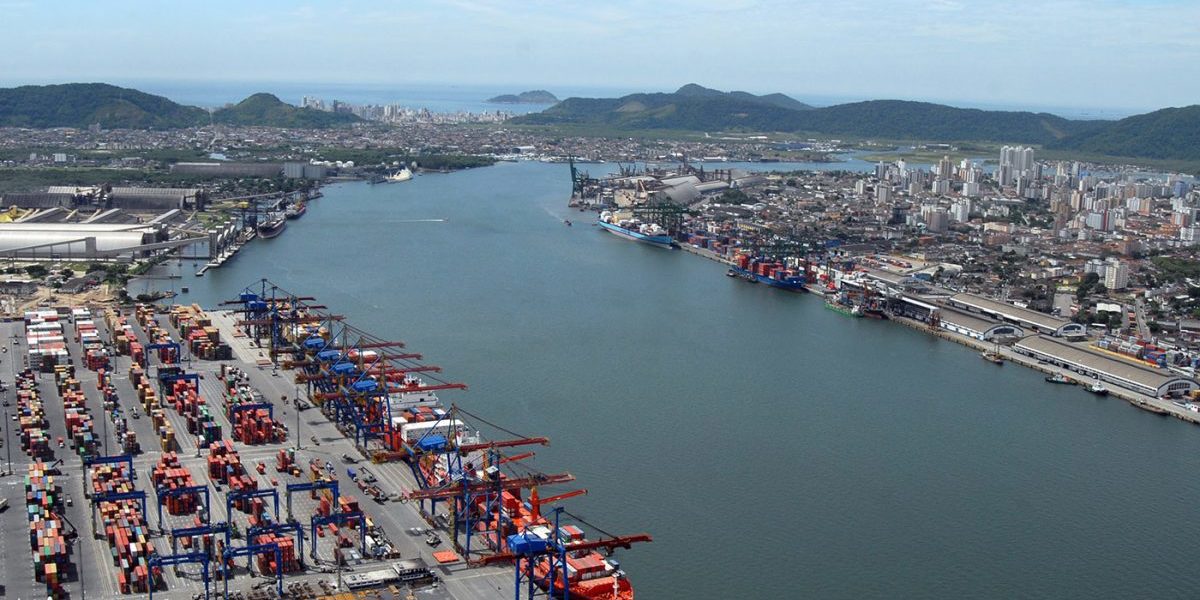 IMAGE: Aerial view of Brazillian container port of Santos in Sao Paolo. Getty Images
Atlanteo has conceptualised a modular production plant capable of producing around 10,000 mt/year of e-methanol. The company plans to build its pilot plant, Project Alba, in Brazil’s Espírito Santo region.
Construction is due to start next year, with production expected by 2030.
The 20-megawatt pilot plant will target the shipping, aviation and chemical sectors, with fuel allocations to be determined by the “offtake agreements we conclude”, Eisfelder said.
Given the limited production capacity, the facility is expected to supply a small number of customers rather than serve a broader market, he added.
Atlanteo intends to work with established suppliers and traders to handle the logistics, distribution and physical deliveries to end customers in Europe.
The company will focus on production and does not “plan to become a physical bunker supplier”, Eisfelder said.
Modular expansion
Atlanteo plans to scale up e-methanol production by building more modular plants instead of expanding the capacity of individual facilities.
The company's modular design combines electricity generated from small run-of-river hydropower plants and solar installations with electrolysis, methanol synthesis and biogenic CO2 sourced from agricultural waste.
“Scaling works by replicating the module where these resources exist locally, not by enlarging a single site,” Eisfelder explained.
Project Alba will be the first test of this approach. The size of future plants will vary depending on the renewable energy and agricultural resources available at each location.
Atlanteo is eyeing more projects in Brazil, with plans to eventually take the concept to other regions where similar resources are available.
The company also plans to collaborate with agricultural businesses, which could supply both the agricultural waste that provides biogenic CO2 and sites suitable for small hydropower plants.
Eisfelder did not disclose a production cost target for the e-methanol.
But he said access to inexpensive hydropower and locally sourced biogenic CO2 will be central to keeping production costs down. The company aims to use Project Alba to test whether these cost assumptions hold up in practice.
By Konica Bhatt
Please get in touch with comments or additional info to news@engine.online