Battle for the strait: US and Iran lock horns in renewed war
The US Central Command (CENTCOM) has launched strikes on Iranian sites for the sixth consecutive day.
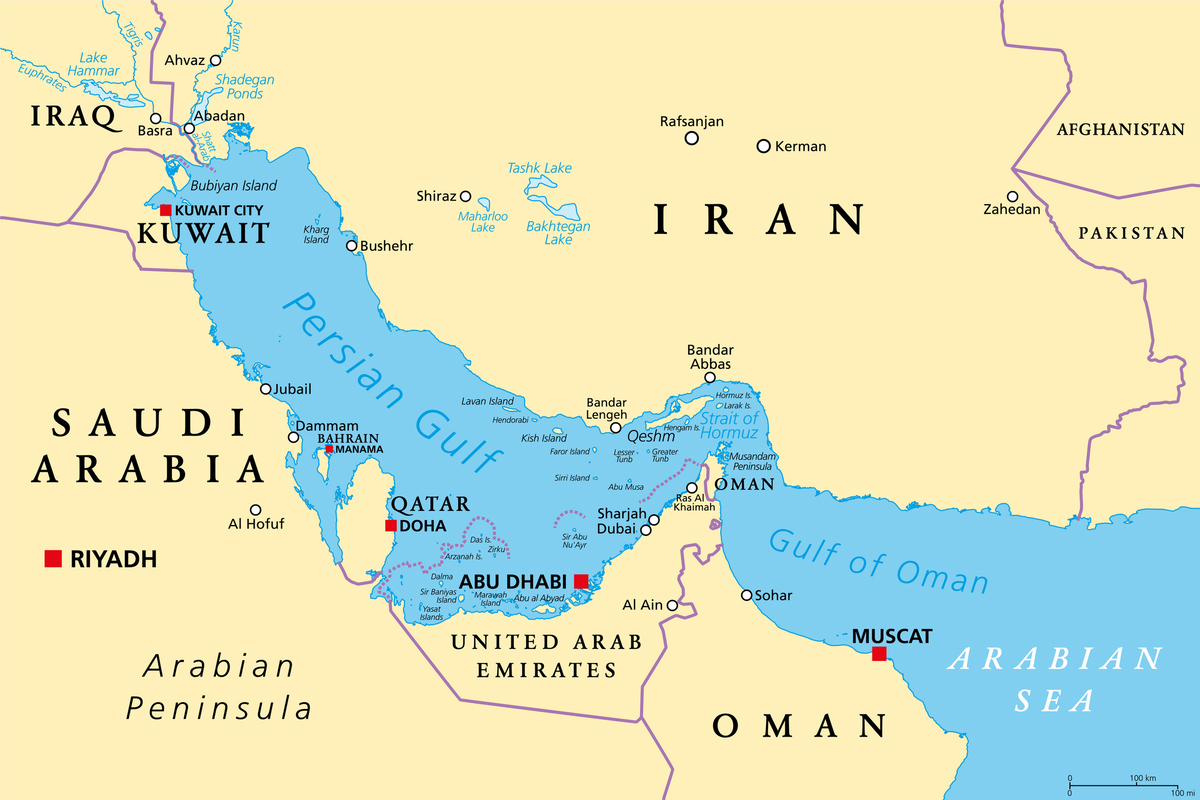 IMAGE: Getty Images
Brent crude’s price has remained well above $80/bbl mark amid renewed hostilities in the Persian Gulf, after the US CENTCOM conducted further airstrikes on Iranian coastal surveillance and air defense sites, logistics and maritime capabilities.
The US navy also conducted a verification aboard a merchant vessel – M/T Wen Yao – in the Gulf of Oman yesterday, CENTCOM said.
So far, the US has redirected three commercial ships trying to evade the blockade, disabled one that didn’t comply, and boarded another to ensure full compliance with its ongoing naval blockade of the region.
“The Strait of Hormuz and the surrounding waters remain free and open, except for vessels attempting to violate America’s steel wall blockade,” the US CENTCOM claimed.
Conflict spreads to Bab al-Mandeb Strait
Meanwhile, Iran has instructed the Houthis – its proxies based in Yemen – to prepare to close the Bab al-Mandeb Strait if the US strikes Iran’s power infrastructure, Reuters reported.
The Houthis now await final orders from Iranian allies to begin targeting commercial vessels using the vital conduit, the report added.
Like the Strait of Hormuz, the Bab al-Mandeb Strait is also a highly crucial gateway to the Red Sea, overlooking Hodeidah and the Gulf of Aden. It carries about 7% of global seaborne oil flows.
The maritime industry has seen previous Houthi attacks which sent shipping costs soaring, by forcing vessels to divert around Africa’s Cape of Good Hope. Any new attacks in the region threatens to deepen the global energy crisis, as traffic through the Strait of Hormuz is already facing severe disruption.
OPEC’s de-facto leader Saudi Arabia’s energy security is particularly vulnerable, as it has funnelled roughly 70% of its crude exports through the Red Sea port of Yanbu in a bid to circumvent the Strait of Hormuz.
Riyadh has made itself highly dependent on the 1,200 km East-West Pipeline, leaving its primary export strategy dangerously exposed to disruptions in the Red Sea.
A ticking time bomb
According to the International Energy Agency (IEA) chief Fatih Birol, the clock is ticking for the global economy as the escalating regional conflict and the shutdown of the Strait of Hormuz will manifest in severe economic consequences in just a few short weeks.
“If the Strait of Hormuz remains closed, we may again have some difficulty for global economies, including those in the region and developing nations and Asia,” Birol said in an interview with Bloomberg.
The International Maritime Organization’s (IMO) secretary-general Arsenio Dominguez also warned that the Strait of Hormuz has become too dangerous for shipowners and operators to navigate.
Other maritime intelligence agencies including the Joint Maritime Information Center (JMIC) and Windward continue to categorise the regional threat level for the Strait of Hormuz as ‘severe.’
By Aparupa Mazumder
Please get in touch with comments or additional info to news@engine.online