ClassNK approves Mitsubishi’s methane slip reduction technology
Japanese classification society Nippon Kaiji Kyokai (ClassNK) has granted approval to a methane oxidation catalyst system jointly developed by Mitsubishi Heavy Industries Marine Machinery & Equipment, Mitsubishi Shipbuilding and Daihatsu Infinearth to curb methane slip from vessels.
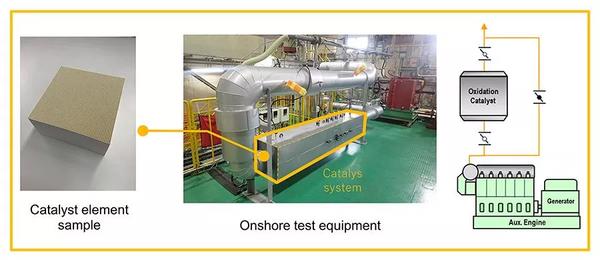 IMAGE: Mitsubishi’s onshore test equipment for the methane oxidation catalyst system for marine LNG engines. MHI-MME
The system works by installing a methane oxidation catalyst in the exhaust stream of LNG-fuelled engines, where unburned methane is oxidised over the catalyst. Methane oxidation is a chemical reaction in which methane is converted into carbon dioxide (CO2) and water through reaction with oxygen.
In LNG-powered engines, "methane slip—unburned methane released into the atmosphere—remains a challenge,” ClassNK said.
Methane is a highly potent greenhouse gas, trapping 86 times more heat than CO2 over the first 20 years after its release, making it significantly more damaging in the near term, according to the United Nations Environment Programme.
The global fleet of LNG-capable vessels currently stands at 921, with a further 679 ships expected to be delivered by 2033, according to classification society DNV.
The new system has been installed as a demonstration unit on the LNG bunkering vessel KEYS Azalea, built by Mitsubishi Shipbuilding, and is currently undergoing testing.
Methane-reduction technologies are gaining traction among shipowners aiming to limit methane emissions.
This month, climate tech firm Bennu Climate, together with lomarlabs, a subsidiary of UK-based shipping company Lomar Shipping, began sea trials of a system designed to remove methane during routine ship operations.
By Tuhin Roy
Please get in touch with comments or additional info to news@engine.online