East of Suez Fuel Availability Outlook 8 Sep
Availability tight in Singapore
Bunker demand low in Zhoushan
Supply tight across grades in Fujairah
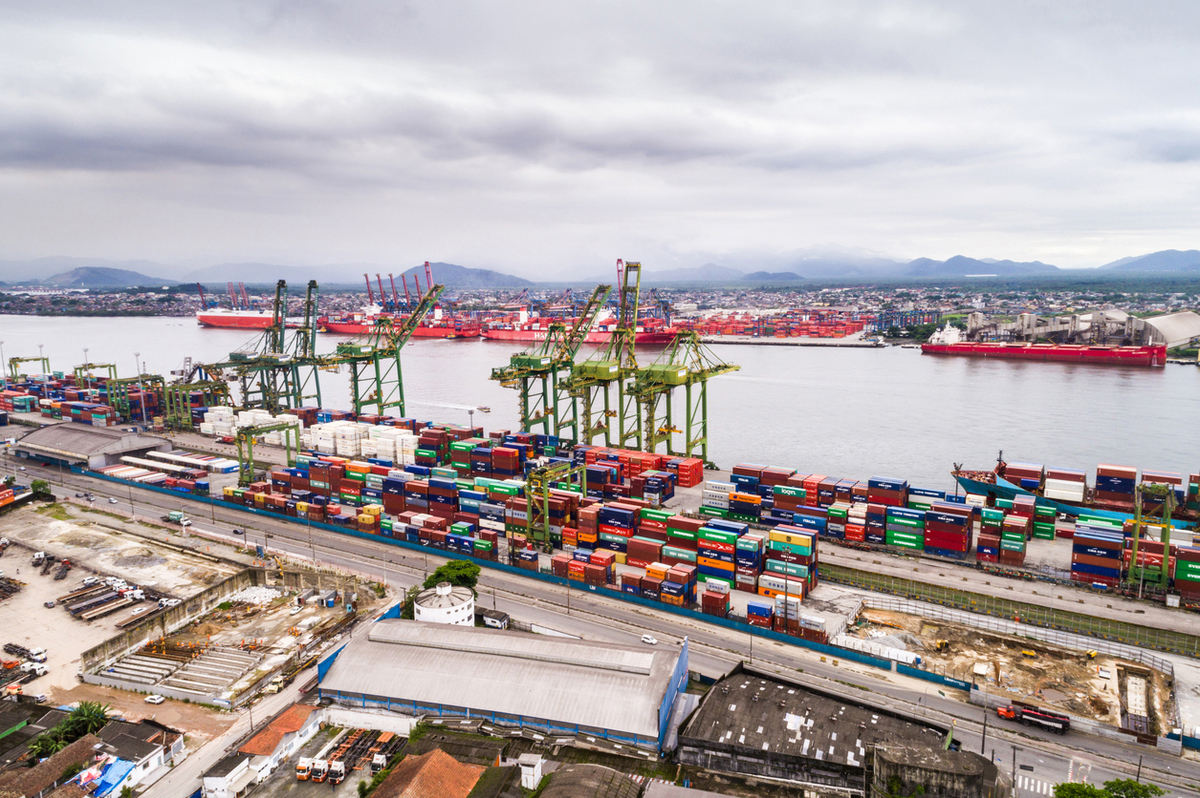
 IMAGE: Cargo ships docked at Tauranga Harbour Port with Mount Maunganui in the background. Getty Images
Singapore and Malaysia
Despite subdued demand, bunker supply in Singapore remains constrained. Recommended lead times for VLSFO are 12-15 days, compared with 9-16 days a week earlier. A source attributed the tight availability to reduced supply and a shortage of blending components.
HSFO supply is also tight, with advised lead times of 10-12 days, compared with 8-16 days previously. LSMGO lead times are around 7-10 days.
At Malaysia’s Port Klang, bunker supply remains constrained. Prompt VLSFO availability is tight, while LSMGO remains limited and HSFO continues to face supply pressure.
East Asia
Bunker demand is weak, while fuel availability remains tight in Zhoushan, with suppliers quoting lead times of around 10 days for VLSFO, LSMGO and HSFO. VLSFO lead times are broadly unchanged from a week earlier.
The persistent supply constraints stem largely from disruptions caused by adverse weather. Bunkering operations were suspended for about two weeks following Typhoon Dolphin in early August, leaving suppliers with substantial delivery backlogs. Supply tightened further toward the end of August, when rough seas linked to four consecutive tropical systems prompted another suspension at Zhoushan’s inner and outer anchorages, a source said.
Bunkering resumed on 31 August at the more sheltered Xiushandong and inner Mazhi anchorages after a six-day weather-related suspension. However, operations at Xiushandong were suspended again on 3 September after Typhoon Saudel made its third landfall in China along the Fujian coast. Bunkering resumed at the anchorage on Monday.
Suppliers remain uncertain about when Zhoushan’s bunkering operations will return to full capacity, with activity continuing to depend heavily on weather conditions, the source added.
Supply conditions remain mixed across other Chinese ports. Dalian and Qingdao have adequate VLSFO and LSMGO supplies, although HSFO remains tight in Qingdao. All three major grades remain constrained in Tianjin, while VLSFO and HSFO availability is limited in Shanghai, with relatively stable LSMGO supply.
Southern China is also facing supply pressure. VLSFO and LSMGO grades are in short supply in Fuzhou, while Xiamen has sufficient VLSFO stock but limited LSMGO supply. VLSFO and LSMGO availability is constrained in both Yangpu and Guangzhou.
Supply conditions in Hong Kong’s bunker market remains largely unchanged, with suppliers maintaining lead times of around seven days for all major grades.
Taiwan is comparatively well supplied. VLSFO and LSMGO can be delivered in around two days at Hualien, Taichung and Keelung, while lead times at Kaohsiung are about three days. Availability across all four ports is broadly unchanged from last week.
Separately, CPC Corporation said its bunker barge Chung Yu No. 18 has resumed operations at Keelung Port after completing repairs to an equipment failure that had kept the vessel out of service since late July.
Bunker demand across South Korea has weakened as firmer Brent futures have pushed benchmark fuel prices higher. Busan’s VLSFO price has risen by around $70/mt over the past week to approximately $900/mt, according to a South Korean trader.
Fuel availability has improved marginally at southern ports, including Busan, Ulsan, Masan, Onsan, Yeosu and Kwangyang. Lead times for all grades have shortened to 7-11 days, compared with 9-18 days a week earlier. Western ports, including Incheon, Daesan, Dangjin, Pyeongtaek and Taean, have seen a similar improvement, with VLSFO, LSMGO and HSFO lead times narrowing to 7-11 days from 9-18 days.
Weather disruptions are likely to hamper bunkering operations at Busan and Ulsan from 8-11 September, Yeosu from 9-10 September and Daesan on 9 September.
In Japan, lead times for VLSFO, LSMGO and HSFO are around 7-10 days at Tokyo, Chiba and Kawasaki, while suppliers at Nagoya, Yokkaichi, Osaka, Kobe, Mizushima, Tokuyama and Oita are indicating 10-12 days. Kashima remains tight for VLSFO and HSFO.
Oceania
Bunker supply in Western Australia remains stable, with VLSFO readily available at Kwinana and Fremantle. Suppliers are indicating lead times of around seven days at both ports. Each port is served by a single supplier, with all deliveries carried out by barge.
Supply conditions are more varied along Australia’s east coast. Port Kembla can take VLSFO deliveries by either truck or pipeline, while Sydney has adequate stocks of VLSFO and LSMGO. HSFO availability in Sydney is comparatively tighter, with suppliers generally requiring around seven days’ notice.
In Queensland, VLSFO and LSMGO remain readily available at Brisbane and Gladstone, with delivery windows of about one week. Further south, VLSFO stocks in Melbourne and Geelong are comfortable, although both ports rely on a single bunker barge, keeping lead times at around seven days. HSFO availability has tightened further at both Melbourne and Brisbane.
Separately, one supplier is offering VLSFO, LSMGO and HSFO in Brisbane, Sydney and Melbourne with lead times of roughly five days.
In Western Australia, pipeline bunker deliveries at Dampier Cargo Wharf (DCW) are expected to remain suspended until around the end of September as repair work continues. Limited truck deliveries are available, subject to vessel size. During the outage, the supplier has designated the Toll Supply Base (TSB) in Dampier as the preferred bunkering location, according to a source.
Across the Tasman Sea, New Zealand’s bunker market remains largely steady. VLSFO is readily available at Tauranga and Auckland, with suppliers indicating lead times of around four days. At Marsden Point, vessels can receive VLSFO and LSMGO directly via pipeline.
Weather continues to pose the main operational risk in New Zealand, with Wellington and ports across the South Island particularly susceptible to bunker delivery delays during adverse conditions.
South Asia
Bunker supply remains tight across several Indian ports. VLSFO availability is constrained in Kakinada, Krishnapatnam, Haldia and Chennai, while HSFO is tight across a broader range of ports, including Visakhapatnam, Kakinada, Gangavaram, Krishnapatnam, Paradip, Haldia, Chennai, Tuticorin and New Mangalore, according to an India-based source.
Weather conditions could place additional strain on bunker operations in the coming days. Rough seas are forecast to disrupt bunkering at Visakhapatnam from 8-12 September.
Sri Lanka’s bunker market remains broadly stable, with all major grades available at Colombo and Hambantota. However, one supplier has extended its lead time to around seven days from four days previously. Intermittent weather disruptions are also expected at Colombo and Trincomalee from 8-12 September, potentially delaying bunker deliveries.
In Pakistan, a supplier at Muhammad Bin Qasim is indicating earliest VLSFO delivery around mid-September.
Middle East
US-Iran tensions over the Strait of Hormuz continue to disrupt bunker fuel availability in Fujairah. Supplies of all major grades are described as “super tight”, with fuel oil imports falling sharply amid heightened regional tensions.
Tight supply is also being reported at the nearby port of Khor Fakkan, where availability across all grades remains constrained, according to a Middle East-based source.
In Saudi Arabia, VLSFO and LSMGO supply in Jeddah remains steady. At Qatar’s Ras Laffan, however, bunker availability continues to be restricted, with both VLSFO and LSMGO in limited supply.
Meanwhile, adverse weather could potentially disrupt bunker operations in Oman. Rough weather conditions are forecast at Salalah from 8-12 September, potentially disrupting bunkering operations, according to a source.
In Egypt, bunker inventories at Port Suez have fallen to critically low levels across all three conventional fuel grades.
Further south, bunker availability remains limited across all major grades in Djibouti.
By Tuhin Roy
Please get in touch with comments or additional info to news@engine.online