East of Suez Market Update 18 June
Prices in East of Suez ports have moved down, and VLSFO availability is tight in Singapore.
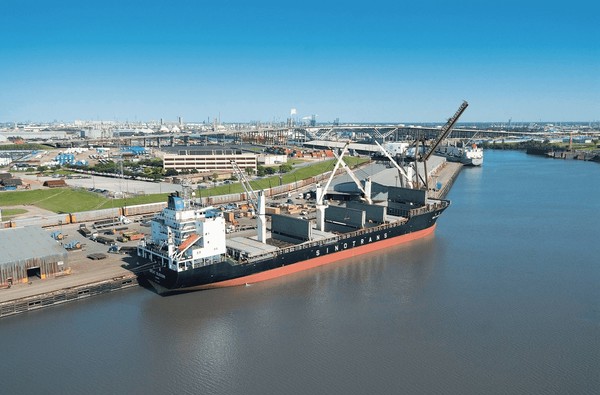
 IMAGE: Aerial view of Singapore container terminal. Getty Images
Changes on the day to 17.00 SGT (09.00 GMT) today:
- VLSFO prices down in Singapore ($13/mt), Fujairah ($12/mt) and Zhoushan ($8/mt)
- LSMGO prices down in Singapore ($39/mt), Fujairah ($25/mt) and Zhoushan ($19/mt)
- HSFO prices down in Singapore ($15/mt), Zhoushan ($13/mt) and Fujairah ($8/mt)
- B30-VLSFO price down in Singapore ($10/mt)
VLSFO prices across the three major Asian bunker hubs have fallen over the past day, with Singapore recording the steepest decline. Even so, Singapore’s VLSFO price remains at a slight premium of $12/mt to Zhoushan, while trading at a substantial discount of $568/mt to Fujairah.
Bunker fuel availability in Singapore remains tight. Suppliers continue to recommend lead times of 10–14 days for VLSFO deliveries, largely unchanged from the previous week.
HSFO availability has tightened modestly, with recommended lead times narrowing to 7–10 days, from 5–12 days last week. LSMGO supply has also become more constrained, with deliveries now requiring 7–10 days of advance planning, compared with around seven days previously.
Elsewhere, bunker supply conditions in Malaysia’s Port Klang are mixed. VLSFO availability remains relatively stable, particularly for smaller prompt stems. In contrast, LSMGO supply remains limited and difficult to secure, while HSFO availability continues to be constrained, leaving both grades under ongoing supply pressure.
Brent
The front-month ICE Brent contract has lost by $1.45/bbl on the day, to trade at $77.76/bbl at 17.00 SGT (09.00 GMT) today.
Upward pressure:
Brent’s price has felt some upward pressure after the US Energy Information Administration (EIA) reported a big drawdown in US crude stocks.
Commercial US crude oil inventories decreased by 8.3 million bbls to 418.2 million bbls in the week ending 12 June, according to data from the EIA.
The American Petroleum Institute (API) also reported a substantial draw of 8.33 million bbls during the same week – largely matching with the EIA estimates.
“US inventory data was tighter,” two analysts from ING Bank remarked.
A sharp fall in US crude stockpiles is generally seen as a sign of stronger oil demand and can provide upward support to Brent crude’s price.
“EIA figures show crude stocks fell by 8.3m [8.3 million] barrels last week, well above expectations and the largest draw since mid-February, broadly in line with the API data,” the two ING Bank analysts added.
Downward pressure:
Brent’s price has continued to decline, following a fast-tracked US-Iran peace deal, with terms effective immediately.
US President Donald Trump signed the deal during his visit for the G7 meeting in France. The text of the agreement includes the reopening of the Strait of Hormuz and a complete halt to all regional hostilities including attacks on Lebanon.
“Oil prices extend declines as the US and Iran sign a peace agreement, with Middle East supply expected to recover sooner than previously anticipated,” ING Bank’s analysts said.
The US will lift its blockade of Iranian ports and the Strait of Hormuz, Trump said earlier. Washington will also waive some sanctions on Iran, immediately allowing Iran to sell its oil freely to the global oil market.
“Iran expects a swift lifting of US oil sanctions, supporting a return of exports,” ING Bank’s analysts added.
By Tuhin Roy and Aparupa Mazumder
Please get in touch with comments or additional info to news@engine.online