East of Suez Market Update 18 Mar
Most prices in East of Suez ports have declined, and VLSFO and HSFO availability is tight in Singapore.
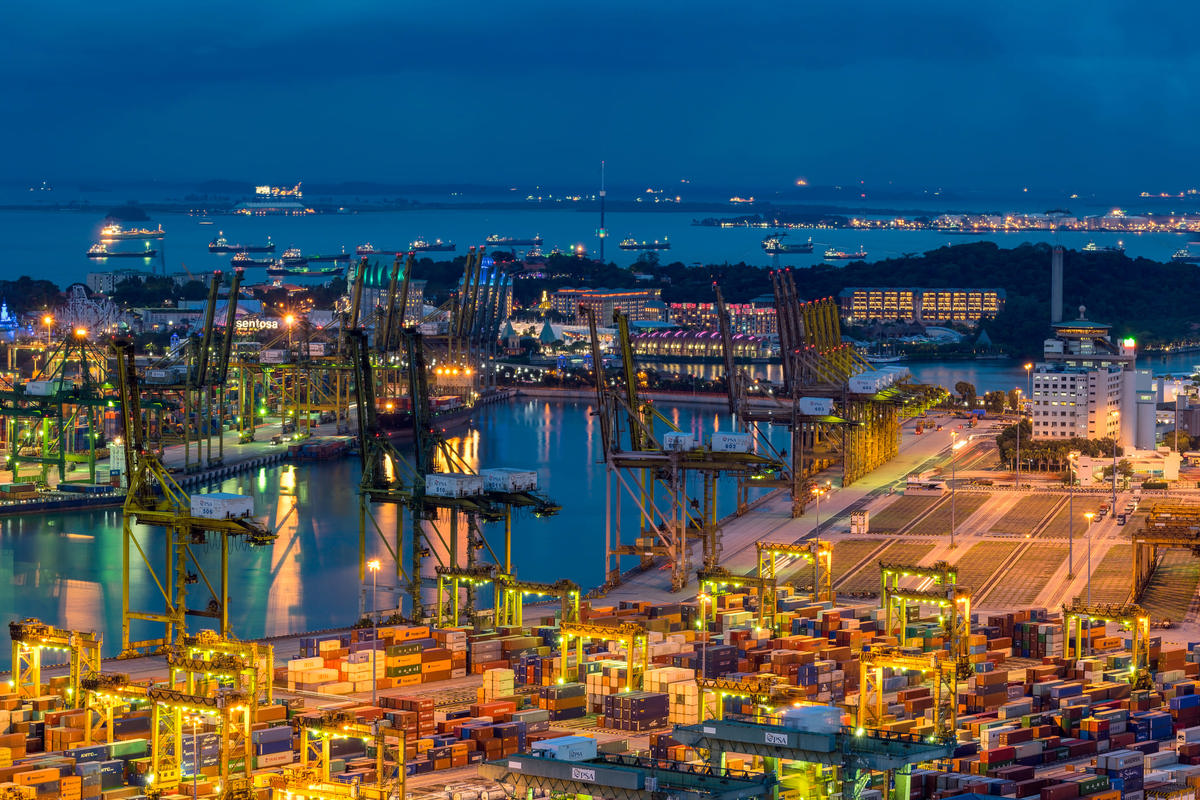
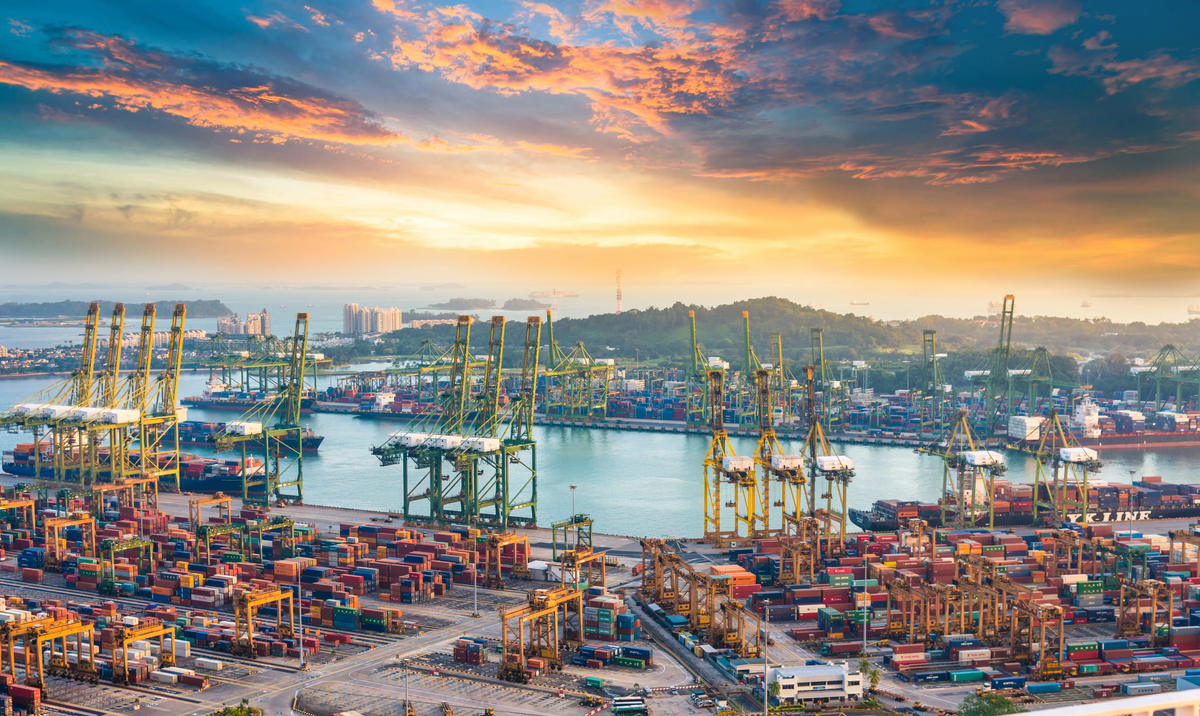 IMAGE: Container ship with working crane bridge in shipyard in Singapore. Getty Images
Changes on the day to 17.00 SGT (09.00 GMT) today:
- VLSFO prices up in Fujairah ($34/mt), and down in Singapore ($73/mt) and Zhoushan ($70/mt)
- LSMGO prices down in Fujairah ($100/mt), Singapore ($61/mt) and Zhoushan ($48/mt)
- HSFO prices down in Fujairah ($18/mt), Zhoushan ($15/mt) and Singapore ($11/mt)
- B30-VLSFO prices up in Singapore ($56/mt)
Singapore’s VLSFO price has declined for a third straight day, though it still remains above the $1,000/mt mark. It is currently priced at discounts of $82/mt to Fujairah and $33/mt to Zhoushan.
Overall bunker prices remain elevated, supported by firm crude prices, tightening supply, stronger demand and ongoing geopolitical tensions in the Middle East.
HSFO prices across the three major ports have eased within a narrow range of $11–18/mt, with Singapore seeing the smallest drop. As a result, Singapore’s Hi5 spread has narrowed by $62/mt to $221/mt, placing it below Fujairah’s $255/mt but above Zhoushan’s $192/mt.
VLSFO availability remains tight in Singapore, with recommended lead times of around 10–13 days, slightly improved from 12–16 days last week. HSFO supply is also constrained, with lead times of 9–16 days, compared with 11–15 days previously.
In contrast, LSMGO availability has improved significantly, with lead times shortening to 6–9 days from 13–17 days last week.
In Malaysia, VLSFO supply is sufficient at Port Klang, particularly for smaller prompt stems. LSMGO supply has tightened, while HSFO availability remains limited, making both grades more difficult to secure.
Brent
The front-month ICE Brent contract has declined by $1.24/bbl on the day, to trade at $102.89/bbl at 17.00 SGT (09.00 GMT) today.
Upward pressure:
Brent crude has remained firm as the Middle East conflict enters its third week with no signs of easing.
Oil flows through the Strait of Hormuz remain tightly constrained, even as Iran gave permission to limited tanker transits.
“With no sign of de-escalation in the Middle East, Brent crude appears to have found a floor just above $100/bbl,” two analysts from ING Bank noted.
Meanwhile, the Israel Defense Forces (IDF) has claimed to eradicate Iran’s security chief Ali Larijani. The news has raised market concerns of an Iranian retaliation that could disrupt supply and send oil prices higher.
“Confirmation of the death of Iran’s security chief, Ali Larijani, only increases uncertainty for markets. It’s unlikely to lead to de-escalation,” ING Bank’s analysts added.
Downward pressure:
Brent’s price moved lower following a surprise build in US crude stocks.
US crude oil inventories rose by 6.6 million bbls in the week ending 13 March, according to estimates from the American Petroleum Institute (API).
A build in US crude stocks typically indicates lower demand for oil and can put some downward pressure on Brent's price.
The US Federal Reserve (Fed) will hold its Federal Open Market Committee (FOMC) meeting later today to discuss the prospects of interest rate cuts in the US – amid the ongoing war.
Notably, higher interest rates in the US can dampen demand growth and make dollar-denominated commodities, like oil, more expensive for holders of other currencies.
By Tuhin Roy and Aparupa Mazumder
Please get in touch with comments or additional info to news@engine.online