East of Suez Market Update 25 Nov
Prices in East of Suez ports have risen, and HSFO availability is tight in Fujairah.
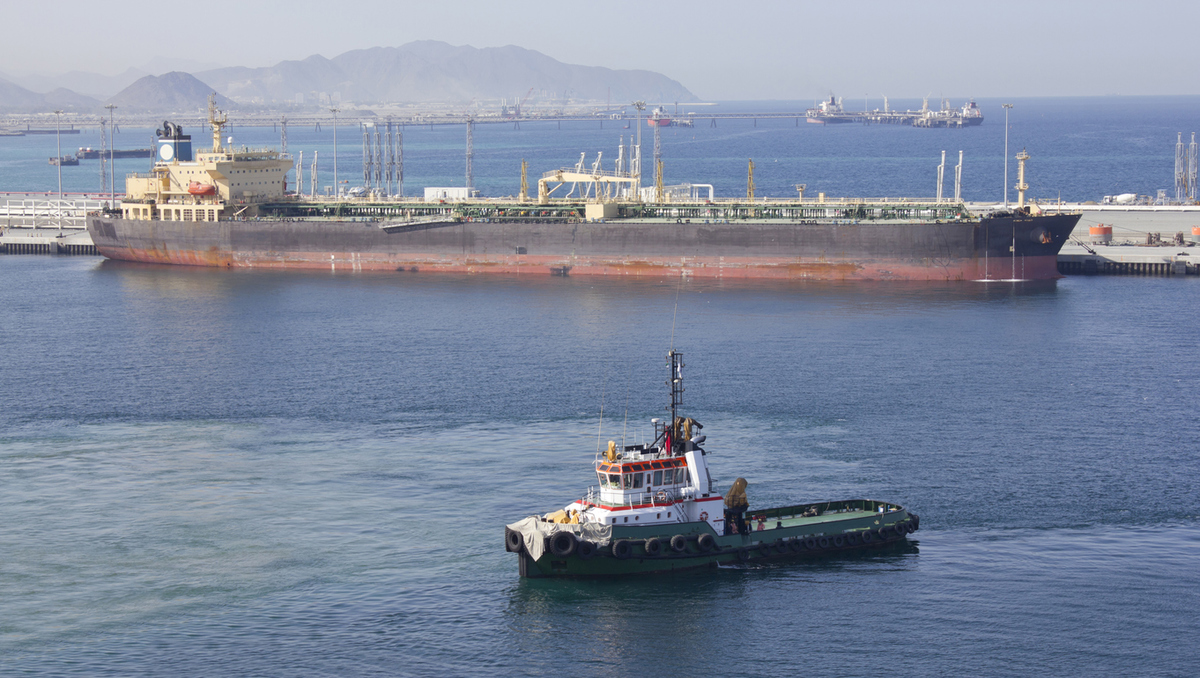 IMAGE: Harbour craft in front of an oil tanker in Fujairah. Port of Fujairah
Changes on the day to 17.00 SGT (09.00 GMT) today:
- VLSFO prices up in Fujairah ($23/mt), Singapore ($17/mt) and Zhoushan ($9/mt)
- LSMGO prices up in Fujairah ($37/mt), Singapore ($31/mt) and Zhoushan ($15/mt)
- HSFO prices up in Fujairah ($17/mt), Zhoushan ($12/mt) and Singapore ($11/mt)
Fujairah's prices have risen the most among the three major Asian bunker ports across all three grades, led by LSMGO. Its VLSFO price now stands at a $38/mt premium over Zhoushan and a $40/mt discount to Singapore.
Fujairah's Hi5 spread has widened from $257/mt to $263/mt, staying above Singapore's $249/mt and Zhoushan's $147/mt.
Bunker demand in the Arab Gulf remains subdued as regional tensions continue and attacks around the Strait of Hormuz increase, a Middle East-based trader said. In Fujairah, VLSFO and LSMGO are readily available, while HSFO supply remains tight, a regional source said.
Fujairah's LSMGO price is well below those at Omani ports. Sohar's stands at $1,746/mt, a $293/mt premium over Fujairah, followed by Muscat at $1,770/mt (a $317/mt premium), Salalah at $1,803/mt ($350/mt) and Duqm at $1,815/mt ($362/mt).
Demand remains healthy at Omani ports, where LSMGO deliveries at Salalah, Sohar, Duqm and Muscat can generally be arranged within 2-3 days.
Brent
The front-month ICE Brent contract has increased by $2.55/bbl on the day, to trade at $91.02/bbl at 17.00 SGT (09.00 GMT) today.
Upward pressure:
Brent crude prices have found support from continued attacks on vessels near the Strait of Hormuz, alongside exchanges of attacks between Saudi Arabia and the Houthis.
A container ship was targeted and forced to stop on Tuesday while sailing along an unauthorised route near the Strait of Hormuz, Iran's Revolutionary Guards said, according to state media, Reuters reported.
Meanwhile, three vessels were struck by unidentified projectiles on Monday while sailing eastbound through the strait, the United Kingdom Maritime Trade Operations (UKMTO) said.
“Crude oil rebounded, as the market faced another escalation in attacks on vessels in the Persian Gulf,” ANZ Bank's senior commodity strategist Daniel Hynes said.
“The continued attacks are slowly eroding hope that a diplomatic solution to the Middle East conflict will be reached,” Hynes added.
Downward pressure:
Brent crude prices have faced some downward pressure as oil exports from the Middle East resume. Expectations of a global oil oversupply have also outweighed concerns about potential shipping disruptions through the Strait of Hormuz.
Oil prices pared some of their gains as “recovering supply continued to outweigh escalating security risks around the Strait of Hormuz. Iran has claimed that at least six tankers have been targeted since Tuesday and threatened tighter control over the waterway, but exports from the Persian Gulf continue to recover,” two analysts from ING Bank said.
Rising crude inventories have further reinforced concerns about a potential supply surplus.
US crude oil inventories increased by 126,000 bbls in the week ending 20 November, according to estimates from the American Petroleum Institute (API), as reported by Trading Economics.
An increase in crude inventories typically signals weaker demand relative to supply, potentially weighing on Brent prices by pointing to an emerging supply-demand imbalance.
By Tuhin Roy
Please get in touch with comments or additional info to news@engine.online