East of Suez Market Update 6 Nov
Most prices in East of Suez ports have moved higher, and availability of LSMGO and HSFO remains limited in Fujairah.
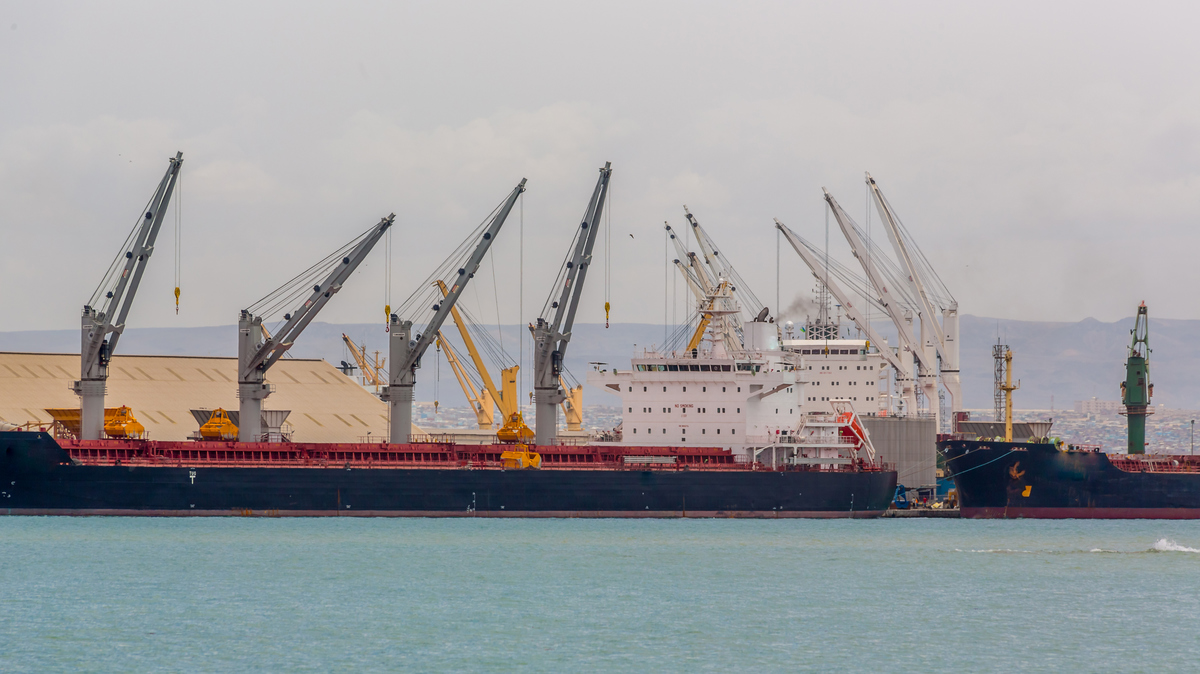 IMAGE: A ship anchored in Djibouti port with giant cranes unloading its cargo. Getty Images
Changes on the day to 17.00 SGT (09.00 GMT) today:
- VLSFO prices up in Singapore ($14/mt), and down in Fujairah ($14/mt) and Zhoushan ($12/mt)
- LSMGO prices up in Fujairah ($59/mt), Singapore ($30/mt) and Zhoushan ($3/mt)
- HSFO prices up in Fujairah ($19/mt), Zhoushan ($10/mt) and Singapore ($1/mt)
Fujairah’s HSFO price has climbed by $19/mt, the steepest increase among the three major Asian bunker ports. The price now stands at a $38/mt discount to Singapore and a $57/mt discount to Zhoushan.
With VLSFO falling and HSFO rising, Fujairah’s Hi5 spread has narrowed from $211/mt to $178/mt. It remains above Singapore’s $118/mt and Zhoushan’s $83/mt.
VLSFO availability in Fujairah has improved, even as vessel traffic through the Strait of Hormuz continues to be disrupted amid US-Iran tensions, a regional source said. Supplies of LSMGO and HSFO in the port remain limited.
Elsewhere in the region, supply at Qatar’s Ras Laffan is restricted, and Egypt’s Port Suez faces low bunker inventories, a Middle East-based source said. Availability across the major fuel grades in Djibouti remains limited.
Brent
The front-month ICE Brent contract has risen by $2.35/bbl on the day, to trade at $97.66/bbl at 17.00 SGT (09.00 GMT) today.
Upward pressure
Ongoing concerns over Middle Eastern oil supplies amid the conflict continue to support Brent crude futures.
Prices rebounded following a surge in tanker attacks in the Gulf and the Strait of Hormuz on Wednesday and Thursday. Renewed attacks in the strait, a critical maritime passage through which most Middle Eastern oil shipments transit, have heightened concerns over potential disruptions to regional supply flows, Reuters reported.
“The market has a habit of trying to sprint to the final chapter while the fighting is still on page one… Then comes another reminder from the Strait of Hormuz that wars do not end because the market grows tired of carrying the headline risk,” said SPI Asset Management managing partner Stephen Innes.
Brent crude has also drawn support from a further decline in US crude and fuel inventories. Commercial crude stocks in the US fell by 865,000 bbls to 409.8 million bbls in the week ended 30 October, according to the US Energy Information Administration (EIA).
Downward pressure
Meanwhile, expectations of a possible de-escalation in the US-Iran conflict have exerted downward pressure on oil prices following election losses for US President Donald Trump's party.
“Brent, the global benchmark had come under pressure as the market contemplated what a Democrat sweep in US midterms elections would mean for the Middle East conflict,” said ANZ Bank senior commodity strategist Daniel Hynes.
“The political centre of gravity in Washington has shifted after the Democratic sweep, and that raises a much more awkward question for the White House: not whether it can launch another strike, but whether it still has the domestic room to sustain the war,” Innes said.
By Tuhin Roy
Please get in touch with comments or additional info to news@engine.online