East of Suez Market Update 8 July
Most prices in East of Suez ports have moved up, and availability remains tight across all grades in Singapore.
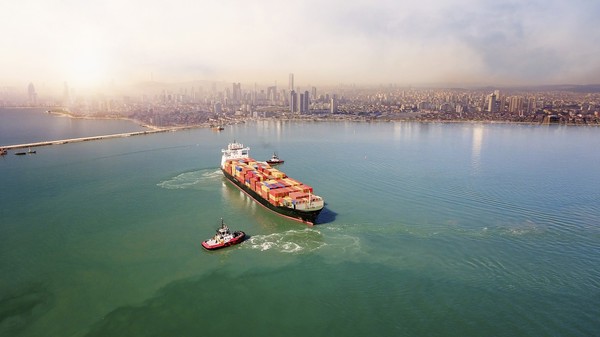
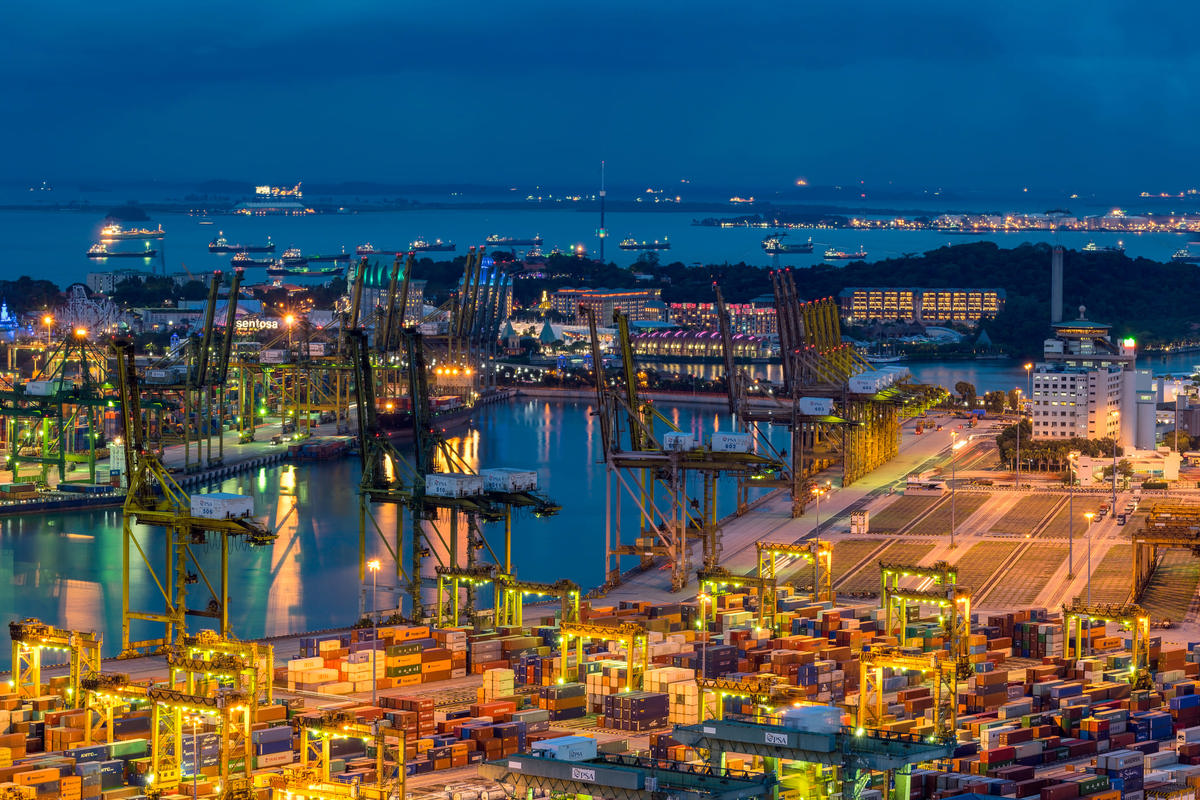 IMAGE: Aerial view of Singapore container terminal. Getty Images
Changes on the day to 17.00 SGT (09.00 GMT) today:
- VLSFO prices up in Singapore ($42/mt), Zhoushan ($35/mt) and Fujairah ($21/mt)
- LSMGO prices up in Singapore ($78/mt), Zhoushan ($4/mt), and down in Fujairah ($2/mt)
- HSFO prices up in Zhoushan ($28/mt), Singapore ($14/mt) and Fujairah ($11/mt)
- B30-VLSFO price up in Singapore ($75/mt)
Singapore’s VLSFO price has surged by $42/mt over the past day, marking the largest increase among the three major Asian bunker hubs. Despite the rise, it remains at a discount of $13/mt to Zhoushan and $2/mt to Fujairah.
VLSFO availability in Singapore continues to tighten due to delayed cargo arrivals, with suppliers now recommending lead times of 13–17 days, a source said. This marks a shift from last week, when some suppliers were quoting lead times of around nine days.
HSFO supply has also tightened, with recommended lead times widening to 11–19 days from 7–11 days last week. LSMGO availability has similarly become more constrained, with suppliers now advising lead times of 8–10 days, compared with 3–8 days a week earlier.
Bunker fuel availability in Malaysia’s Port Klang remains mixed. VLSFO supply is generally sufficient, particularly for smaller prompt stems. However, LSMGO availability remains limited, while HSFO continues to face supply constraints, leaving both grades relatively tight.
Brent
The front-month ICE Brent contract has gained by $5.75/bbl on the day, to trade at $78.70/bbl at 17.00 SGT (09.00 GMT) today.
Upward pressure:
Brent prices have strengthened after Iran reportedly attacked three commercial vessels near the Strait of Hormuz on Tuesday, triggering US military retaliation and intensifying tensions across the region.
US President Donald Trump said the memorandum of understanding aimed at ending the conflict with Iran was “over,” according to Reuters.
The renewed hostilities have revived concerns over potential disruptions to Middle East oil supplies.
“Re-escalation in the Persian Gulf has reignited supply concerns, pushing oil prices higher amid questions about the direction of US-Iran peace talks,” two analysts from ING Bank said.
“Crude oil futures surged higher amid renewed attacks in the Strait of Hormuz,” ANZ Bank’s senior commodity strategist Daniel Hynes echoed.
Adding to the bullish sentiment, the US Department of the Treasury (DoT) revoked a sanctions waiver that had temporarily permitted transactions involving Iranian-origin crude oil and petrochemical products following the renewed attacks in and around the Strait of Hormuz. The move has also provided additional support to Brent futures.
“US launches biggest strikes on Iran since signing of MoU, reinstates oil sanctions. Washington says moves in response to Iranian strikes on ships in Hormuz,” VANDA Insights’ founder Vandana Hari commented.
Meanwhile, US crude oil inventories declined by 399,000 bbls in the week ending 3 July, according to estimates from the American Petroleum Institute (API) cited by Trading Economics.
A draw in US crude inventories is generally interpreted as a sign of stronger oil demand and tends to support higher Brent prices.
Downward pressure:
Brent crude prices faced some downward pressure after Baker Hughes reported an increase in US oil drilling activity.
The number of active US oil rigs rose by five from the previous week, to 445.
The US oil rig count is widely regarded as a leading indicator of future crude oil production, as it reflects current and expected drilling activity across the country's shale sector.
By Tuhin Roy
Please get in touch with comments or additional info to news@engine.online