LNG bunker vessel fleet needs to more than double by 2030 - DNV
The global LNG bunker vessel fleet needs to expand to 165-208 vessels by 2030, up from roughly 70 vessels currently in operation, according to a new white paper from DNV.
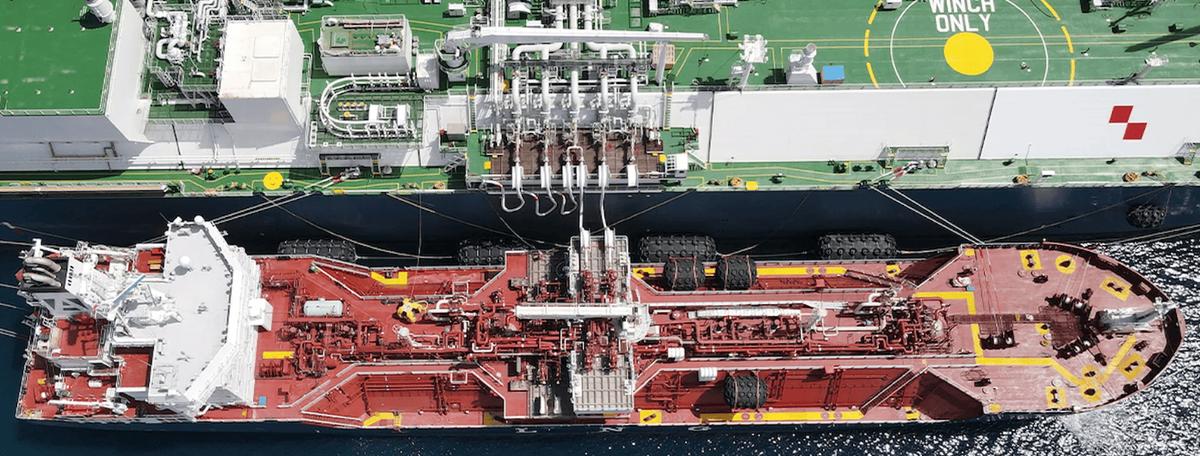 IMAGE: DNV
With only around 32 vessels on order for delivery by 2027, the report warns that bunkering capacity is struggling to keep pace with the rapid expansion of the LNG-fuelled fleet.
“LNG-fuelled shipping is growing faster than the bunkering network needed to support it,” said Martin Cartwright, global business director, gas carriers & FSRUs, DNV Maritime.
Market outlook
The global LNG bunker vessel fleet currently stands at approximately 70 vessels, with more than 30 additional vessels contracted for delivery between 2026 and 2029, according to DNV’s Alternative Fuels Insight (AFI) platform.
Depending on demand assumptions, the fleet will need to grow to 165-208 vessels by 2030. DNV attributes this range to differing assumptions around utilization rates, vessel size and network configuration.
Fleet requirements are highly sensitive to the configuration of the bunkering network. Factors including average vessel size, utilization rates, transfer frequency, and the availability of shore-based storage and terminal infrastructure can significantly influence future capacity requirements.
Newbuilding activity is increasingly focused on vessels in the 18,000-20,000 cbm range, reflecting demand from deep-sea consumers and hub-and-spoke distribution models. Smaller barges of under 5,000 cbm continue to serve port-centric trades.
Europe accounts for 33% of the fleet by vessel count, while Asia accounts for 30%, making the two regions the dominant operating markets. Singapore, China, South Korea and Japan are driving growth in Asia.
In Singapore, LNG sales increased by 7% in July to 59,000 mt. Total LNG sales during the first seven months of the year reached nearly 377,000 mt, up from 286,000 mt during the same period a year earlier.
Unlike Singapore, several European ports, including Rotterdam and Marseille Fos, do not publish dedicated LNG bunkering figures.
On the demand side, LNG consumption by LNG-fuelled ships increased by more than 500% between 2020 and 2024, while DNV forecasts a further 167% increase between 2025 and 2030, based on data from S&P Global and Clarksons.
Demand drivers
The LNG-capable fleet, excluding LNG carriers, now numbers around 900 vessels and continues to expand rapidly.
DNV data shows that 200 LNG-capable vessels were delivered in 2025, while another 190 were added to the order book. A further 650 vessels are expected to be added before 2030, with containerships accounting for the largest share of growth.
Ship-to-ship bunkering is becoming a core operating model as the LNG-fuelled fleet expands, particularly for large-volume transfers during constrained port windows.
DNV also identifies the conversion of small-scale LNG carriers into dedicated bunker vessels as a potentially faster way to add bunkering capacity than relying solely on newbuilding programmes.
Challenges and prospects
DNV cautions that increasing the number of bunker vessels alone will not be enough to close the capacity gap. Ports will also need to invest in storage, dedicated berths and transfer systems to prevent the bottleneck from shifting from vessels to shoreside infrastructure.
Geopolitical disruption, particularly disruption to LNG flows through the Strait of Hormuz, could add further pressure to regional LNG supply.
Competition from other alternative fuels is also emerging. Methanol already has an established parallel supply chain, while ammonia has appeared in the bunker vessel order book for the first time, alongside new IMO interim safety guidance issued in 2026.
Taken together, the figures point to a market in transition from early-stage deployment to a structurally undersupplied logistics segment. Closing the projected 2030 capacity gap will depend not only on shipyard output but also on how quickly ports and terminals can develop the supporting infrastructure required to handle growing LNG bunkering demand.
“Shipping’s fuel transition depends on more than ships and fuel choices. It also depends on the infrastructure, supply chains, and operational capabilities needed to make alternative fuels available safely and at scale,” said Cristina Saenz de Santa Maria, chief executive of DNV Maritime.
By Tuhin Roy
Please get in touch with comments or additional info to news@engine.online


