MEPC 84: NZF needs support from major economies to drive green fuel shift – MMMCZCS
Shipowners could become more hesitant on green fuel investments if an IMO Net-Zero Framework is adopted without the backing of major economies, says Daniel Barcarolo.
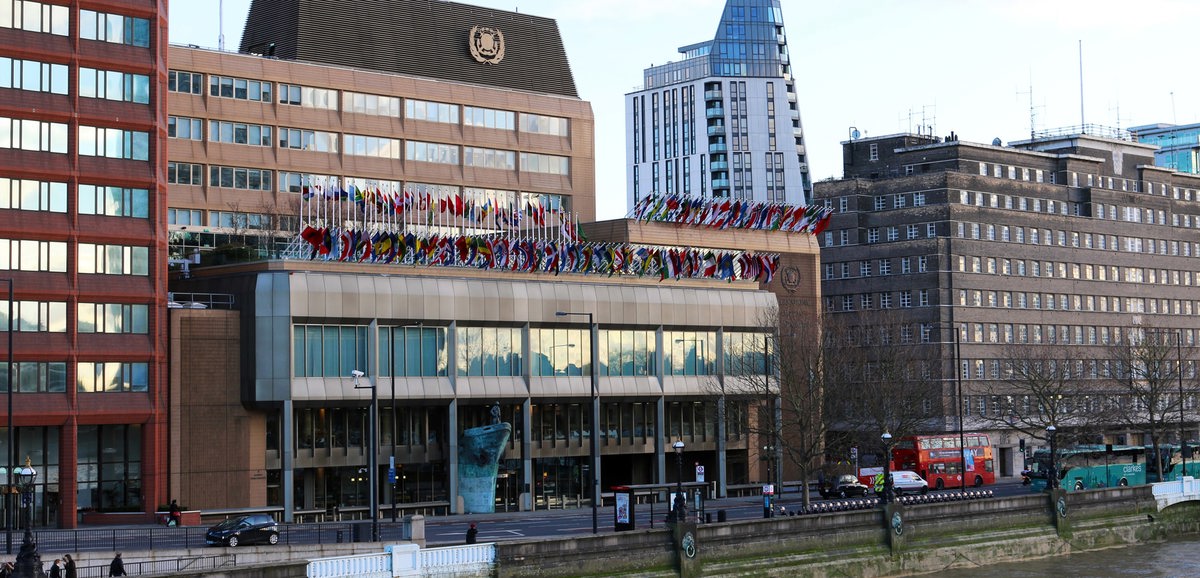 IMAGE: The International Maritime Organization's headquarters in London. IMO
Barcarolo is the head of regulatory affairs at the Mærsk Mc-Kinney Møller Center for Zero Carbon Shipping and will attend IMO meetings over the next two weeks. He spoke to ENGINE’s Konica Bhatt about the uncertainty around the Net-Zero Framework (NZF).
The IMO's Intersessional Working Group on Reduction of GHG Emissions from Ships (ISWG-GHG 21) is meeting in London this week to discuss member state submissions on the framework’s fate ahead of MEPC 84 next week.
The US and several petrostates have strongly opposed any economic element in the framework. Even if a version of the NZF is approved without US backing, that opposition carries commercial weight, Barcarolo said.
"While there is strong interest in alternative fuels, uncertainty around the final shape, timing and stringency of global regulation makes it harder to take final investment decisions, especially for assets with lifetimes of 20 to 30 years," he told ENGINE.
A "fragmented or politicised" NZF will only exacerbate that uncertainty, he warns. He thinks the industry needs a framework that is not only technically feasible, but also supported by major global economies so it can be implemented without fear.
What is the greater risk to shipping's green fuel transition at this stage – delayed adoption of the IMO’s Net-Zero Framework or a watered-down framework?
Both would be problematic for the decarbonisation mission. There is a lot happening in the world right now, but it is precisely in times of geopolitical tension, energy crises and price volatility that we need to keep the focus on the long‑term transition. Recent developments — from conflicts in energy‑producing regions to renewed market volatility — only reinforce the case for moving towards more resilient energy systems based on renewables and sustainable fuels.
We need to leverage the overwhelming support seen across the industry for global regulation, and the shared vision embedded in the IMO’s GHG Strategy adopted in 2023 and secure agreement for an ambitious, global regulation.
We remain optimistic. Not only because optimism is part of our DNA, but because there is clear alignment beneath the surface. Countries may be motivated by different priorities: some driven primarily by climate ambition, others by opportunities linked to energy security, industrial development and next‑generation fuels — from LNG and biofuels to nuclear and e‑fuels.
What the industry needs most right now is not perfection, but a clear and robust framework that creates confidence that investments made today will still make sense tomorrow.
Have you seen shipowners delay or reconsider alternative fuel investments due to uncertainty around IMO regulations?
Yes, we do see cases where regulatory uncertainty leads shipowners to delay or rethink investment decisions — particularly when it comes to fuel choice and long‑term fuel supply contracts.
That is a consistent message we hear from across the value chain. While there is strong interest in alternative fuels, uncertainty around the final shape, timing and stringency of global regulation makes it harder to take final investment decisions, especially for assets with lifetimes of 20-30 years.
What our recent analysis and industry engagement show very clearly is that regulatory clarity matters. Where strong policy signals exist — for example through regional regulation or clear global frameworks — investment follows. Conversely, when the global signal is blurred, projects slow down, even if the underlying technologies are ready.
The US has opposed any economic element in the Net-Zero Framework. Even if a version is approved without US backing, could the US influence companies to hold back investments in low- and zero-emission fuel technologies?
That risk cannot be ignored. Geopolitical considerations and the threat of retaliatory measures always create uncertainty, particularly when they spill over into multilateral technical negotiations.
Even if the IMO ultimately approves a Net-Zero Framework without US backing, strong opposition from a major economy can influence commercial decision making, especially for globally exposed companies that operate across multiple jurisdictions.
That is precisely why it is so important to keep the focus at the IMO on delivering a technically sound, robust and globally applicable framework.
A fragmented or politicised outcome would increase uncertainty for investors. A clear ambitious framework supported by a broad coalition of states, remains the best way to limit those risks and give companies confidence to move ahead with investments.
In a submission to the IMO, Japan proposes trimming GFI reduction targets from 2030 toward 2035. What could these lower targets mean for the business case for green fuels in the near term?
It is too soon to judge how targets in the proposal from Japan will impact uptake of alternative fuel. These are proposals not final submissions.
What is important is that Japan and other Member States are engaging in the IMO process and presenting proposals that maintain high ambition. The details of specific targets and ideas and how they might affect investment need to be considered by the Member States in IMO discussions.
Japan also proposes mandatory remedial unit purchases through an IMO fund, while retaining surplus units. Will that be enough to generate sufficient funding for the transition?
This is not quite capturing their proposal, which attempts to maintain the core elements of the IMO NZF without the NZ Fund. However, again, it is too early to comment on the effectiveness. What Japan seems to be doing is providing options for how the Member States can move forward. As with any proposal, some of these ideas may prove useful, while other elements may not be considered.
How critical is the IMO net-zero fund to the green fuel transition and what is at stake if it gets significantly weakened at MEPC 84?
The IMO Net- Zero Fund aims to do two things: 1) provide rewards to support the lowest-emission fuels, and 2) leave no one behind through just and equitable transition funding for developing countries with support for a variety of measures.
On the first goal, we find that it may be hard to fully close the cost gap between the most advanced alternatives and fuel oil with the fuel standard alone. For those fuels, some additional support will likely be required. This could come in a range of forms including a ZNZ [zero- and net-zero] reward, national subsidies and voluntary support.
It will likely take multiple forms of support which is a potential outcome as more countries turn towards alternatives for energy security purposes. The net-zero fund is one mechanism, but there are others.
On the second goal – just and equitable transition funding, eliminating a fund will eliminate an important source of revenue for this purpose and would require significant effort and creativity to find an alternative.
By Konica Bhatt
Please get in touch with comments or additional info to news@engine.online