Middle East war: Houthis strike Aramco facility
Tensions in the Middle East have remained elevated on the back of a fresh escalation between Riyadh and Yemen’s Iran-aligned militant group Houthi.
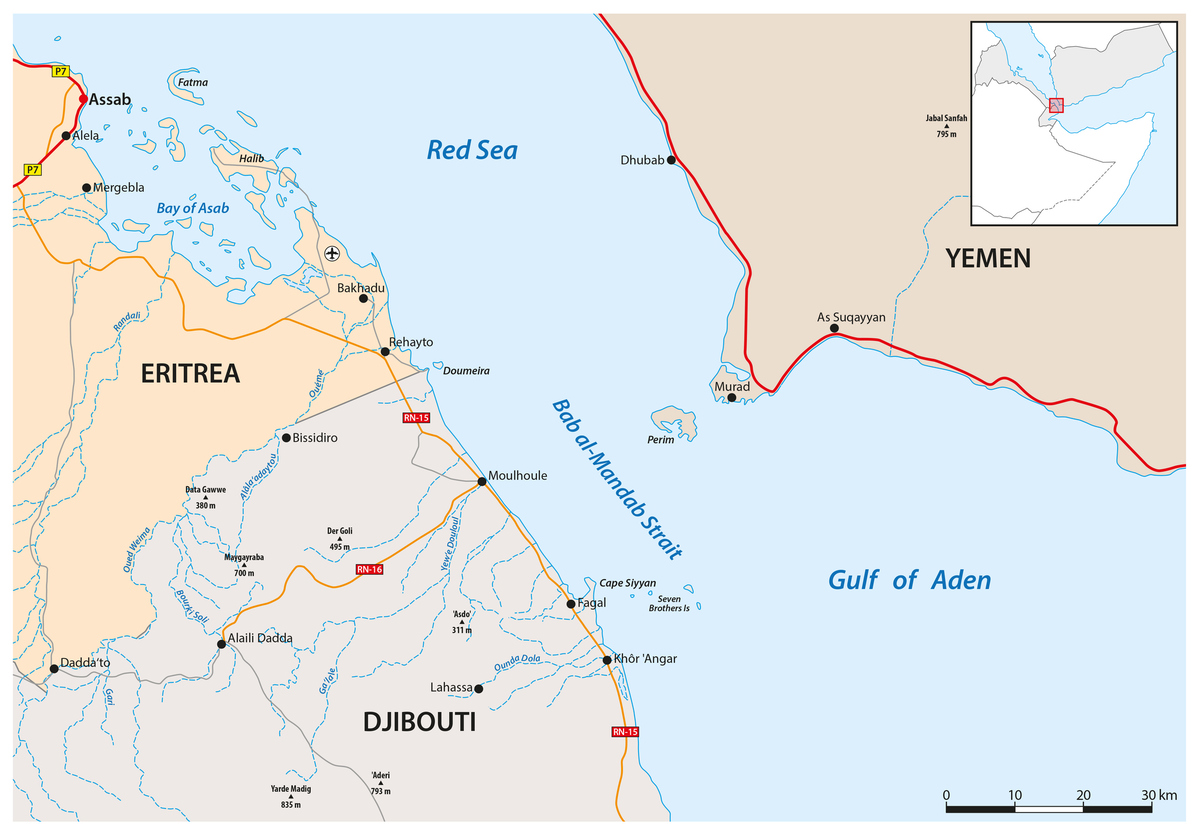 IMAGE: Getty Images
The Houthi faction has reportedly struck critical infrastructure in Saudi Arabia’s capital city Riyadh, as well as state-owned oil company Aramco’s facility, putting the OPEC leader’s recent crude shipment gains at risk once again.
Yesterday, the Houthis carried out three different strikes using ballistic missiles and drones, the group’s spokesperson Yahya Sare’e said on social media platform Telegram.
One attack targeted the Aramco refinery in Rabigh, causing a fire at the facility, Sare’e said.
The other attacks targeted the King Khalid International Airport (Riyadh’s primary airport used by civilians), the Abha Airport, the Khamis Mushayat Air Base, the Aqifa camp in Asir, and other critical sites in Najran and Jizan.
“The Armed Forces warn all international airlines using Saudi airspace to cease their flights, as it has become an operations zone for our forces,” Sare’e warned.
There is also news that the East-West pipeline was targeted yesterday. The OPEC producer had only resumed crude oil loadings at its Red Sea port of Yanbu days prior, following the September attack that crippled multiple pumping sites on the pipeline.
“Though the latest attack doesn’t appear to have disrupted flows through the pipeline, it’s a reminder that flows remain at risk,” two analysts from ING Bank noted.
Yemen’s civil war explodes
The latest Houthi strikes come shortly after the launch of a military offensive by Yemen's internationally recognised government to reclaim all Houthi-held territories, Al Jazeera reported, marking a sharp escalation in the civil war.
The Houthis have controlled Yemen’s capital city Sanaa, and much of the country’s western coastline along the critical Bab al-Mandeb Strait, for over a decade.
Similar to the Strait of Hormuz, the Bab al-Mandeb Strait is a vital maritime corridor connecting the Red Sea and the Suez Canal to the Gulf of Aden – serving the shortest commercial shipping route between Europe and Asia.
The development risks disruption in the Red Sea transit lanes, which have already faced severe constraints from Houthi blockades targeting Saudi-linked vessels in the region.
On Sunday, a crude oil tanker within the Bab al-Mandeb Strait, about 60 nautical miles south of Al Mukha, Yemen, reported multiple explosions in close proximity, market intelligence provider Windward reported.
“The attack was most likely Houthi, in line with the group’s blockade of Saudi-linked shipping,” Windward said.
Vessel crossings through the strait reached 23 inbound and 19 outbound on 4 October, marginally up from 18 inbound and 13 outbound crossings recorded on Saturday, according to Winward.
Further disruptions could extend delivery timelines for Saudi crude oil, as vessels increasingly bypass the region, forced to opt for a much longer voyage through the Suez Canal, west into the Mediterranean, and around Africa's Cape of Good Hope.
Riyadh and allies form coalition
Saudi Arabia is exploring a strategic defence partnership with Washington, in a bid to “strengthen regional security and stability,” the country’s defence minister Khalid bin Salman said on social media platform X.
Separately, Saudi Arabia, Turkey and Pakistan have agreed to implement collective defence commitments through the Mecca Defence Alliance to deploy military forces in the region.
The countries will “activate collective deterrence measures within the framework of the [Mecca] Alliance in response to the attacks and all those responsible for them,” bin Salman said, referring to the recent Houthi attacks.
By Aparupa Mazumder
Please get in touch with comments or additional info to news@engine.online