Oil unbothered by Russia-Ukraine energy ceasefire
Brent crude has shown little reaction after US President Donald Trump announced an energy ceasefire between Russia and Ukraine, whose conflict has dragged on for more than four years.
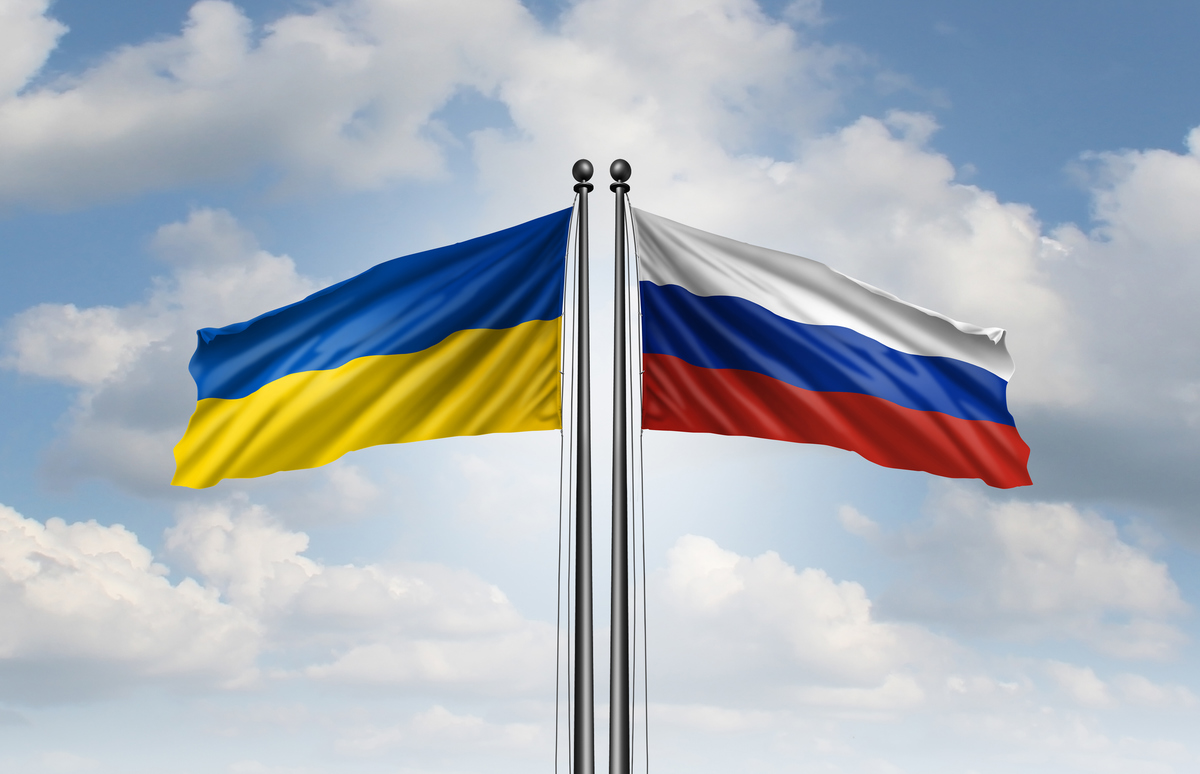 IMAGE: Flags of Russia and Ukraine. Getty Images
Moscow and Kyiv have agreed to stop attacking each other’s energy infrastructure, Trump said on social media platform Truth Social.
“Effective immediately, there is an ENERGY CEASEFIRE in the War between Russia and Ukraine,” the US President wrote on Sunday.
However, oil prices have continued to trade comfortably above $100/bbl since the announcement, signalling widespread market scepticism about the durability of the ceasefire deal.
The global oil market “doesn’t seem to be buying the Russia-Ukraine energy ceasefire,” two analysts from ING Bank said.
Ukrainian President Volodymyr Zelensky has subsequently accused Russia of violating the agreement, claiming that Russia has launched more than 120 drones against Ukrainian energy sector in Kyiv and Kharkiv overnight.
"The targeted Russian ballistic missile strike was precisely on the energy sector, for which the American President had declared a ceasefire,” Zelensky wrote on social media platform Telegram.
Despite Washington's repeated declarations — first on 14 September and again on Sunday — that Kyiv and Moscow had agreed to an immediate ceasefire in the energy sector, the situation on the ground continues to defy the rhetoric.
Both sides have pressed forward with aggressive long-range strikes targeting critical power grids, processing plants and commercial vessels, underscoring market participants’ total disregard of any purported truce.
“We have supposedly had an energy ceasefire before, which did not result in a change. This ceasefire still needs to be confirmed by Ukraine and Russia, and if it is, then the question becomes how sustainable it is,” ING Bank’s analysts added.
The Russo-Ukrainian War began in February 2014 with the Russian annexation of Crimea and the outbreak of fighting in the Donbas region. The conflict escalated into a full-scale war on 24 February 2022, when Russia launched a nationwide invasion of Ukraine.
Over the course of the war, Ukraine has repeatedly targeted key export hubs in Russia, like Novorossiysk and Tuapse, as well as Ust-Luga and Primorsk on the Baltic Sea.
Trump signs diesel supply deal with Putin
Trump said last week on Truth Social that Moscow would supply over 300,000 mtof diesel to the US and global markets, with a further 500,000 mt to follow in November.
The announcement represents a stark policy paradox, coming on the heels of aggressive tariffs on allies and third-party nations purchasing Russian crude.
By sanctioning secondary buyers while simultaneously paving the way for direct imports of Russian middle distillates to ease domestic supply shortages, the US administration has fuelled significant market confusion over the enforcement of its secondary sanctions.
“Clearly, in the run-up to the midterm elections, pressure is growing on Trump to address high oil and diesel prices,” ING Bank’s analysts said.
By Aparupa Mazumder
Please get in touch with comments or additional info to news@engine.online