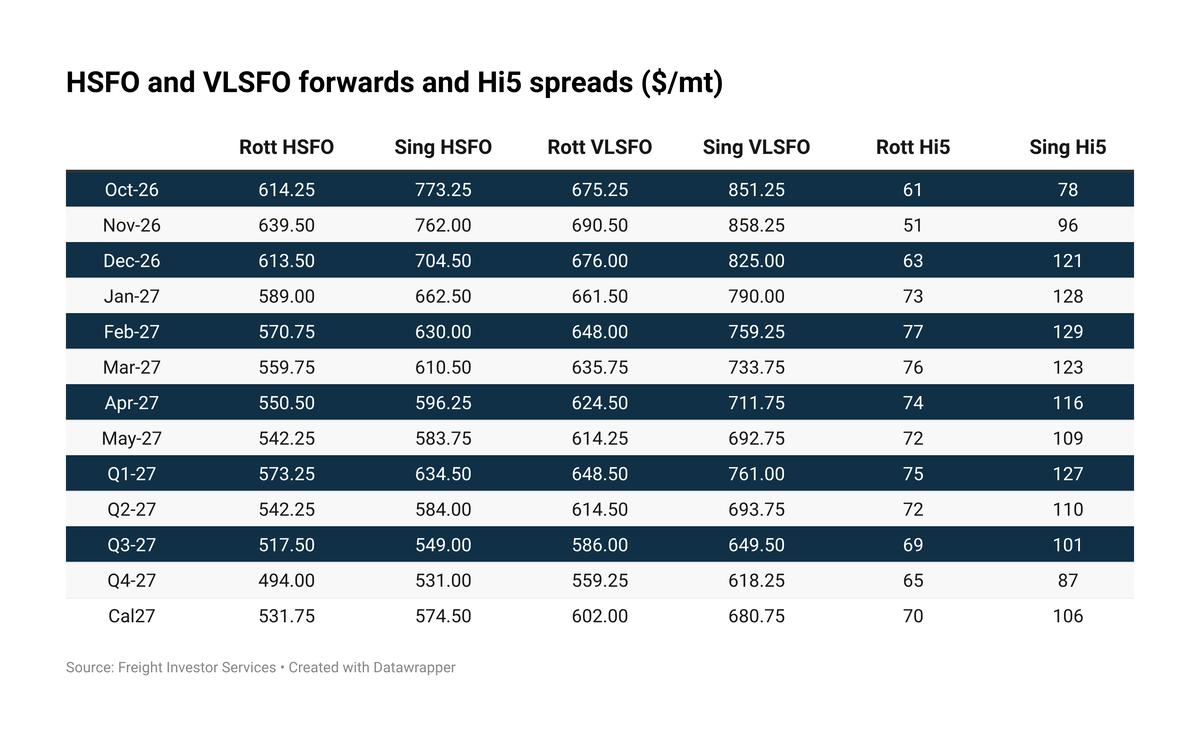
Shipping firms add emergency surcharges as bunker prices spike
Major container liners have decided to levy emergency fuel surcharges on new bookings, as fuel availability tightens and costs spike due to the Iran conflict.
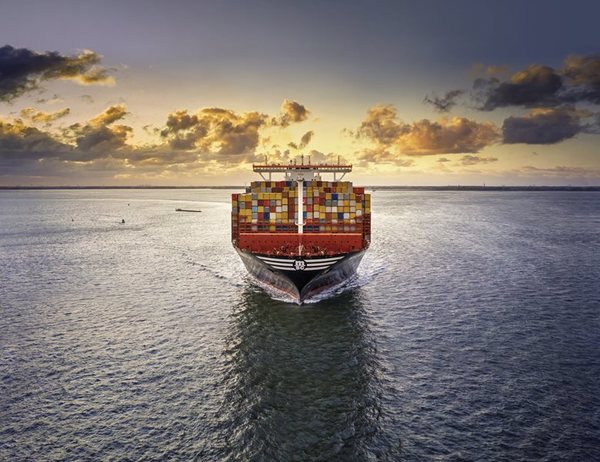 IMAGE: A container ship operated by Maersk in the Port of Hamburg. Getty Images
Traffic in the Strait of Hormuz, through which 20% of global fuel supplies move, has been almost paralyzed due to the conflict in the region.
This has affected global access to fuel and increased fuel procurement costs across global ports.
Danish Shipping giant A.P. Møller - Mærsk said they will implement a temporary “emergency bunker surcharge” (EBS) due to the current situation.
The surcharge will cover the impact of fuel availability, cost and mix, apart from what is already covered in the company’s Fossil Fuel Fee.
Upon getting required regulatory approval, the EBS will apply to all routes globally from 25 March 2026 and will be re-evaluated on a fortnightly basis, Maersk said.
The company said adding the surcharge will improve their capability to have access to the required fuel and the ability to move the fuel to where it is needed.
In addition to introducing the surcharge, Maersk said it has also carried out considerable redistribution of fuels to offset shortages in the Middle East. The company is securing alternative fuel sources from different locations and suppliers.
German container line Hapag Lloyd also announced an emergency fuel surcharge (EFS) that will apply to all shipments from 23 March 2026.
The EFS will apply from 8 April 2026 on sailings that are under the scope of the U.S. Federal Maritime Commission, the company added.
Other rivals including France’s CMA CGM, Japan’s Ocean Network Express and Switzerland-based Mediterranean Shipping Company (MSC) have also announced similar surcharges, effective from mid-to-late March.
This is not the first time container lines have added bunker surcharges. MSC had implemented fuel surcharges in 2022 to tackle fuel price volatility at the start of the Russia-Ukraine conflict.
By Nachiket Tekawade
Please get in touch with comments or additional info to news@engine.online