Shipping's green fuel transition faces execution hurdle - Safe Bulker CEO
Shipping's biggest obstacle to decarbonisation is not a lack of low- and zero-emission fuels and technologies, but the ability to deploy them at scale, according to Polys Hajioannou, chief executive of Monaco-based dry bulk operator Safe Bulkers.
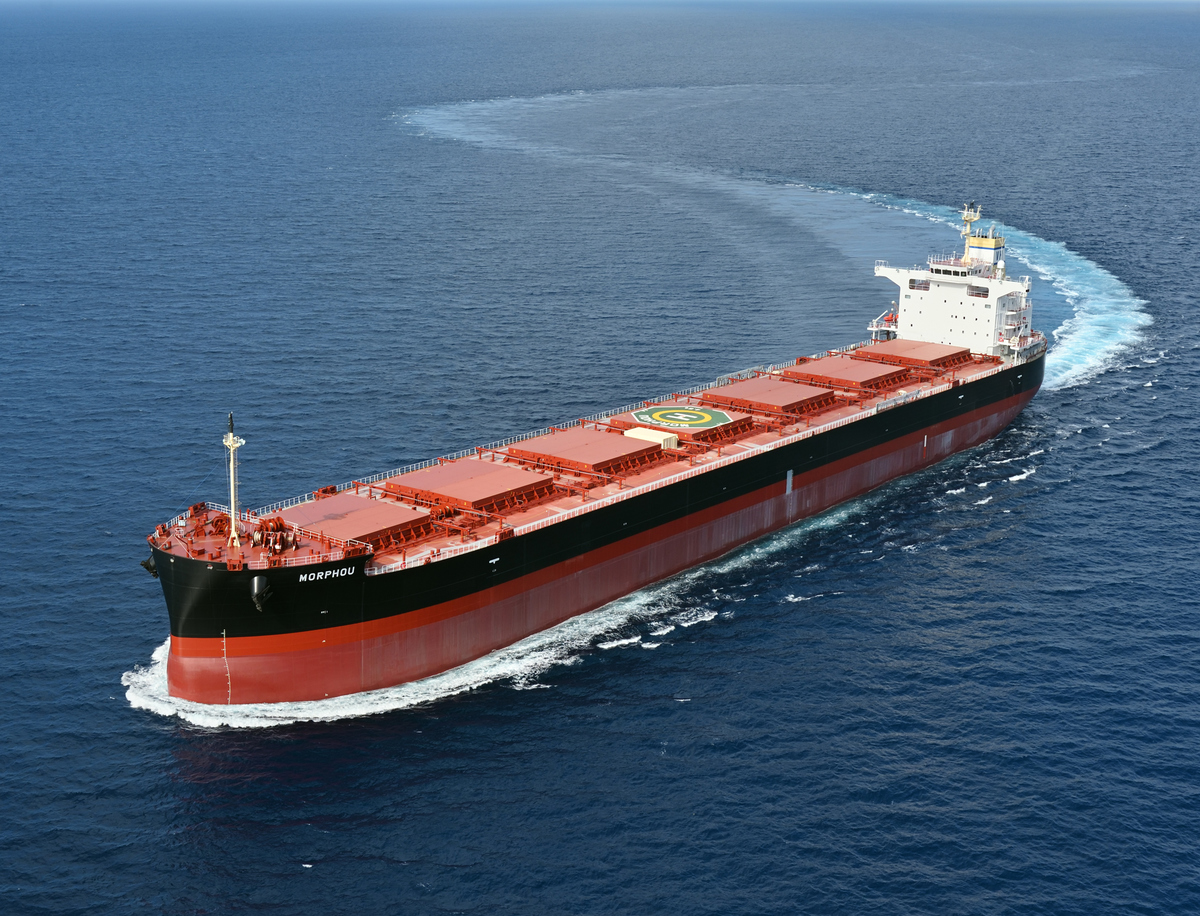 IMAGE: Bulk carrier Morphou. Safe Bulker
Global regulatory and economic uncertainty is delaying investment in low- and zero-emission fuels and technologies, Hajioannou wrote in the company's 2025 sustainability report.
The IMO's net-zero 2050 ambition offers a long-term direction of travel, but "limited economic incentives, uneven regulatory developments, and a lack of clarity regarding future fuel pathways" continue to cloud investment decisions and create uncertainty over how the transition will be implemented and financed.
As a result, adoption of low- and zero-emission fuels and technologies remains constrained by high costs, limited fuel availability and insufficient supporting infrastructure.
Safe Bulkers has ordered two methanol-capable vessels for delivery by 2027, but Hajioannou said greater regulatory clarity is needed to support wider deployment of low- and zero-emission fuels.
“The challenge is no longer one of innovation, but of execution—scaling solutions within a clear, stable, and globally coordinated regulatory framework,” he said.
Broader geopolitical unrest is compounding the challenge.
"Geopolitical tensions, ongoing conflicts and trade restrictions continue to disrupt trade flows, increase volatility and heighten cost pressures across our industry," Hajioannou said.
He added that these developments are making long-term planning more difficult and intensifying the "need for resilience and disciplined decision-making".
Hajioannou also highlighted the importance of upcoming discussions at the IMO's Marine Environment Protection Committee meeting (MEPC 85) in November.
However, he warned that significant questions remain unanswered, including how transition costs will be passed through supply chains and how funds generated through future regulatory mechanisms will be managed and distributed.
By Konica Bhatt
Please get in touch with comments or additional info to news@engine.online