The Week in Alt Fuels: I attended my first IMO meeting
A first-hand account of the IMO’s MEPC 84, where shipping’s future was negotiated in slow motion and breaks felt more dynamic than diplomatic discussions.
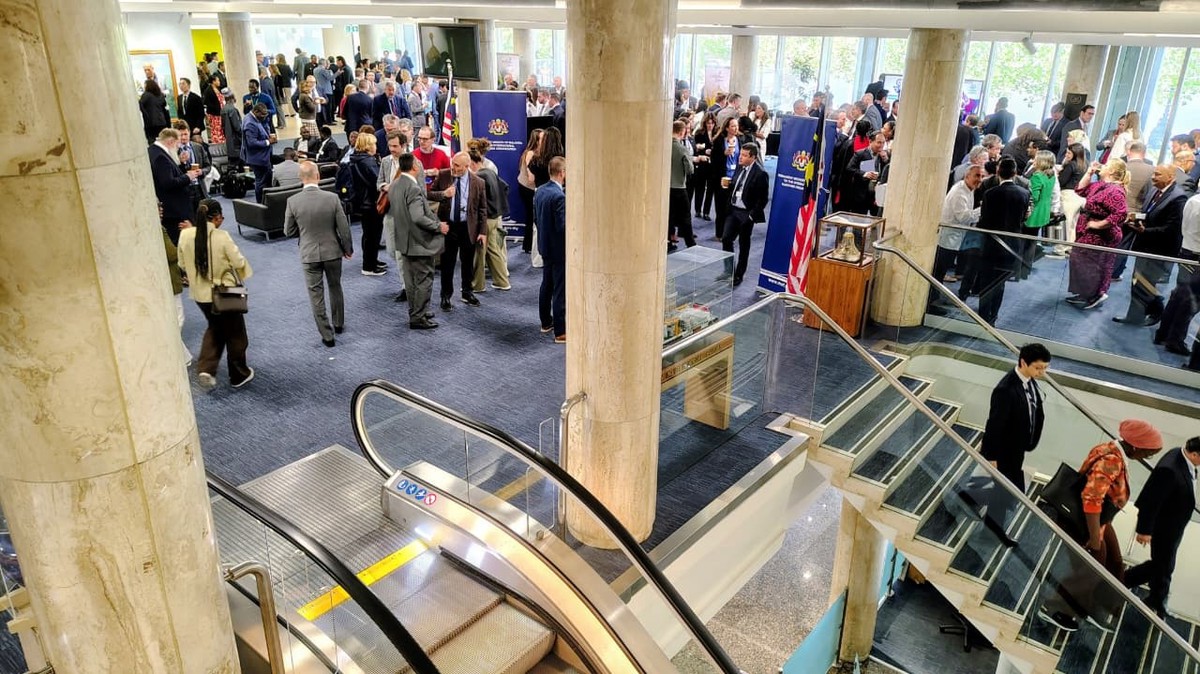 IMAGE: Delegates during one of the many coffee break discussions at IMO headquarters in London this week. Konica Bhatt
I visited the International Maritime Organization for the first time this week to attend the Marine Environment Protection Committee's 84th session (MEPC 84). Located on the south bank of the River Thames in London, this is where delegates spent four days discussing the future of shipping's global emission regulations.
It was a full house in the main hall, with almost every seat occupied. Nameplates of member states and maritime-focused organisations lined the room. Headsets, formal statements and thick stacks of papers set the scene for structured debates.
Discussions around the approved Net-Zero Framework (NZF) fell under “Agenda Item 7” in IMO terms, and ran across most days of the week.
And given the London setting, some might imagine these discussions through a James Bond lens — dramatic entrances, sharp exchanges or last-minute breakthroughs.
The reality was much slower, more procedural and far more technical than that.
The language in the room is diplomatic and measured, because every word carries political weight and potential future legal consequences. But behind the carefully chosen phrases sat real disagreements over costs, core elements of the approved net-zero draft and adoption procedures.
Some member states argued that the framework approved last year should be adopted without any major changes. Others called for further negotiations, softer technical targets or removing GHG pricing altogether.
Supporters of the current text warned that weakening it would adversely affect investment signals for low- and zero-emission fuels, and be catastrophic for shipping’s green fuel transition.
Critics argued that it would impose unfair cost burdens, particularly on developing economies and tramp vessel operators, and undermine realistic conventional fuel alternatives.
Ultimately after five days, no consensus was reached.
MEPC Chair Harry T. Conway urged member states to continue consultations and work towards a global agreement. MEPC 85 and the second extraordinary session are currently scheduled for November 2026, unless the IMO advises to change dates.
As a first-time visitor, my first takeaway was that multilateralism is not dramatic. But it should not be mistaken for irrelevance. At the risk of parroting the IMO Secretary-General, many shipowners and fuel producers want to invest in green fuel propulsion and fuels, and they have waited years for a clear global direction on the energy transition.
The answer has not yet arrived. But the room was full, and people were still talking.
My second takeaway was more practical. Arrive early, find a seat with working headphones, keep a charger nearby and be prepared for long discussions, longer lunch queues and the occasional moment when a single sentence matters more than an hour of speeches.
Summary of discussions at the IMO this week:
The fate of the approved NZF dominated discussions at the IMO. Supporters including the EU, Canada, Australia and Brazil pushed to adopt the framework largely as-is. The US, Saudi Arabia, Argentina, Liberia and a growing list of mostly developing nations called for substantial revisions — particularly the removal of GHG pricing.
The US Federal Maritime Commission claimed a "silent majority" opposes the current draft, and bilateral talks during the week appeared to broaden visible opposition beyond what earlier formal sessions had suggested.
A rival proposal from Argentina, Liberia and Panama gained traction as a potential alternative. It would strip out GHG pricing, soften fuel intensity reduction targets and replace the NZF's payment system with tradeable surplus units. Critics, including UCL and RMI researchers, warned the proposal would favour fossil fuels — particularly LNG — and leave the transition to green fuels underfunded and unstructured.
Beyond the net-zero debate, the IMO committee adopted a new Emission Control Area covering the North-East Atlantic, expected to cut NOx, SOx and particulate matter from ships in waters off Greenland, Iceland, Ireland, the UK and several EU coastal states. Russia also tabled a last-minute bid to restrict access to IMO fuel consumption data, drawing support from several petrostates but opposition from the EU and Brazil.
No final vote on the NZF or any draft amendments to the MARPOL Annex VI will take place until a second extraordinary MEPC session is convened.
By Konica Bhatt
Please get in touch with comments or additional info to news@engine.online