Americas Market Update 2 Apr
Bunker fuel prices have risen across all key ports in the Americas, and availability is tight for conventional fuels on the West Coast.
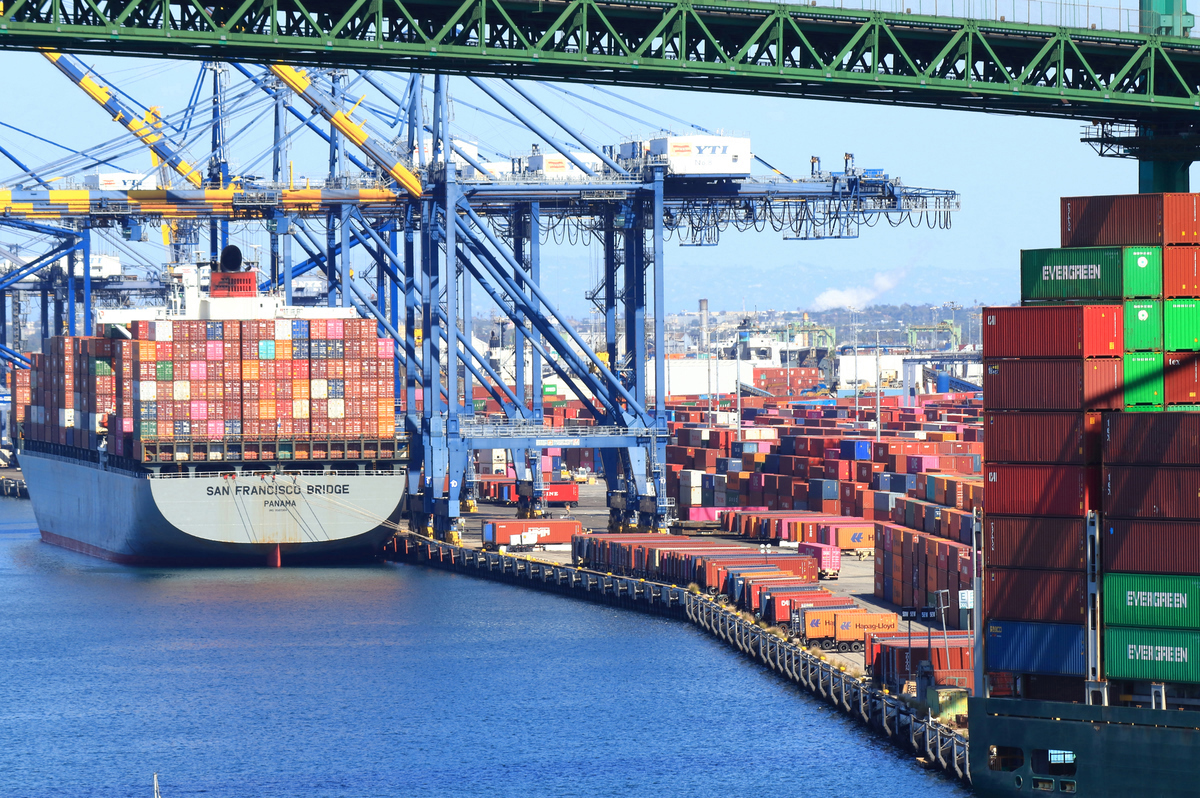 IMAGE: Cargo containers being offloaded in the Port of Los Angeles. Getty Images.
Changes on the day to 08.00 CDT (13.00 GMT) today:
- VLSFO prices up in Houston ($169/mt), Balboa ($103/mt) and Los Angeles ($80/mt)
- LSMGO prices up in Houston ($266/mt), Balboa ($218/mt) and Los Angeles ($82/mt)
- HSFO prices up in Los Angeles ($78/mt), Houston and Balboa ($18/mt)
Fuel prices in the Americas have tracked Brent’s upward movement over the past day and have increased across all three fuel grades.
The increase in the price of VLSFO at the port of Houston has the grade trading at a premium of $82/mt to New York and a discount of $226/mt to Los Angeles.
Across the US West Coast, bunker availability is tightening, with buyers advised to secure stems well in advance to avoid delays, a bunker trader tells ENGINE.
At the ports of Los Angeles and Long Beach, lead times have lengthened across all grades. HSFO and LSMGO typically require around 7–9 days, while VLSFO is more constrained and often requires 9–11 days.
At Balboa, the inverse price movements of HSFO and VLSFO has widened the Hi5 spread to $120/mt today, from $35/mt yesterday.
Recommended lead times for VLSFO and LSMGO in Balboa and Cristobal stand at around 6–7 days, while HSFO availability is relatively tighter, with most suppliers requiring longer lead times.
Brent
The front-month ICE Brent contract has gained $6.64/bbl on the day, to trade at $109.16/bbl at 08.00 CDT (13.00 GMT) today.
Upward pressure:
Brent’s price has once again rallied towards the $110/bbl mark, after US President Donald Trump signalled continued military operations against Iran, including possible strikes on energy facilities.
Although Trump said the conflict will soon come to an end, he did not offer any concrete timeline for a ceasefire agreement.
Oil market analysts see Trump’s remarks as a threat of further escalation – leading to more supply disruptions.
“The next couple of weeks will be critical. If exports from Persian Gulf producers remain constrained, they will be forced to cut production,” ANZ Bank’s senior commodity strategist Daniel Hynes said.
Meanwhile, Iran’s parliament approved a plan to collect tolls from shipowners for vessels transiting the Strait of Hormuz, Iranian state media reported, without disclosing the toll fees.
Tehran has “reiterated that the future of the key waterway will be decided by Iran and Oman,” Hynes said. “It’s unclear how quickly traffic in the Strait of Hormuz could resume if the US withdraws from the region,” he added.
Downward pressure:
Brent’s price gains were somewhat capped by a rise in US crude stocks.
Commercial US crude oil inventories increased by 5.5 million bbls in the week ending 27 March, according to data from the US Energy Information Administration’s (EIA).
“EIA figures showed crude stocks rose for a sixth consecutive week,” two analysts from ING Bank noted.
The EIA report comes a day after the American Petroleum Institute (API) reported a whopping 10.3 million bbls rise in crude stocks during the same time.
“Total crude inventories [reported by the EIA] climbed to 461.6m barrels [461.6 million bbls], the highest since June 2023 and close to the five‑year average,” ING Bank’s analysts said.
A build in US crude stocks typically indicates lower demand for oil and can put some downward pressure on Brent's price.
By Gautamee Hazarika and Aparupa Mazumder
Please get in touch with comments or additional info to news@engine.online