Annual reports reveal shipping companies' biofuel consumption
Several shipping companies reported using biofuels across their fleets in 2025, with B100 emerging as the most commonly disclosed grade alongside blends such as B6, B24 and B30.
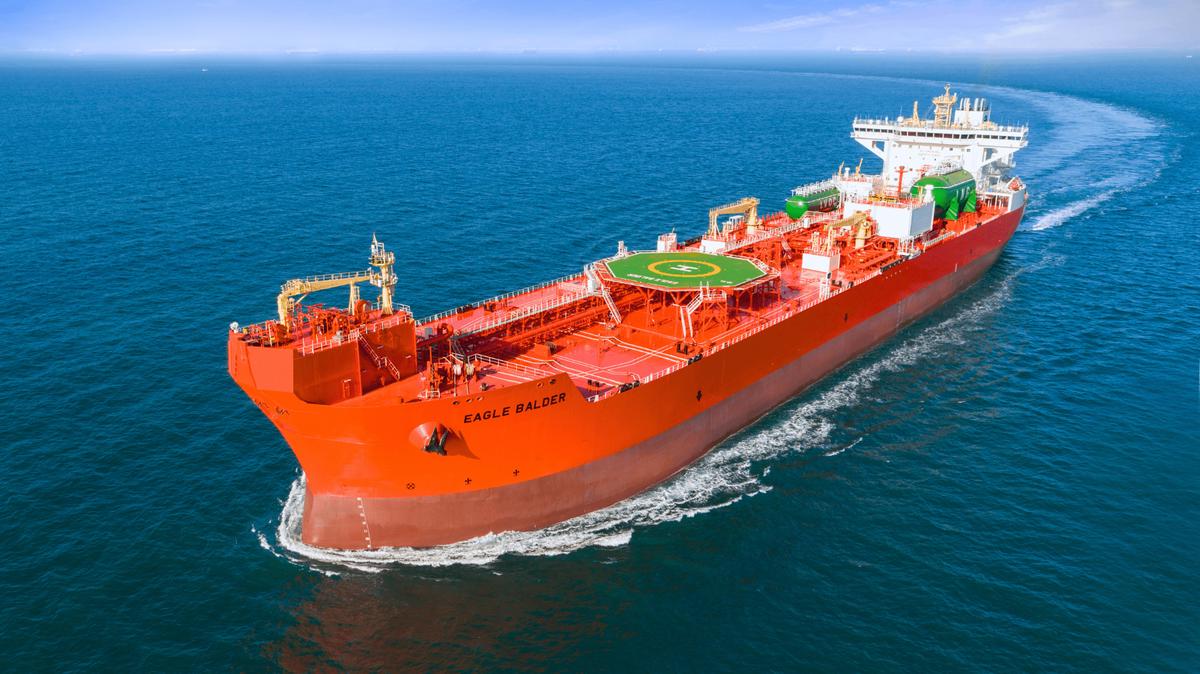 IMAGE: The crude oil tanker Eagle Balder. AET Tanker
Bermuda-based tanker owner Teekay Tankers used biofuels on selected voyages to comply with FuelEU Maritime last year. The company consumed more than 6,000 mt of biofuels in 2025, which included 100% biofuel (B100) and 30% biofuel (B30) blended with conventional fuels.
Another tanker operator, AET, used a combined 3,200 mt of B24 and B30 biofuel blends across its fleet during the year.
Canadian dry bulk operator Canada Steamship Lines (CSL) also attributed its use of biofuels in 2025 to FuelEU. It bunkered three of its vessels operating in Europe with around 1,500 mt of 6% biofuel (B6) and 1,300 mt of B30 to meet FuelEU requirements.
It also bunkered around 16,000 mt of B100 across 10 vessels operating on the Great Lakes between May and October 2025.
Singapore-headquartered Eastern Pacific Shipping (EPS) bunkered around 18,000 mt of biofuel in 2025, with 94% of its biofuel purchases being B100.
MSC Cruises consumed approximately 3,000 mt of biofuels on two cruise ships. The cruise operator bunkered 1,700 mt of 100% hydrotreated vegetable oil (HVO100) on the MSC Opera during a four-month trial, 570 mt of HVO100 on the MSC Seaview and 680 mt of 24% biofuel blended with 76% VLSFO (B24-VLSFO).
Liquefied biomethane (LBM) also featured in operators' fuel mix reported in 2025.
EPS consumed around 8,000 mt of LBM in 2025 as part of a broader alternative fuel mix.
MSC Cruises bunkered around 6,800 mt of mass-balanced LBM on the LNG dual-fuel cruise ship MSC World Europa. The biomethane was produced from waste-based feedstocks including whey permeate, food waste, sewage sludge, organic municipal waste and manure before being injected into the European natural gas grid and supplied for bunkering through a mass-balancing system.
AET completed its first LBM trial on one of its LNG dual-fuel vessels in February of this year.
By Konica Bhatt
Please get in touch with comments or additional info to news@engine.online