Biofuel blending can take fuel below MFM validated range – GCMD
Blending FAME-based biofuel with residual marine fuel grades like VLSFO and HSFO can push their viscosity outside the validated operating range of mass flow meters (MFMs), the Global Centre for Maritime Decarbonisation (GCMD) said in a study.
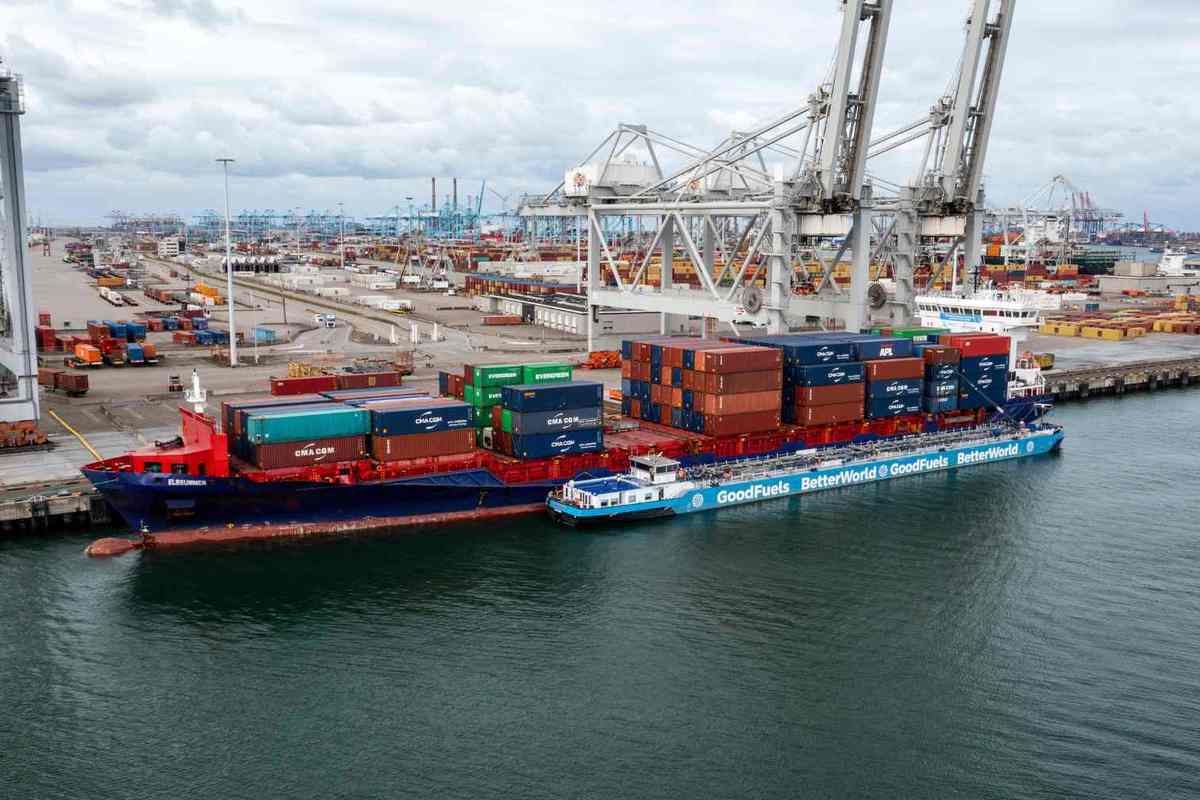
IMAGE: A biofuel bunkering operation. FincoEnergies
The study focuses on challenges faced by shipowners in securing the right quantity of bio-blended bunker supplies and the renewable fraction that they pay for.
The report says that MFMs have validated operating ranges within which they can provide reliable measurements. Barges are configured to these ranges based on the marine fuel grade that they handle.
A barge that mostly supplies residual grades like VLSFO and HSFO will typically be validated for a higher viscosity range, while barges handling distillates such as LSMGO are validated for a lower one.
While pure biofuel grades like B100 can be bunkered using distillate-fuel barges, biofuel blends with residual grades like VLSFO are bunkered using residual fuel barges.
Because the biofuel components have lower viscosity than residual fuel, it can drag down the blend’s final viscosity beyond the validated range of the MFMs used by the barges, the study says.
MFMs can achieve a measurement uncertainty of +/- 0.5% within their validated range, but that accuracy is no longer assured outside it, GCMD says.
GCMD recommends measuring the blend's viscosity at transfer conditions before delivery, with transfer temperature management, higher-viscosity blend components or MFMs validated over a broader range among the controls available if needed.
The report further notes that the renewable fraction is also important, as it determines the green premium that buyers pay and underpins greenhouse gas accounting and regulatory compliance.
GCMD says that blend ratios like B24 or B30 are declared by suppliers, not independently verified, and notes that land-based investigations have found biodiesel blends containing far less renewable content than declared, sometimes mostly fossil fuel.
FAME blends can be checked by standard lab analysis, while HVO blends need radiocarbon dating, though GCMD says both results carry a margin of error that has to be allowed for.
Pure FAME may contain up to 3.5% non-ester material, so the measurable FAME content of a finished blend may not exactly match its declared blend ratio, the report says.
Laboratory tests also have a margin of error, so a result below the declared ratio does not on its own prove incorrect blending, the report says.
One measure that GCMD recommends in the report is that renewable fractions should be explicitly declared in supply documents including information on whether the fraction is by mass or by volume and the fuel specification.
By Nachiket Tekawade
Please get in touch with comments or additional info to news@engine.online