Costly bunker fuel puts brakes on boxship speeds
Average speeds across the global container vessel fleet fell by 2.3% between the fourth quarter of 2025 and mid-April, as higher bunker prices linked to the Iran conflict have prompted shipping companies to slow vessels to cut fuel costs, container shipping research firm Alphaliner said.
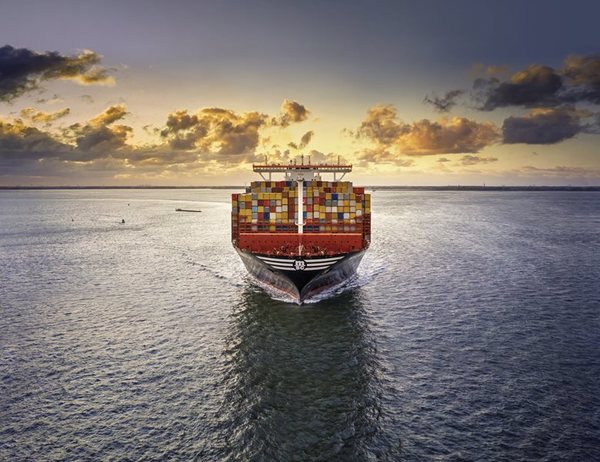 IMAGE: A container ship operated by Maersk in the Port of Hamburg. Getty Images
Higher bunker prices often lead operators to adopt slow steaming, which is reducing vessel speeds to cut fuel consumption and operating costs.
Average vessel speeds of the container fleet dropped from 15.58 knots to 15.22 knots in the mentioned period, according to the report. The average speed dropped to 15.18 knots on 14 April, which was the lowest since March 2023.
Most of this deceleration took place after 28 February, when the conflict broke out in the Middle East, paralyzing oil and gas flows through the Strait of Hormuz and sending fuel prices surging globally.
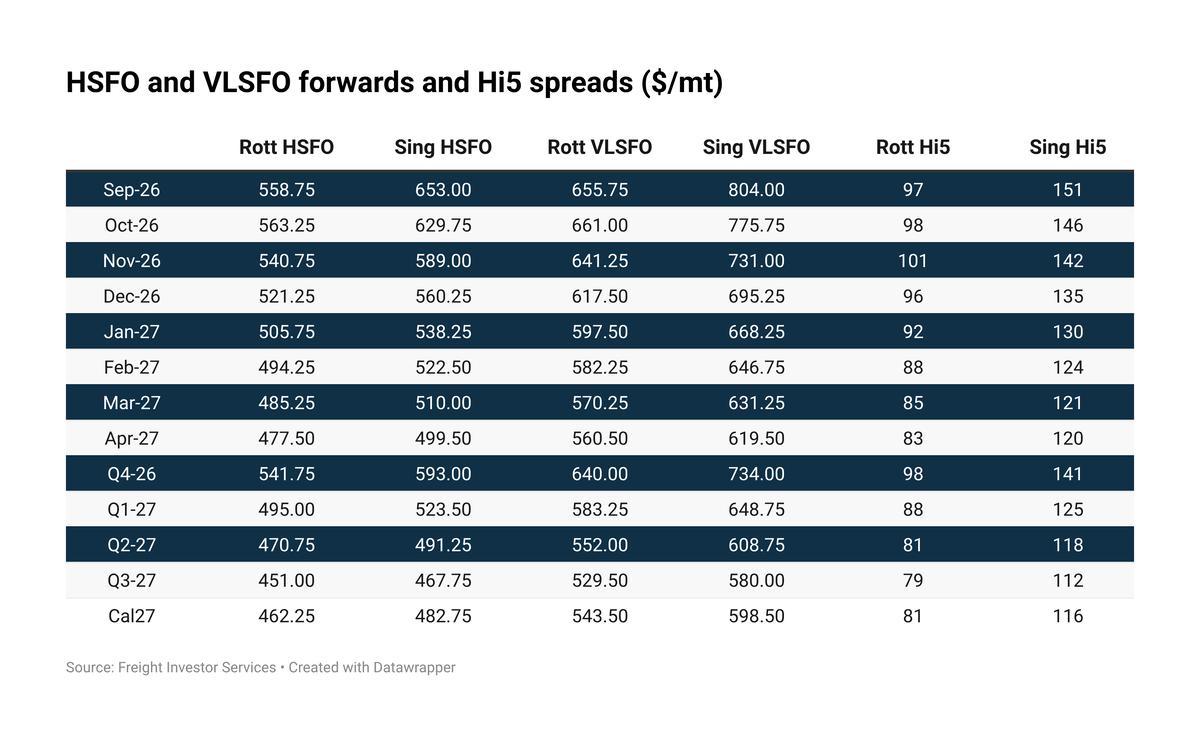
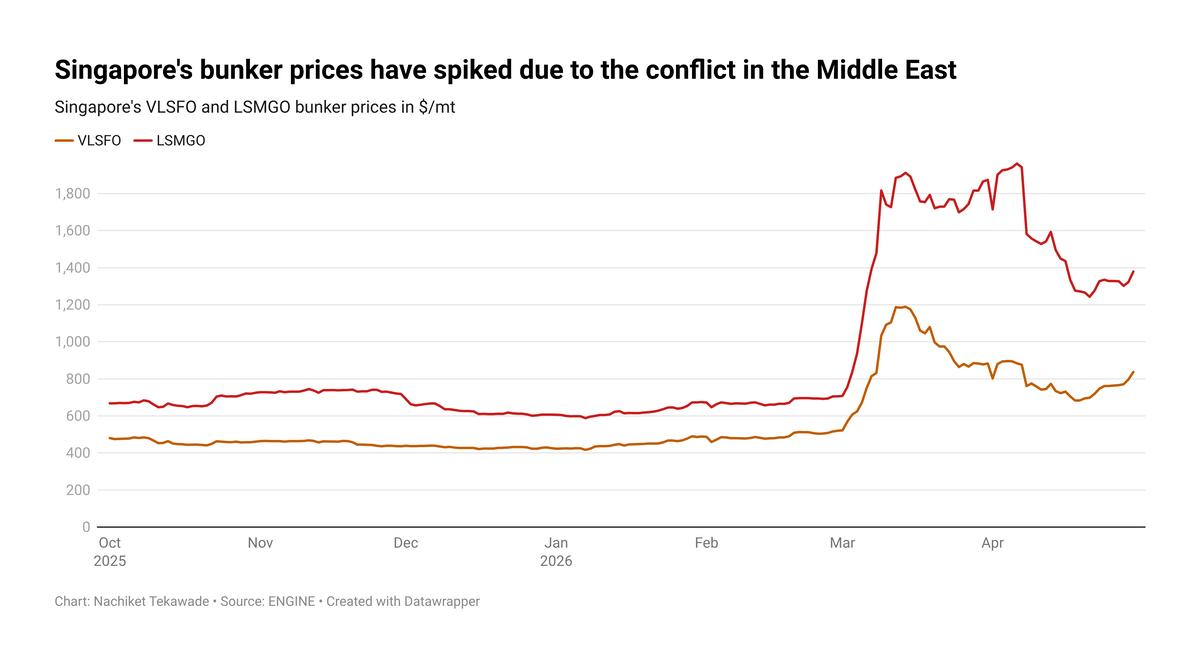
In Singapore, the world’s biggest bunkering hub, VLSFO and LSMGO prices have almost doubled between October 2025 and April 2026, according to ENGINE’s price observations. Much of this surge took place after the conflict broke out on 28 February.
Deceleration not consistent across routes
Alphaliner’s observations show that the impact of the increasing bunker costs on container ship speeds has not been the same on all routes.
North-South trades have been hit the most. Far East-South America and Far East-ANZ routes saw a speed reduction of around 3.6%, compared to 2.3% globally.
This could be because speed cuts are more valuable on long sea-passages as these routes have more buffer times in their schedule that can allow the vessels to afford slow-steaming without breaking schedule frequency, Alphaliner said.
The routes from Far-East to the East Coast of North America and from Far-East to West Coast of North America also saw average speeds reduce by 2.2% and 1.8% respectively. The North-Atlantic average speed dropped by around 1.5%, Alphaliner data shows.
Far East to Europe route an exception
In the same period, the average speed on the Far-East to Europe route increased by 1.3%.
This reflects the continued rerouting of vessels around the Cape of Good Hope, to avoid threats to vessels from the Houthis in the Red Sea. Carries are steaming harder on these routes to maintain vessel schedules, the report said.
But average speeds on this route have also dropped by around 0.7% since 1 March to date, Alphaliner said. This is still a much slower reduction compared to other routes.
Major container-shipping companies like Maersk, CMA CGM and MSC have added emergency fuel surcharges on new bookings to deal with rising prices and longer routes.
Alphaliner said that if the Strait of Hormuz reopens for a prolonged period and bunker prices ease further, similar observations from 2022 suggest vessel speeds will recover more slowly than they fell.
By Nachiket Tekawade
Please get in touch with comments or additional info to news@engine.online