East of Suez Fuel Availability Outlook 19 May
HSFO and LSMGO availability tight in Port Klang
Bunker supply tight in several Japanese ports
Availability tight across all grades in Fujairah
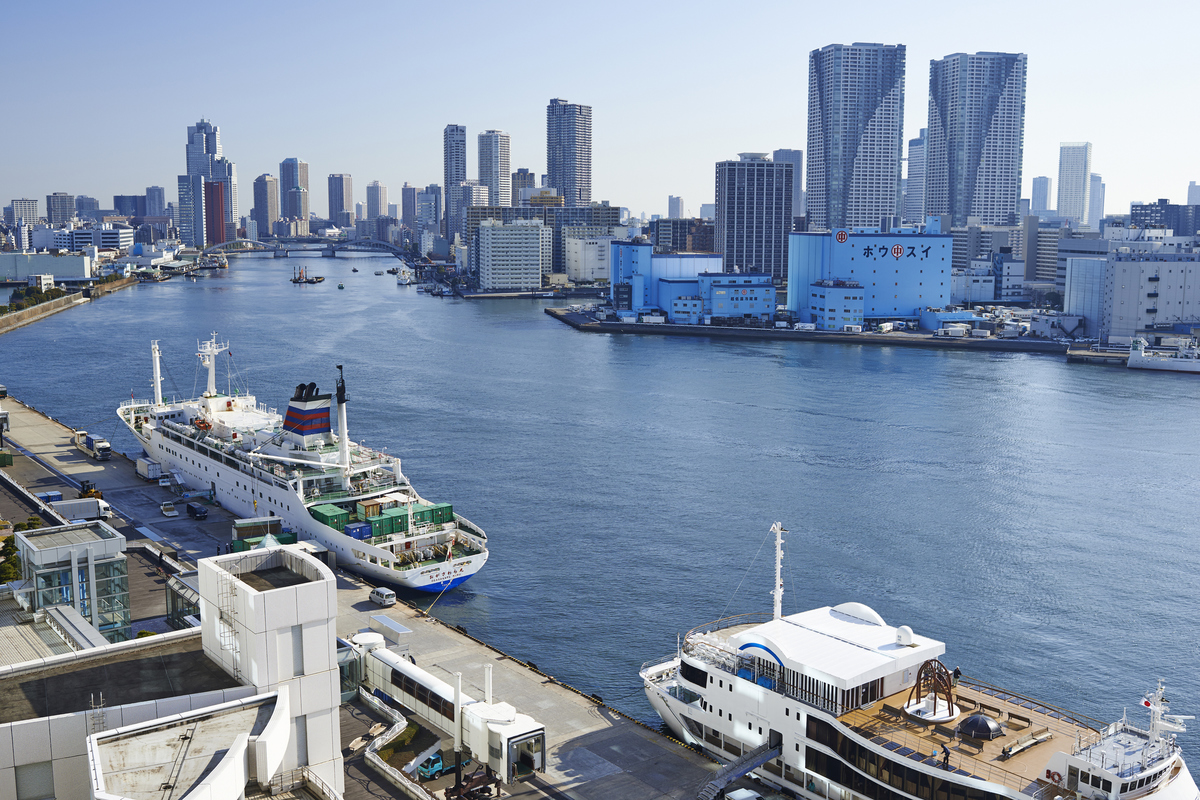 IMAGE: Aerial daytime view of Tokyo port, Japan. Getty Images
Singapore and Malaysia
VLSFO availability in Singapore remains tight, although delivery lead times have eased slightly to 10-14 days, from 12-14 days last week. Lead times for LSMGO now stand at 5-10 days, compared to 8-9 days previously. In contrast, HSFO availability has improved, with lead times narrowing to 5-10 days, from 9-14 days last week.
Singapore’s residual fuel oil stocks have averaged 9% lower so far in May compared to April, according to the latest data from Enterprise Singapore.
Fuel oil inventories have remained below 20 million bbls this month amid an 18% drop in the port’s net fuel oil imports. Exports have declined by 327,000 bbls, while imports fell more sharply by 785,000 bbls. Meanwhile, the port’s middle distillate inventories have remained broadly stable at 10.22 million bbls so far this month.
At Port Klang in Malaysia, VLSFO supply remains relatively stable, particularly for smaller prompt volumes. Tighter conditions persist for LSMGO, while HSFO availability continues to face constraints, making both grades increasingly difficult to secure.
East Asia
In Zhoushan, several suppliers are still dealing with bunker delivery backlogs caused by adverse weather, although overall fuel availability remains normal amid subdued demand, a trader said. Recommended lead times for VLSFO remain largely unchanged from last week at around 5-7 days, while HSFO and LSMGO require 4-6 days.
Bunker deliveries at Zhoushan’s Tiaozhoumen and Xiazhimen outer anchorages resumed Tuesday morning after being suspended on Monday due to adverse weather conditions, according to a source.
Meanwhile, bunker operations at the more sheltered Xiushandong anchorage and the inner anchorage at Mazhi continued without disruption.
Supply conditions across northern China remain mixed. Dalian and Qingdao have sufficient stocks of VLSFO and LSMGO, while HSFO availability remains tight in Qingdao. In Tianjin, bunker supply is tight across all fuel grades. Shanghai is facing constrained availability of VLSFO and HSFO, while LSMGO supply remains comparatively stable.
Further south, availability of both VLSFO and LSMGO remains limited in Fuzhou. Xiamen has adequate VLSFO stocks but tighter LSMGO supply. In Yangpu and Guangzhou, both grades continue to face supply constraints.
In Hong Kong, bunker availability remains broadly stable, with lead times for all grades holding at around seven days in recent weeks.
Taiwan’s bunker market also remains steady, according to a source. Lead times are around two days for both VLSFO and LSMGO in Kaohsiung, Taichung and Hualien, while in Keelung they extend slightly to around four days due to a storage tank leakage issue.
In South Korea’s southern ports - Busan, Ulsan, Masan, Onsan, Yeosu and Kwangyang - recommended lead times for both VLSFO and LSMGO have shortened to around four days, from 7-10 days last week. HSFO availability on the southern coast remains tight and is now largely being offered only on an enquiry basis.
Across western South Korean ports such as Incheon, Daesan, Dangjin, Pyeongtaek and Taean, lead times have eased to around five days, down from about eight days previously. HSFO availability has also improved in the region, with lead times reduced to around five days, from eight days last week.
Weather-related disruptions continue to threaten bunker operations. Delays are expected in Busan and Ulsan between 20-23 May, in Yeosu from 20-22 May, and in Daesan during 20-21 May.
In Japan, the bunker market remains under intense pressure amid the ongoing Middle East crisis. Major Japanese refiners have sharply reduced spot bunker supply for ocean-going vessels to prioritise domestic demand. One supplier has fully suspended spot supply for ocean-going vessels, while others have cut supply volumes by around 50-90%.
VLSFO and HSFO supply remains tight in the Tokyo Bay region, where stems of 200-500 mt are only occasionally available. In western Japan, supply conditions remain critically tight, with almost no spot bunker availability following refinery output cuts.
LSMGO supply is extremely limited across the country. A domestic gasoil shortage has resulted in an almost complete absence of LSMGO offers, according to a Japan-based trader.
Recommended lead times currently stand at around 7-10 days for HSFO and 10-12 days for VLSFO across major ports including Tokyo, Chiba, Kawasaki, Nagoya and Yokkaichi. At Osaka, Kobe, Kashima, Mizushima, Tokuyama and Oita, both grades continue to be offered only depending on individual enquiry requirements.
In contrast, bunker supply conditions in Indonesia remain relatively stable. VLSFO availability is steady in Jakarta, Surabaya, Balikpapan and Cigading, with lead times of around three days. LSMGO supply is also stable across Jakarta, Benoa, Surabaya and Batam, while HSFO stocks remain well supplied in Jakarta, Surabaya and Balikpapan, according to a trader.
Oceania
“Supply seems to be steady in most ports [in Oceania]. It [lead times] varies from port to port depending on supplier,” an Australia-based trader said.
In Western Australia, VLSFO supply at Kwinana and Fremantle typically requires around one week of lead time, with deliveries handled by barge through a single supplier.
Supply conditions along Australia’s east coast vary by region. In New South Wales, Port Kembla can accommodate VLSFO deliveries via truck or pipeline. Sydney maintains comfortable stocks of VLSFO and LSMGO, although HSFO availability remains tight and generally requires lead times of about seven days.
In Queensland, suppliers in Brisbane and Gladstone are offering VLSFO and LSMGO with lead times of roughly seven days. HSFO supply in Brisbane is available only on a request basis.
Further south in Victoria, VLSFO stocks remain healthy in both Melbourne and Geelong. However, prompt HSFO availability is still limited. Bunker operations in both ports rely on a single barge, with recommended lead times of close to seven days.
One supplier recommends lead times of around five days across all fuel grades in Brisbane, Sydney and Melbourne. Meanwhile, Dampier remains dependent on truck support for pipe supply, making advanced lead time and berth confirmation critical, according to a source.
In New Zealand, bunker supply conditions remain stable. VLSFO is readily available in Tauranga and Auckland, with advised lead times of around four days. At Marsden Point, both VLSFO and LSMGO can be supplied directly to vessels via pipeline.
However, bunker operations are weather-dependent, particularly in Wellington and ports across the South Island.
South Asia
In India, VLSFO availability remains tight in Kandla and Sikka, where recommended lead times are around 8-9 days, according to a source. The grade requires around 5-6 days in Cochin and a shorter 2-3 days in Hazira.
Meanwhile, LSMGO supply prospects in Mundra is being offered only on a firm enquiry basis.
Weather conditions are expected to disrupt operations at several Indian ports between 20-23 May, including Kandla and Visakhapatnam, while Sikka and Cochin could face disruptions on 23 May, potentially affecting bunkering activity.
In contrast, bunker supply in Sri Lanka remains strong. Both Colombo and Hambantota are well stocked across all fuel grades, with at least one supplier able to offer prompt deliveries within around three days.
However, adverse weather could impact bunker operations in Colombo and Trincomalee between 20-23 May.
Middle East
“Middle Eastern ports are currently active and operational overall, with bunkering running normally across the region, although there are occasional periods of tension from time to time,” a regional source said.
In Fujairah, bunker availability remains tight for now, with all offers subject to firm enquiry. Demand has dropped significantly as many vessels are still waiting to transit the Strait of Hormuz. Some suppliers have product available in the port, while others have run dry as imports have almost completely halted, according to a trader.
“Supplies taking place as normal and some terminals remain closed for maintenance,” the trader added.
Across the UAE, operations at Khor Fakkan, Jebel Ali, Hamriyah and Sharjah are continuing as usual, according to Inchcape Shipping. Ports in Ras Al Khaimah are also fully operational, although RAK Ports introduced a marine risk surcharge in March for vessels calling at its ports, harbours and anchorages.
Adverse weather is expected to disrupt bunker deliveries in Fujairah and Khor Fakkan on 21 May.
In Kuwait, both Shuaiba and Shuwaikh continue to operate normally.
“Operations [in Saudi Arabia] are continuing normally, although intermittent congestion is causing some delivery delays,” a source said.
No formal alerts have been issued in Saudi Arabia. VLSFO availability in Jeddah remains tight while LSMGO supply is stable.
Bunker operations could face weather-related disruptions in Yanbu on 20-21 May and in Jeddah on 22-23 May.
In Qatar, the Ministry of Transport (MOT) announced the full resumption of round-the-clock maritime navigation activities for all vessel types at the beginning of May, according to Inchcape Shipping. However, both VLSFO and LSMGO availability remain tight in Ras Laffan.
“Omani ports including Sohar, Salalah, Muscat, and Duqm continue to show relatively stable bunker supply conditions,” an Oman-based trader said.
Prompt LSMGO availability remains strong across Omani ports, with one supplier recommending lead times of around 1-2 days.
In Bahrain, vessel movements have resumed, although operations remain limited under the current situation, according to Inchcape Shipping.
Egyptian ports are functioning normally. VLSFO stocks at Port Suez are nearly depleted, while LSMGO and HSFO remain sufficiently available. Adverse weather is expected to affect bunker operations in Port Said on 21 May.
Both VLSFO and LSMGO remain in tight supply at Djibouti port. Meanwhile, operations across Iraq, Cyprus, Pakistan and Lebanon continue as normal, according to Inchcape Shipping.
By Tuhin Roy
Please get in touch with comments or additional info to news@engine.online