East of Suez Market Update 30 Mar
Prices in East of Suez ports have moved in mixed directions, and availability is good across all grades in Zhoushan.
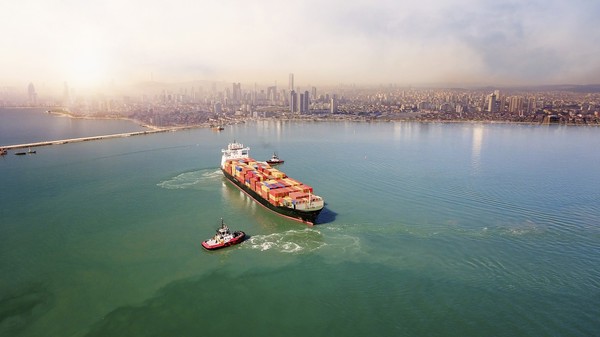
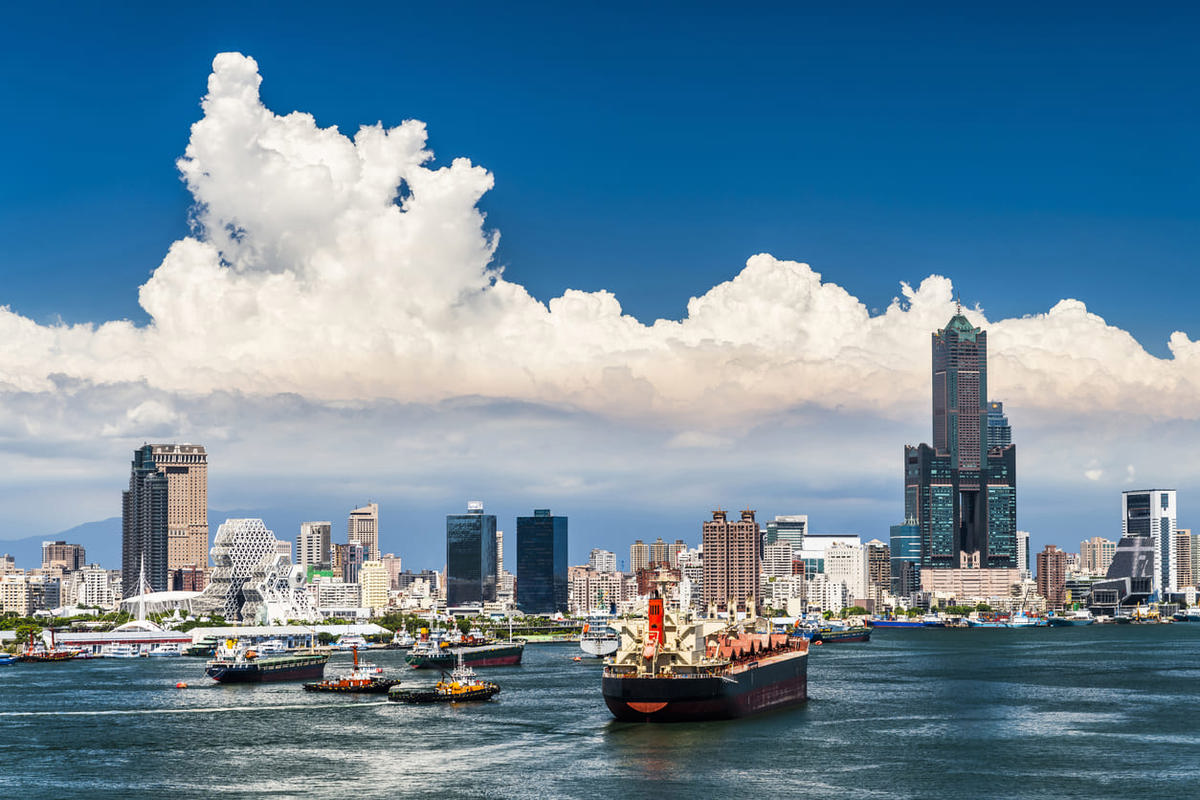 IMAGE: The coastal urban landscape of the port of Kaohsiung in Taiwan. Getty Images
Changes on the day from Friday to 17.00 SGT (09.00 GMT) today:
- VLSFO prices up in Fujairah ($76/mt), Singapore ($6/mt), and down in Zhoushan ($1/mt)
- LSMGO prices up in Singapore ($103/mt), Zhoushan ($60/mt), and down in Fujairah ($17/mt)
- HSFO prices up in Singapore ($19/mt), and down in Zhoushan ($9/mt) and Fujairah ($8/mt)
- B30-VLSFO prices up in Singapore ($45/mt)
Fujairah’s VLSFO price has climbed by $76/mt over the weekend, while prices in Singapore and Zhoushan have remained largely stable. As a result, Fujairah's benchmark is now priced at notable premiums of $132/mt to Singapore and $127/mt to Zhoushan.
“The Middle East remains volatile with ongoing security concerns around Hormuz impacting vessel traffic and port operations,” a source said.
In Zhoushan, fuel availability across all grades remains steady, with most suppliers continuing to recommend lead times of 3–5 days - unchanged from last week, a trader noted.
In Taiwan, bunker supply has not been significantly disrupted by Middle East tensions. However, there are discussions that state-owned CPC Corporation may implement fuel rationing in April to mitigate potential impacts of the crisis. Prices, meanwhile, have shown stronger reactions, as volatility in Brent crude linked to Middle East tensions has significantly influenced bunker markets, a Taiwan-based trader said.
Recommended lead times for VLSFO and MGO are about two days in Keelung and Hualien, while deliveries in Taichung and Kaohsiung require slightly longer lead times of around three days.
Brent
The front-month ICE Brent contract has gained by $5.61/bbl on the day from Friday, to trade at $115.24/bbl at 17.00 SGT (09.00 GMT) today.
Upward pressure:
Brent crude’s price has moved higher over the weekend as geopolitical risks in the Middle East intensified after Iran-backed Houthi militants joined the war.
The Yemen‑based Houthi militant group launched ballistic missiles targeting Israel over the weekend, following a barrage of US‑Israeli strikes on Iranian nuclear and ballistic missile facilities.
Israeli forces targeted several Iranian sites developing ballistic missile systems, the Israel Defense Forces (IDF) said on social media platform X.
The news has raised concerns of a broader regional escalation, according to market analysts.
“The [Houthi] group has previously disrupted Red Sea shipping, forcing vessels to reroute and heightening concerns over energy supply chains,” two analysts from ING Bank noted.
The US Central Command (CENTCOM) said about 3,500 additional soldiers arrived in the Middle East on Saturday, “in addition to transport and strike fighter aircraft, as well as amphibious assault and tactical assets.”
“A-10 Warthog and Apache helicopter gunships are flying strike missions inside Iranian airspace and the Strait of Hormuz at will,” US secretary of war Pete Hegseth said during a news brief at the Oval Office.
The additional military deployment in the region has “further amplified” the risk to oil flows, ING Bank’s analysts added.
Downward pressure:
While there is no significant pullback in Brent’s price today, market participants will keep an eye on emergency stock releases over the upcoming weeks, as a part of the International Energy Agency’s (IEA) commitment to ease some pressure on oil prices.
France has released about 580,000 bbls of oil products under the IEA’s coordinated emergency stock release effort, French media reported. This makes up “roughly 4% of its 14.5mb [14.5 million bbls] commitment,” ING Bank’s analysts said.
Earlier this month, the IEA agreed to release 400 million bbls of crude oil from strategic reserves, as the conflict in Iran continues to destabilise oil flows through the Persian Gulf.
The US will contribute 172 million bbls from its Strategic Petroleum Reserve (SPR) as part of the IEA-led effort, the US Department of Energy (DoE) said.
By Tuhin Roy and Aparupa Mazumder
Please get in touch with comments or additional info to news@engine.online