EIA forecasts elevated oil prices in the first half of 2026
The US Energy Information Administration (EIA) expects the Brent crude spot price to average $106/bbl in May and June 2026, before declining to around $79/bbl the following year.
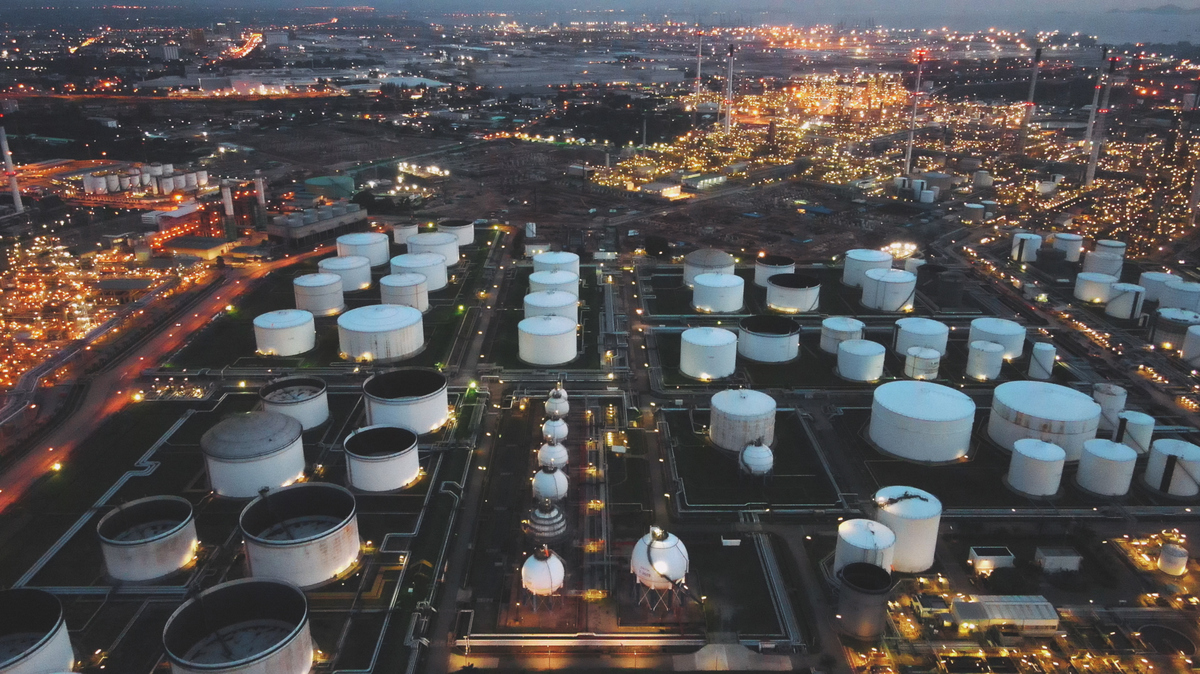 IMAGE: Oil storage facility. Getty Images
The EIA forecasts Brent crude to average close to $100/bbl this year as the continuing Middle East conflict unsettles global markets and sharply reduces vessel movements through the Strait of Hormuz.
Brent crude’s spot price increased sharply last month, reaching a high of $138/bbl on 7 April and averaging $117/bbl for the month, as the de-facto closure of the Strait of Hormuz tightened global oil flows, the EIA noted.
“This monthly average price [in April] is also the highest since June 2022, following Russia’s invasion of Ukraine,” the EIA said. “Daily Brent spot prices increased significantly in April, reflecting the tightness and demand for physical barrels of crude oil for delivery in the very near term,” the US agency added.
The energy agency has clarified that the price forecast is highly dependent on its assumptions of the duration of the US-Irael conflict with Iran and resulting outages in oil production.
The EIA expects the Strait of Hormuz to remain effectively closed through late May, with flows slowly starting to resume in late May or early June.
“Even after flows resume, we expect it will take until late 2026 or early 2027 for most pre-conflict production and trade patterns to resume,” the energy agency said in its May short-term energy outlook (STEO) report.
Supply and demand estimates
Global liquid fuels production is expected to reach 101.6 million b/d in 2026 – about 2.8 million b/d lower than the EIA’s previous estimate.
The decline in annual production estimates come as supply outages in Iraq, Saudi Arabia, Kuwait, the UAE, Qatar, and Bahrain – due to the Middle East war – averaged 10.5 million b/d last month.
Production shut-ins are expected to increase to a peak of nearly 10.8 million b/d in May, as storage levels reach maximum limits requiring producers to shut in additional volumes.
“One of the factors driving our increased expectations of shut-in production is that we now forecast Iran will have to reduce production in part due to the U.S. blockade, which has curtailed Iran’s ability to export oil,” the EIA said.
In 2027, total liquid fuels production is projected to touch 109.5 million b/d – matching the EIA’s April estimates. The US agency expects most production shut-ins to be fully restored by January 2027 and oil inventories to restart building.
“Once the traffic through the Strait of Hormuz gradually begins to resume in June and shut-in oil production gradually returns, we assume oil prices will begin to fall,” the EIA said.
OPEC liquid fuels production is expected to average around 25.2 million b/d this year – about 6.2 million b/d lower than the EIA’s previous projection. The Saudi Arabia-led coalition is expected to increase production to 29.4 million b/d in 2027, the US-based agency said.
The reduction in OPEC’s production estimates comes as the UAE – a core-OPEC member – announced its departure from the coalition last month.
“Because the UAE held spare crude oil production capacity, we now expect OPEC’s spare capacity to average 2.5 million b/d in 2027, compared with our previous forecast of 3.8 million b/d,” the US energy agency said.
The US energy agency forecasts global oil demand to increase by an average of 200,000 b/d to 104.1 million b/d in 2026 – about 500,000 b/d lower than its previous forecast.
“We expect higher prices will bring about a reduction in oil demand, which will help move the oil market towards balance,” the EIA said.
The decline in oil demand will primarily occur in Asia as it is more reliant on crude supplies from the war-torn Middle East region, the EIA said.
Oil demand growth is expected to rebound in 2027 – growing by an average of 1.5 million b/d to around 105.6 million b/d, as oil flows are expected to resume in the latter half of this year.
By Aparupa Mazumder
Please get in touch with comments or additional info to news@engine.online