Europe & Africa Market Update 30 Mar
Bunker benchmarks in European and African ports have mostly increased over the weekend, and availability in Greece’s Piraeus remains stable for now.
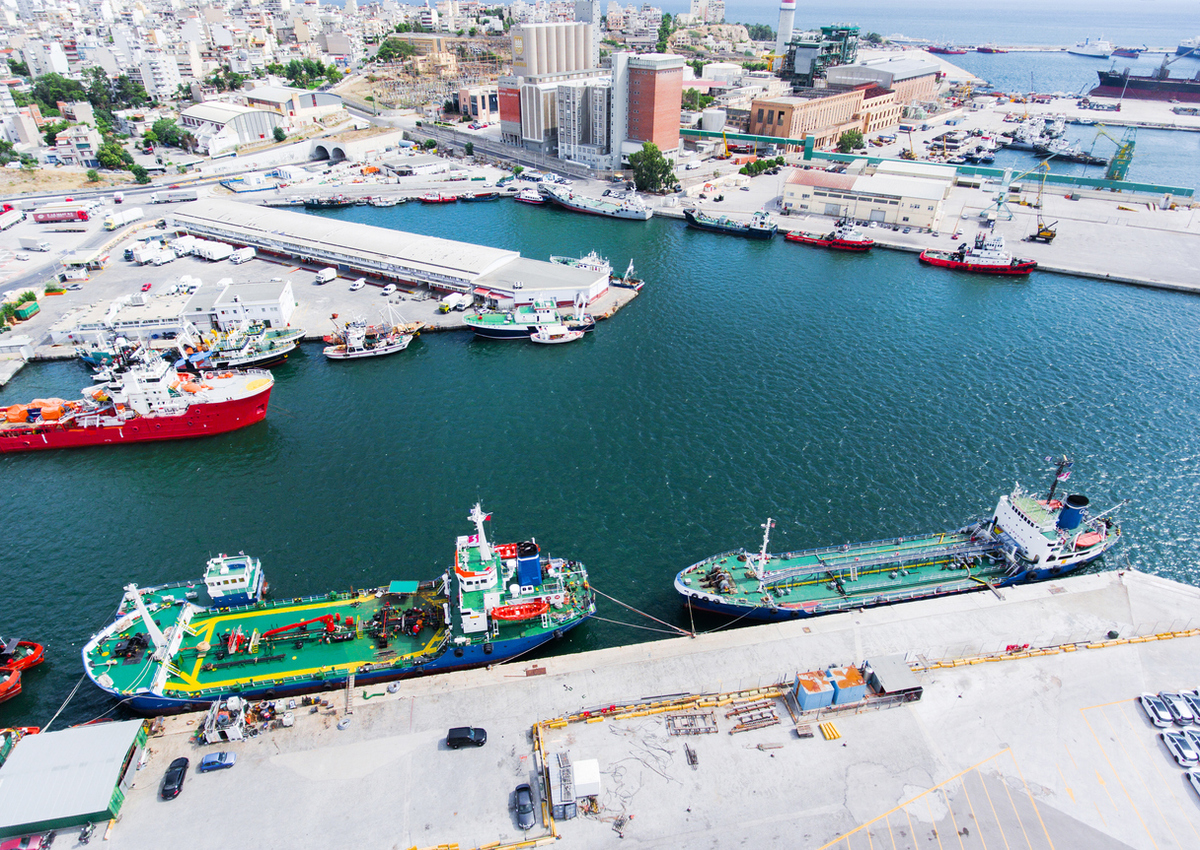 IMAGE: The Port of Piraeus in Athens, Greece. Getty Images
Changes on the day from Friday to 09.00 GMT today:
- VLSFO prices up in Durban ($58/mt), and down in Rotterdam ($69/mt)
- HSFO prices up in Durban ($62/mt)
- LSMGO prices up in Rotterdam ($58/mt) and Gibraltar ($55/mt)
- B30-VLSFO prices up in Gibraltar ($54/mt) and Rotterdam ($31/mt)
Most regional bunker benchmarks have gained over the weekend, tracking the rise in Brent.
Conversely, Rotterdam’s VLSFO price has slumped, pressured by a lower-priced 500-1500 mt stem fixed at $709/mt.
Piraeus’ VLSFO price has also inched lower. A large stem of more than 1500 mt, fixed in the port at a low price of $836, has put downward pressure on the benchmark.
The port's HSFO price has however moved in the opposite direction, increasing significantly.
This has narrowed the port’s Hi5 spread by around $43/mt over the weekend, significantly reducing the economic benefit for scrubber-fitted ships to bunker HSFO in the port.
Fuel availability is steady in the Greek port, but high demand for bunkers is causing operational difficulties related to barge and berth availability, a local supplier said.
The port may face some tightness in product availability around late April or early May if the conflict continues and crude flows through the Strait of Hormuz continue to remain disrupted, the supplier added.
Brent
The front-month ICE Brent contract has gained by $5.61/bbl on the day from Friday, to trade at $115.24/bbl at 09.00 GMT.
Upward pressure:
Brent crude’s price has moved higher over the weekend as geopolitical risks in the Middle East intensified after Iran-backed Houthi militants joined the war.
The Yemen‑based Houthi militant group launched ballistic missiles targeting Israel over the weekend, following a barrage of US‑Israeli strikes on Iranian nuclear and ballistic missile facilities.
Israeli forces targeted several Iranian sites developing ballistic missile systems, the Israel Defense Forces (IDF) said on social media platform X.
The news has raised concerns of a broader regional escalation, according to market analysts.
“The [Houthi] group has previously disrupted Red Sea shipping, forcing vessels to reroute and heightening concerns over energy supply chains,” two analysts from ING Bank noted.
The US Central Command (CENTCOM) said about 3,500 additional soldiers arrived in the Middle East on Saturday, “in addition to transport and strike fighter aircraft, as well as amphibious assault and tactical assets.”
“A-10 Warthog and Apache helicopter gunships are flying strike missions inside Iranian airspace and the Strait of Hormuz at will,” US secretary of war Pete Hegseth said during a news brief at the Oval Office.
The additional military deployment in the region has “further amplified” the risk to oil flows, ING Bank’s analysts added.
Downward pressure:
While there is no significant pullback in Brent’s price today, market participants will keep an eye on emergency stock releases over the upcoming weeks, as a part of the International Energy Agency’s (IEA) commitment to ease some pressure on oil prices.
France has released about 580,000 bbls of oil products under the IEA’s coordinated emergency stock release effort, French media reported. This makes up “roughly 4% of its 14.5mb [14.5 million bbls] commitment,” ING Bank’s analysts said.
Earlier this month, the IEA agreed to release 400 million bbls of crude oil from strategic reserves, as the conflict in Iran continues to destabilise oil flows through the Persian Gulf.
The US will contribute 172 million bbls from its Strategic Petroleum Reserve (SPR) as part of the IEA-led effort, the US Department of Energy (DoE) said.
By Nachiket Tekawade and Aparupa Mazumder
Please get in touch with comments or additional info to news@engine.online