The Week in Alt Fuels: Uncle Sam’s nuclear push
The Trump administration is starting to put serious weight behind nuclear-powered shipping. But regulations, liability and safety still stand between ambition and commercial deployment.
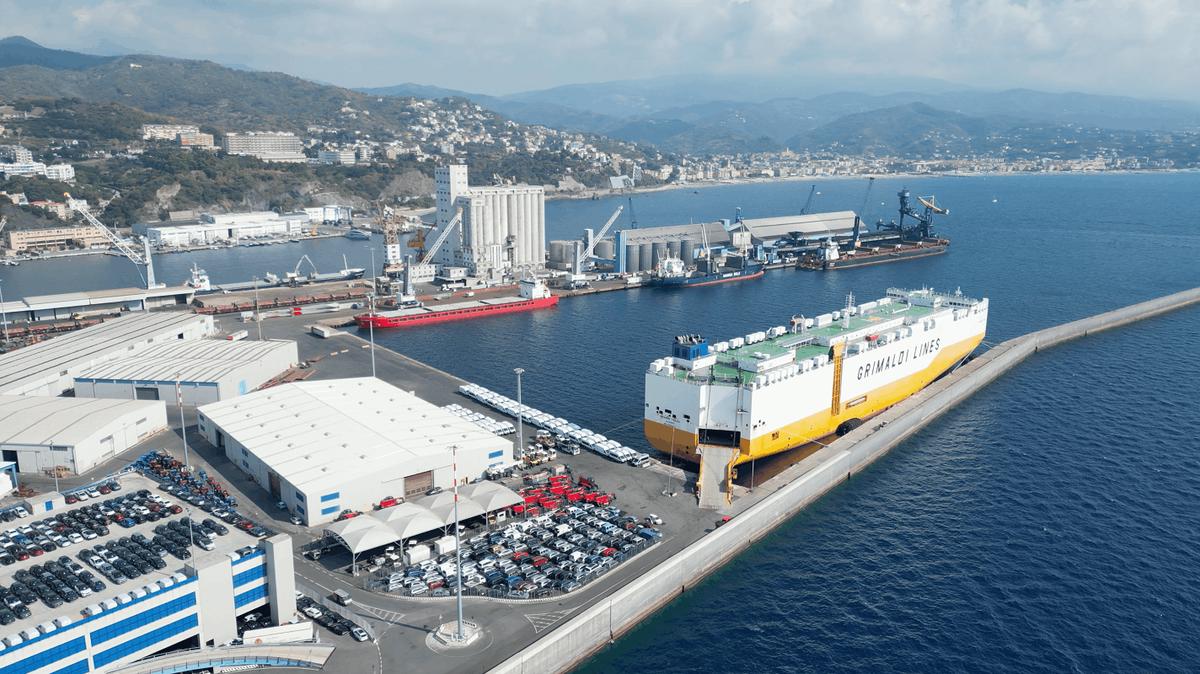
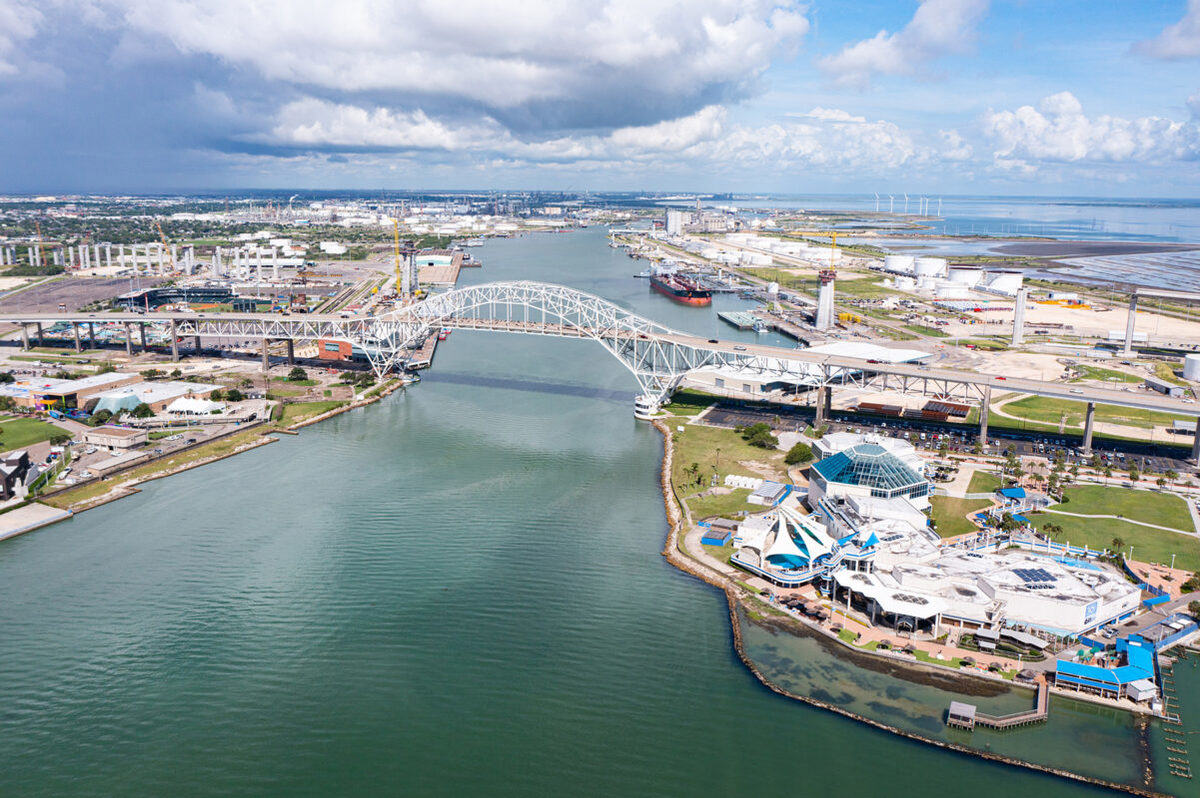 IMAGE: Aerial view of Port of Corpus Christi in Texas. Port of Corpus Christi
Washington wants nuclear to be included in shipping’s future energy mix.
Ahead of the IMO’s Marine Environment Protection Committee meeting in April-May (MEPC 84), the US made a submission calling for an "energy-all" approach that would not restrict or constrain current or breakthrough fuel types.
It argued that proposals should place no limits on conventional crude or diesel, LNG, nuclear, biomass-based fuels or any other marine propulsion technology.
And the push is moving beyond policy statements.
The US Department of Transportation (DoT) and its Maritime Administration (MARAD) sought industry input on developing commercially viable small modular reactors (SMRs) for US-flagged commercial vessels.
MARAD laid out two possible pathways: a 10-year route that would tackle governance issues first and an accelerated seven-year option.
Nuclear technology developer Core Power backed the faster approach, arguing that regulation, engineering and commercial planning should progress together. It proposed using established light-water reactor technology, selecting the first shipping routes early and lining up follow-on vessel orders to help get the first projects off the ground.
Two US ports, Long Beach and Corpus Christi, are figuring out the logistics of hosting commercial nuclear-powered vessels. The port authorities have signed separate agreements with MARAD to explore how to integrate SMRs in shore power infrastructure and port micro-grids. Port authorities will also assess the infrastructure and procedures needed to safely receive nuclear-powered ships.
Corpus Christi's port authority is taking that work a step further through another partnership with Core Power. They will study two tracks: siting a floating nuclear power plant at the port, including grid connection and permitting, and what the port would need to receive nuclear-powered ships routinely. This includes transit, berthing, emergency preparedness and liability.
Federal regulators are trying to figure out who regulates what.
The US Coast Guard (USCG) and Nuclear Regulatory Commission (NRC) have agreed to develop a framework covering nuclear-powered ships, floating nuclear power plants and other commercial applications.
The NRC will oversee reactor approvals, licensing and radiological safety and security. The USCG will handle vessel and facility inspections, design reviews, certifications and enforcement.
Several private companies are putting money and resources behind the technology.
US offshore vessel operator Hornbeck Offshore has invested in the nuclear startup Deployable Energy to assess its micro-reactors for applications ranging from inland waterway and offshore vessels to offshore platforms and power barges.
Core Power is assessing technical, operational, regulatory and economic requirements for using an SMR developed by US-based BWX Technologies on floating nuclear power plants.
Classification society American Bureau of Shipping (ABS) has been involved in studies and nuclear propulsion concepts. In June, it released a nuclear-ready notation for ships, barges and offshore units designed for future conversion to nuclear power.
“Readiness considerations evaluated under the notation may include space allocation, structural arrangements, system interfaces, safety-related features and other design elements needed to support a future nuclear conversion,” ABS said.
For all the momentum, however, commercial nuclear shipping faces a much bigger hurdle than proving the technology can work.
Marine insurer NorthStandard has warned that there is currently no established IMO liability convention for nuclear-powered vessels, preventing such risks from securing reinsurance on a global basis.
Existing IMO rules also predate many of the technologies now being proposed.
Nuclear propulsion is covered by specialised requirements, including the IMO’s Code of Safety for Nuclear Merchant Ships. But the IMO’s Maritime Safety Committee acknowledged last year that the code is outdated and poses a barrier to newer nuclear technologies.
The Nuclear Energy Maritime Organization holds consultative status at the IMO and the International Atomic Energy Agency, and plans to strengthen collaboration with the OECD Nuclear Energy Agency and classification societies.
It aims to publish guidance covering insurability and port governance by 2027, followed by a global pilot framework by 2030.
Using nuclear power on ships will be very different from experimenting with other alternative bunker fuels, given the underlying safety and security risks involved.
Washington can fund studies, prepare ports and encourage reactor developers. But a clear regulatory pathway, an agreed liability regime, updated safety rules and a credible timeline for implementing them will ultimately determine whether the US nuclear shipping push moves beyond plans and concepts towards commercial reality.
In other alt fuels news this week, Taiwanese container shipping firm Yang Ming's vessel YM Willpower was bunkered with 2,000 mt of LNG in its first simultaneous operations at the Port of Shanghai. The stem was delivered by Shanghai International Port Group (SIPG) Energy.
SIPG Energy has also simultaneously bunkered two vessels with different alternative fuels at Shanghai's Luhuashan anchorage. The bunker vessel Hai Gang Zhi Yuan delivered a record 8,000 mt of bio-methanol to CMA CGM's methanol dual-fuel containership CMA CGM Osmium, according to the companies. At the same time, the Hai Gang Wei Lai supplied an unspecified quantity of LNG to Pacific International Lines' (PIL) containership Kota Elan.
Danish dry bulk shipping company Lauritzen Bulkers has launched its second methanol-capable dual-fuel vessel. The 81,000-dwt bulk carrier is expected to be delivered in January 2027, with a third and final vessel to follow.
By Konica Bhatt
Please get in touch with comments or additional info to news@engine.online