Aligned emissions accounting would ease adoption of new drop-in fuels: MMMCZCS
Maritime regulatory frameworks, like FuelEU Maritime and EU ETS, need to harmonise their emissions accounting methods to ease the adoption of new low-emissions drop-in fuels by the shipping sector, the Mærsk McKinney Møller Centre for Zero Carbon Shipping (MMMCZCS) said in a new study.
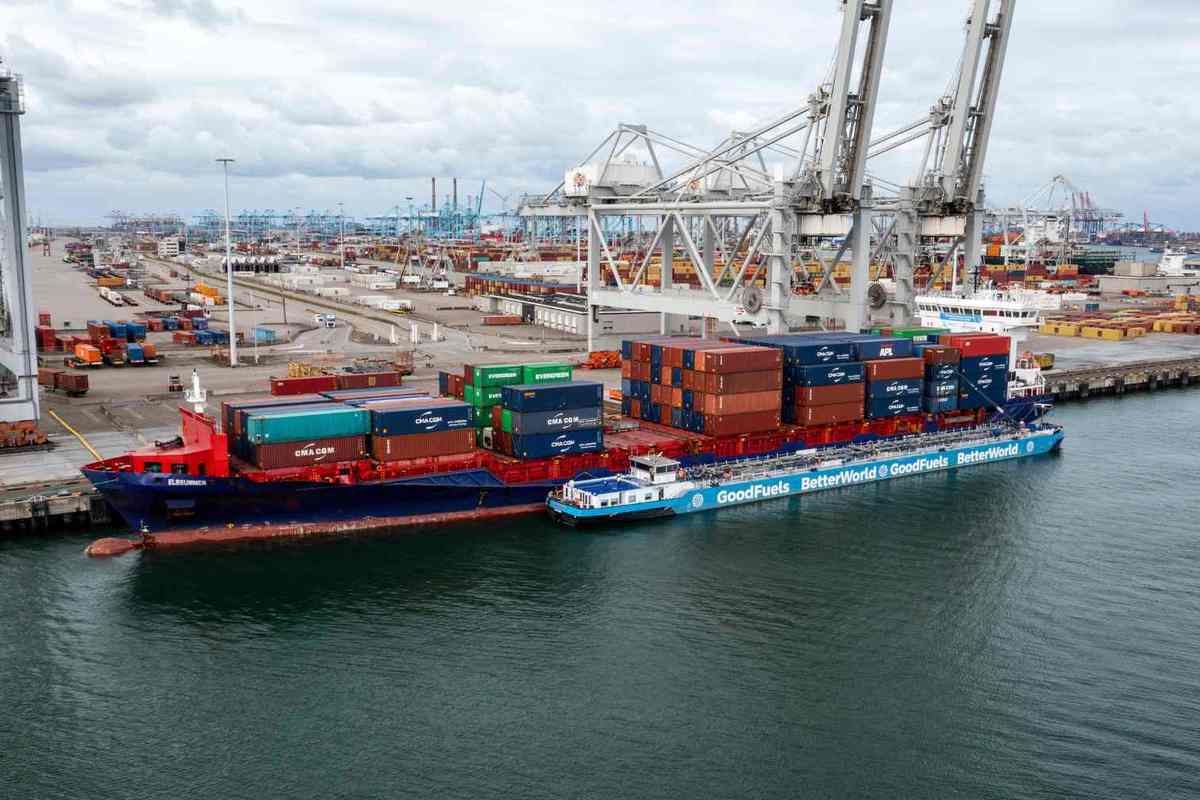 IMAGE: A biofuel bunkering operation. FincoEnergies
MMMCZCS says that the current supply of widely adopted drop-in fuels, like FAME and HVO, which are covered under the fuel quality standard ISO 8217:2024, are not enough to meet shipping sector’s energy demand.
This leaves the room open for new-drop in fuels like pyrolysis oil, hydrothermal liquefaction oil and cashew nutshell liquid (CNSL), which are not covered under the ISO standard.
The study maps each step, from market research of the fuel to its wide-scale adoption, identifying problems and recommending improvements. It found that the adoption pathway remains unclear, fragmented and time-consuming, with roles often poorly defined across the stakeholders involved.
The report says that a preliminary problem with identifying new drop-in fuels for adoption is how different regulatory frameworks like the EU Emissions Trading System (EU ETS), FuelEU Maritime, and potentially the IMO’s Net-Zero Framework, count fuel emissions differently.
FuelEU Maritime accounts well-to-wake emissions, that is, it counts the full emissions from a fuel’s life, from production of the feedstock to the combustion on board. In comparison, EU ETS only prices emissions released from burning fuel on board.
IMO's Net-Zero Framework has not been adopted by member nations, leaving its scope unclear.
The frameworks also differ in their sustainability and eligibility criteria for fuels and feedstocks and take differing approaches to indirect land-use change, waste definitions and negative emissions.
MMMCZCS says divergent regulations can leave the same fuel eligible under one framework but excluded under another.
The study recommends aligning life cycle assessment (LCA) methodologies and penalty structures across frameworks, which it says would reduce this uncertainty for stakeholders weighing whether to start the adoption process.
By Nachiket Tekawade
Please get in touch with comments or additional info to news@engine.online