Americas Fuel Availability Outlook 4 Dec
LSMGO demand weakens in New York
Improved VLSFO and LSMGO availability in Itaqui
Argentinian LNG facility slated to start in 2027
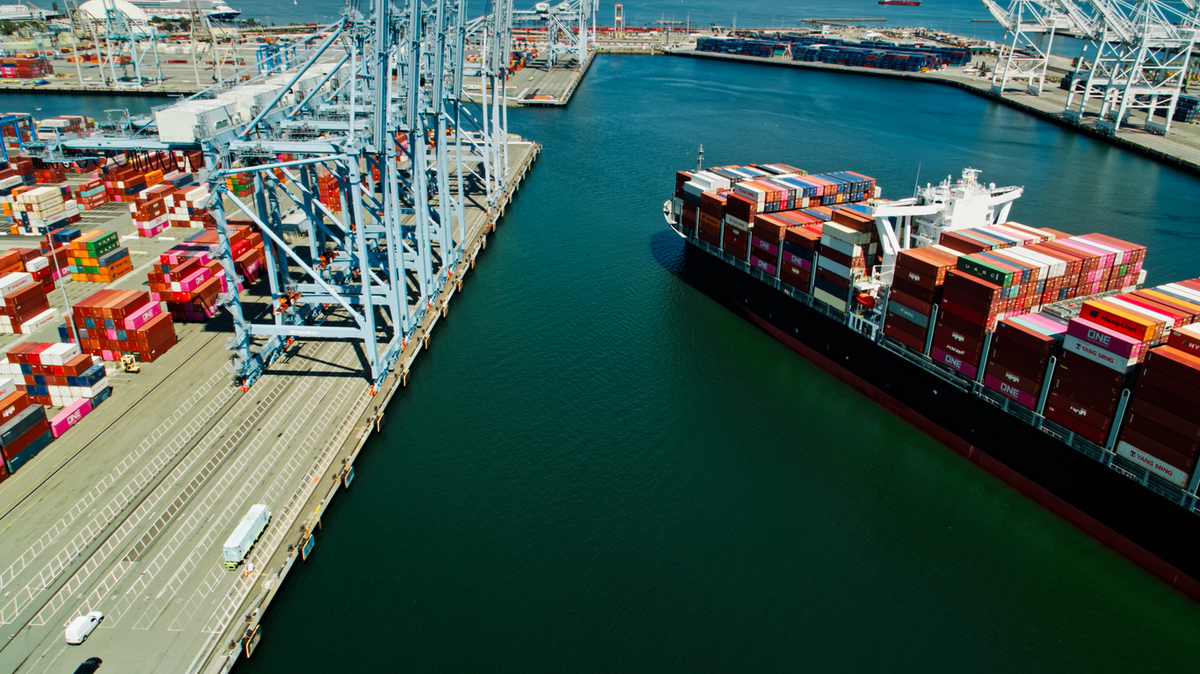
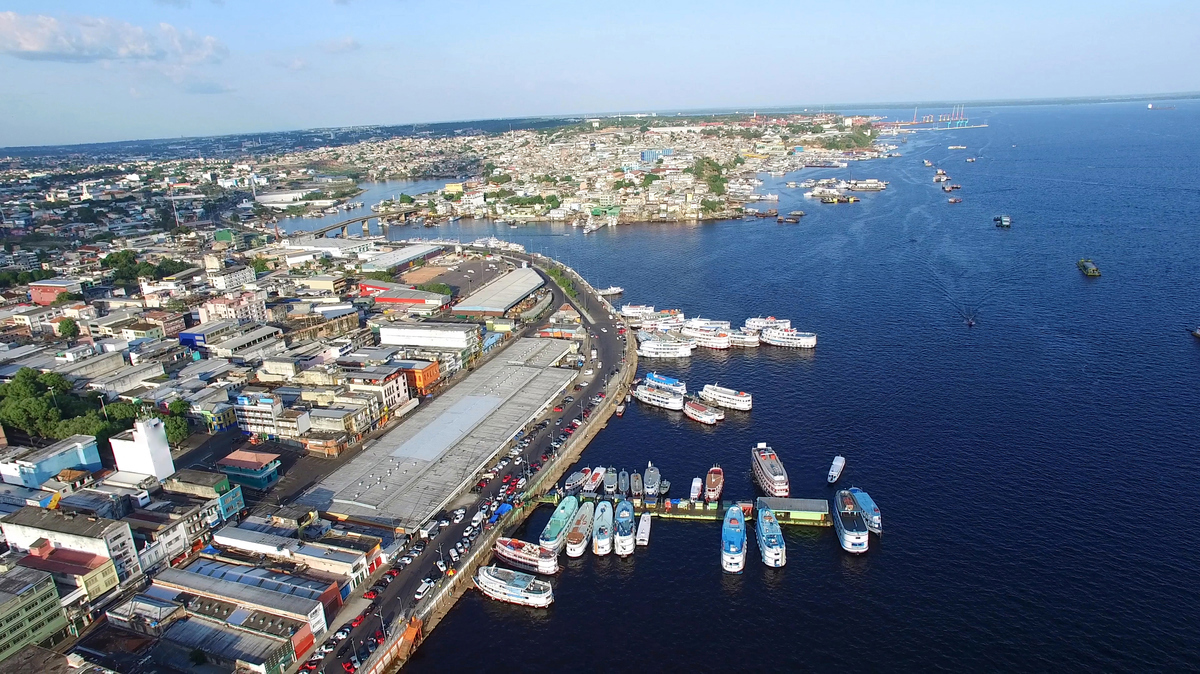 IMAGE: Aerial view of a port in Brazil. Getty Images
North America
Bunker fuel demand in Houston has remained stable despite adverse weather conditions affecting the US Gulf Coast. Lead times for all three conventional fuel grades are currently around 7-8 days.
“For HSFO in particular, I would advise booking at least a week in advance,” a trader told ENGINE.
The US Gulf Coast has entered its fog season, and delays and intermittent channel closures are expected over the coming months.
The Vessel Traffic Service Houston-Galveston has reported reduced visibility in Galveston Bay, down to as low as 1 nautical mile due to misty rain, along with strong winds of 25–30 knots and seas of around 2 feet.
These conditions can disrupt both vessel movements and bunker operations. Mariners are advised to assess conditions carefully before starting or continuing their transits.
Bunker operations resumed in the Galveston Offshore Lightering Area (GOLA) on Tuesday after being suspended earlier due to adverse weather. Rough weather continues to impact the area and is forecast to persist through 6 December.
HSFO and LSMGO are currently available in GOLA with lead times of 3–4 days, while VLSFO requires around five days.
In New York, suppliers report steady demand for HSFO and VLSFO, and availability of both has been tightening. VLSFO stems can need about five days of lead time, while HSFO requires up to eight days, a source said.
LSMGO demand has been notably weaker and lead times of around 2–3 days are recommended.
Weather conditions in New York have improved since last week, with forecasts of 15–20-knot wind gusts and waves of up to 2 feet, supporting more stable bunkering operations.
Demand continues to be decent in Los Angeles this week. All three grades have been available with lead times of 5–7 days.
Container vessel traffic to the port is set to increase, with 23 arrivals expected next week, up from 19 this week, according to the port’s vessel tracker Signal.
In Vancouver, the earliest delivery date for HSFO is between 8–9 December. VLSFO and LSMGO grades are available with lead times of 4-7 days, depending on the size of the inquiry, a source said.
Latin America and the Caribbean
Suppliers in Panama have received a limited number of enquiries so far this week. However, bunker sales rebounded in October, when the country's maritime authority recorded the second-highest monthly volumes of the year, after January.
Across Balboa, Cristobal and Colón, both VLSFO and LSMGO are available within lead times of about 4–6 days.
HSFO remains slightly tight for prompt supply and typically has required at least 5–7 days of lead time the past week, a supplier told ENGINE.
The shortest time in which VLSFO and LSMGO can be delivered by one supplier in Balboa is 1-2 days.
In Colombia, both VLSFO and LSMGO remain readily available across Cartagena, Santa Marta and Barranquilla, with lead times of 2–3 days.
HSFO is also offered at major ports such as Cartagena and Barranquilla, though supply remains limited, a bunker trader said.
In Brazil, VLSFO and LSMGO availability remains steady in Santos, with lead times of around 5–8 days. The port is expected to remain congested for the next 4-5 days.
Across Rio de Janeiro, Rio Grande, Belém and Vila do Conde, both grades are available and can be supplied within recommended lead times of 4–5 days.
At OPL Sepetiba, VLSFO and LSMGO are currently unavailable. According to sources, reloading is expected to take place between 3 December and 14 January.
In Salvador, both grades can be supplied between 8–10 December.
Paranaguá continues to report normal availability for VLSFO, which can be delivered in 4–5 days. However, LSMGO is unavailable at the port.
Meanwhile, Itaqui's availability has improved for both VLSFO and LSMGO this week after a supplier received fresh supplies. The earliest delivery possible is from 6 December.
In Argentina, an LNG production and export facility is being built in Punta Colorada on Patagonia’s northeast coast.
The first floating LNG production unit planned for the site is the Hilli Episeyo. It is expected to be operational by mid-2027 and have a production capacity of around 2.45 million mt/year, Antares Ship Agents informed.
A second floating LNG facility is also currently being converted in Yantai. The unit is designed to produce up to 3.5 million mt/year and is expected to begin operating in 2028.
In addition, negotiations are underway for the charter of a third floating LNG facility, which could be located at either Punta Colorada or Bahía Blanca.
In Zona Común, favourable weather conditions continue to support bunker operations at the anchorage.
Supply of both VLSFO and LSMGO been handled mainly by two suppliers this week, with lead times stretching to around 7–8 days.
Although a small number of bunker calls have been cancelled due to extended waiting times, suppliers are focusing on clearing existing backlogs and maintaining steady operations at the anchorage, a local communications executive told ENGINE.
By Gautamee Hazarika
Please get in touch with comments or additional info to news@engine.online