East of Suez Market Update 15 Apr
Bunker prices in East of Suez ports have declined, while availability remains good across grades in Hong Kong.
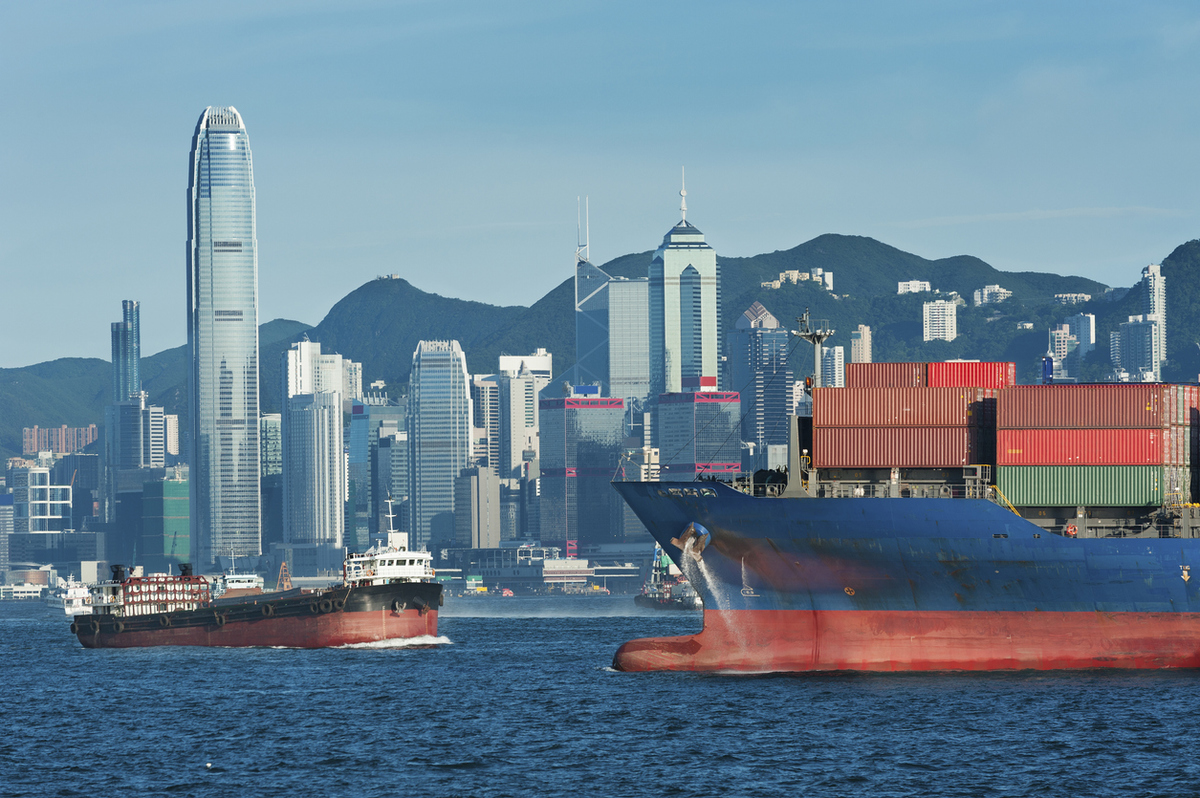 IMAGE: Cargo ships in Victoria Harbour of Hong Kong, China. Getty Images
Changes on the day to 17.00 SGT (09.00 GMT) today:
- VLSFO prices down in Zhoushan ($49/mt), Fujairah ($36/mt) and Singapore ($31/mt)
- LSMGO prices down in Zhoushan ($127/mt), Singapore ($62/mt) and Fujairah ($40/mt)
- HSFO prices down in Fujairah ($16/mt), Singapore ($14/mt) and Zhoushan ($1/mt)
- B30-VLSFO prices down in Singapore ($50/mt)
Zhoushan’s VLSFO price has dropped by $49/mt in the past day, marking the steepest decline among the three major Asian bunker ports. Despite the fall, the port’s VLSFO price still holds premiums of $13/mt over Fujairah and $11/mt over Singapore.
In Zhoushan, the decline in VLSFO price has outpaced the drop in its HSFO benchmark. Consequently, the port’s Hi5 spread has narrowed by $48/mt to $51/mt, remaining significantly below Fujairah’s $121/mt and Singapore’s $91/mt.
Bunkering at Zhoushan’s Tiaozhoumen and Xiazhimen outer anchorages was suspended for nearly a week due to rough weather, before resuming on 14 April, a source said. Meanwhile, operations continued uninterrupted at the more sheltered Xiushandong anchorage and the inner anchorage at Mazhi.
The disruption has resulted in a backlog of 50-60 vessels awaiting fuel, a trader noted. Suppliers are currently recommending lead times of 5–7 days for all grades as they work through the congestion, compared to last week’s 7–10 days for VLSFO and 5–10 days for both LSMGO and HSFO.
In Hong Kong, bunker supply remains largely stable, with lead times for all grades holding at around seven days in recent weeks.
Brent
The front-month ICE Brent contract has lost by $2.83/bbl on the day, to trade at $95.38/bbl at 17.00 SGT (09.00 GMT) today.
Upward pressure:
Brent’s price has felt some upward pressure after US Central Command (CENTCOM) said a blockade of Iranian ports bas been fully implemented.
No vessels have made it past the US blockade since yesterday, the US CENTCOM said, adding that six 6 merchant vessels “complied with direction from U.S. forces” to turn around to re-enter an Iranian port on the Gulf of Oman.
“Vessel transits via the Strait of Hormuz could come to a complete halt, as Iran may strive itself to block any other transits,” remarked tanker tracking firm Vortexa’s senior market analyst Xavier Tang.
Downward pressure:
Brent’s price has moved lower on hopes of renewed ceasefire talks between the US and Iran.
Both parties are arranging a second round of talks in the coming days before the two-week ceasefire agreement expires, Bloomberg reported.
Iran is considering pausing its oil shipments through the Strait of Hormuz, following the US blockade of the vital waterway, according to ANZ Bank’s senior commodity strategist Daniel Hynes.
“This would ease tensions and possibly pave the way for more constructive talks,” Hynes said.
Prices came under further downward pressure after the American Petroleum Institute (API) reported a 6.1 million bbls increase in US crude inventories.
A build in US crude stocks typically indicates lower demand for oil and can put some downward pressure on Brent's price.
By Tuhin Roy and Aparupa Mazumder
Please get in touch with comments or additional info to news@engine.online