Europe & Africa Market Update 16 Apr
Bunker benchmarks at European and African ports have mostly increased, while fuel availability is stable off Malta.
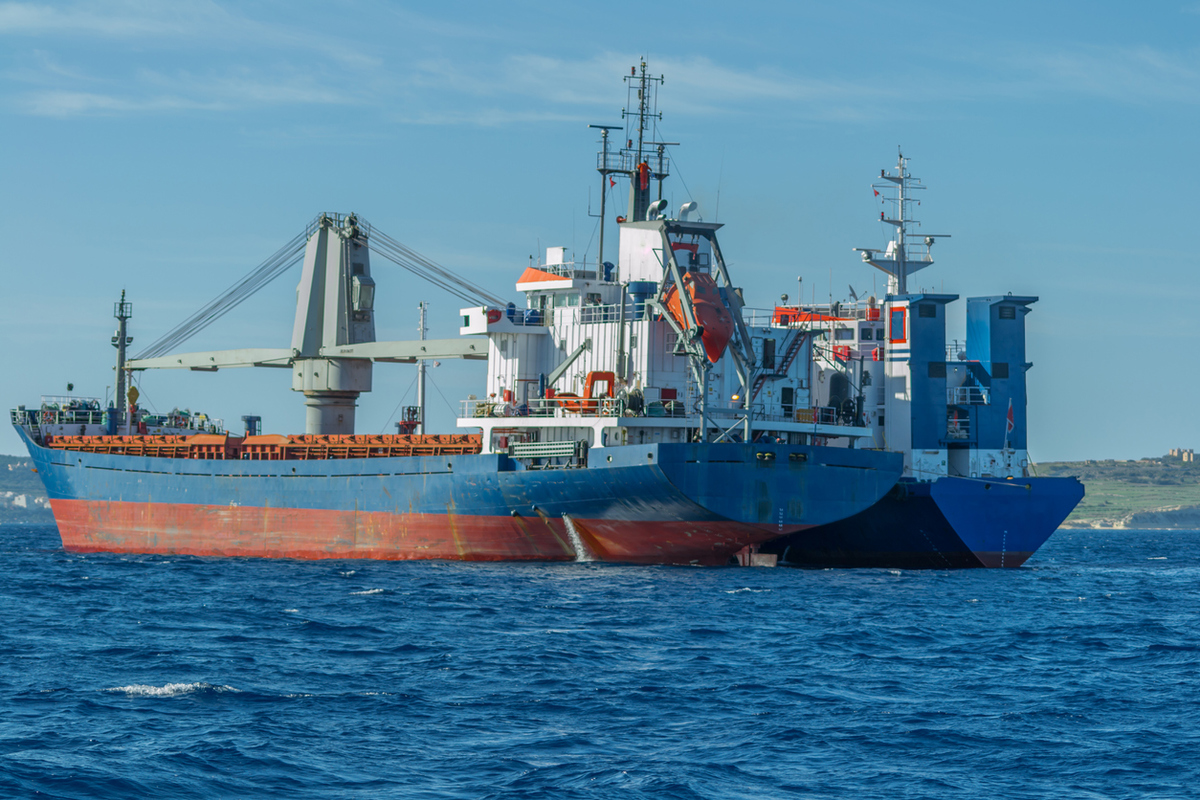 IMAGE: Tankers during a bunker operation off Malta. Getty Images
Changes on the day to 09.00 GMT today:
- VLSFO prices up in Durban ($68/mt) and Gibraltar ($17/mt), and down in Rotterdam ($3/mt)
- LSMGO prices up in Rotterdam ($47/mt) and Gibraltar ($14/mt)
- HSFO prices up in Durban ($15/mt), Rotterdam and Gibraltar ($8/mt)
- B30-VLSFO price up in Gibraltar ($18/mt) and Rotterdam ($10/mt)
Most bunker fuel prices tracked Brent's upward movement, recording gains over the past session.
Conversely, Rotterdam’s VLSFO price has dipped. A lower-priced 500-1500 mt VLSFO stem, fixed at $637/mt, has put downward pressure on the price benchmark.
Gibraltar’s VLSFO price has seen a significant price gain. This has increased Gibraltar’s premium over Rotterdam by $20/mt in a single day.
LSMGO price off Malta has also dropped around $30/mt in the last session. A lower-priced 150-500 mt LSMGO stem fixed at $705/mt has weighed on the benchmark.
This has flipped Malta’s LSMGO benchmark to a $22/mt discount to Gibraltar, compared to a $21/mt premium observed yesterday.
Among East Mediterranean ports, bunkering LSMGO off Malta is priced about $14/mt below Istanbul, $140/mt below Italy’s Augusta, and $105/mt below Greece’s Piraeus.
Bunker availability is stable off Malta, and getting LSMGO, HSFO, VLSFO and ULSFO deliveries requires around 4-5 days of lead time, a trader said. There could be some backlog from a recent weather disruption, the trader added.
Brent
The front-month ICE Brent contract has gained by $0.94/bbl on the day, to trade at $96.32/bbl at 09.00 GMT.
Upward pressure:
Brent has gained in the previous session after Iran threatened to disrupt global shipping routes beyond the Strait of Hormuz, including the Persian Gulf, Gulf of Oman, and the Red Sea.
Iran’s military commander Ali Abdollahi has warned that Tehran will “not tolerate any US-led maritime blockade” targeting Iranian commercial and oil tankers in the Persian Gulf, Gulf of Oman, or Red Sea, state-owned news agency Tasnim reported.
“The longer the conflict drags on, the more persistent these price dynamics are likely to be,” ANZ Bank’s senior commodity strategist Daniel Hynes said.
Oil felt further upward pressure after the US Energy Information Administration (EIA) reported a decline in US crude stocks. Commercial US crude oil inventories decreased by 900,000 bbls to 464 million bbls in the week ending 10 April, according to data from the EIA.
“The oil market doesn’t need a worst-case escalation to justify higher pricing. Tight balances are sufficient to sustain the price of Brent near or above recent threshold levels,” Hynes said.
Downward pressure:
Hopes of de-escalation in the Middle East conflict has capped some of Brent’s price gains today, as market participants eye a potential resumption in talks to bring an end to the conflict.
Oil market analysts continue to hope that the US and Iran will extend their ceasefire by another 2 weeks, two analysts from ING Bank said.
US President Donald Trump said in an interview with Fox News said that the war is “very close to over,” suggesting that a fresh round of negotiation may be held this week.
“Oil prices continue to move lower amid signals that a ceasefire between the US and Iran will be extended,” ING Bank analysts said.
By Nachiket Tekawade and Aparupa Mazumder
Please get in touch with comments or additional info to news@engine.online