Global oil demand to shrink in 2026 – IEA
The Paris-based International Energy Agency (IEA) now expects global oil demand to contract by 420,000 b/d in 2026 to 104 million b/d – 1.3 million b/d short of its pre-war forecast.
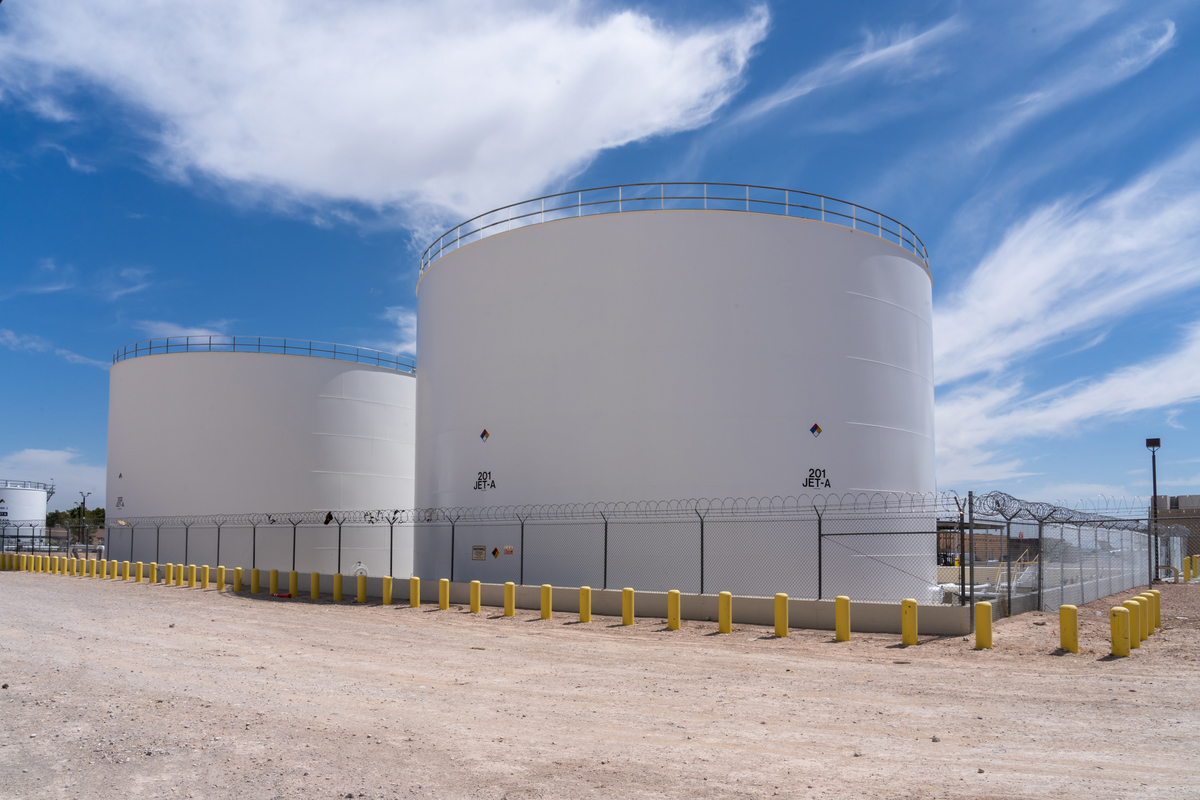 IMAGE: Oil storage tanks. Getty Images
Global oil demand is expected to contract by about 2.5 million b/d in the second quarter of this year, of which about 930,000 b/d will be accounted for by the OECD group of developed countries and about 1.5 million b/d by non-OECD countries, the IEA said.
The downward revision in demand forecast comes amid the US-Israel military action against Iran, leading to the closure of the Strait of Hormuz – a highly critical conduit handling about 25% of global seaborne crude oil flows.
“The current supply-demand gap is significantly smaller, however, as the market was already in surplus heading into the crisis while producers and consumers alike are responding to market signals,” the IEA said.
Meanwhile, the continued disruption to seaborne trade through the Strait of Hormuz has caused global oil inventories to decline by 129 million bbls in March, and by another 117 million bbls in April, according to the IEA.
The IEA estimates that while global oil demand could return to growth later this year, if a US-Iran ceasefire agreement is reached and traffic through the Strait of Hormuz gradually resumes, the recovery in crude supply is likely to lag behind.
“As a result, the oil market remains in deficit until the final quarter of the year,” the energy agency said. “With global oil inventories already drawing at a record clip, further price volatility appears likely ahead of the peak summer demand period,” it added.
Supply estimates
Global oil supply plummeted by 1.8 million b/d to 95.1 million b/d in April, amid continued attacks on Middle Eastern energy infrastructure and restrictions to vessel transits through the Strait of Hormuz, the IEA noted in its monthly Oil Market Report (OMR).
The Middle East war has severely affected output from Gulf countries such as Iraq, Qatar, Kuwait, the UAE and Saudi Arabia, which is currently about 14.4 million b/d below pre-war levels.
“More than ten weeks after the war in the Middle East began, mounting supply losses from the Strait of Hormuz are depleting global oil inventories at a record pace,” the IEA said.
Notably, OPEC’s de facto leader Saudi Arabia and recently departed member the UAE have successfully redirected some exports to terminals located outside the Strait of Hormuz.
Assuming that flows through the strait gradually resume from June, global oil supply is projected to decline by 3.9 million b/d on average in 2026, to 102.2 million b/d, according to the IEA’s estimates.
By Aparupa Mazumder
Please get in touch with comments or additional info to news@engine.online