KR flags hydrogen fuel safety risks in new report
A recent report by the Korean Register (KR) outlines the key safety challenges tied to hydrogen as a marine fuel.
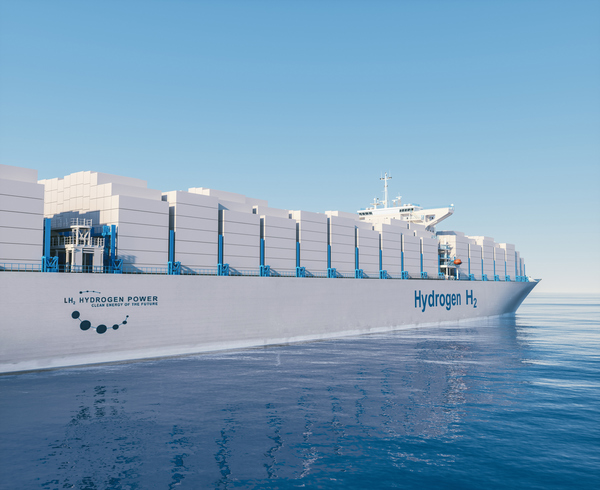 IMAGE: Generic image of a hydrogen-powered container ship. Getty Images
Hydrogen presents significant hazards, including a high risk of fire and explosion, susceptibility to hydrogen embrittlement, and demanding storage requirements. These factors necessitate strict safety management, according to KR. Hydrogen embrittlement weakens metals by allowing hydrogen atoms to penetrate their structure, making them prone to cracking under stress.
From a technical standpoint, hydrogen must be stored either as a compressed gas at extremely high pressures, or as a cryogenic liquid at around -253°C. These conditions demand advanced containment and fuel supply systems, along with a deep understanding of safety protocols, which KR identifies as a major industry challenge.
The report arrives as the International Maritime Organization (IMO) advances regulatory work on hydrogen-fuelled vessels. Interim safety guidelines were developed during the 11th session of the Sub-Committee on Carriage of Cargoes and Containers (CCC) and are expected to be formally adopted at the 111th Maritime Safety Committee (MSC) meeting in May 2026.
Despite these risks, hydrogen remains a compelling option for maritime decarbonization. As a zero-carbon fuel, it is gaining traction as a future energy source. It also serves as a key feedstock for producing alternative fuels like methanol, suggesting that a broader hydrogen-based supply chain could emerge over time.
KR further anticipates growth in cross-border hydrogen trade, which could drive demand for hydrogen carriers and hydrogen-powered vessels.
The report aims to support the fuel’s commercial development while helping the maritime sector better understand its opportunities and risks.
By Tuhin Roy
Please get in touch with comments or additional info to news@engine.online