Port of Barcelona maps path to 85% emissions cut by 2040
The Port of Barcelona has outlined its energy strategy through 2040, aiming to cut greenhouse gas (GHG) emissions by 85% and reach net-zero emissions by 2050.
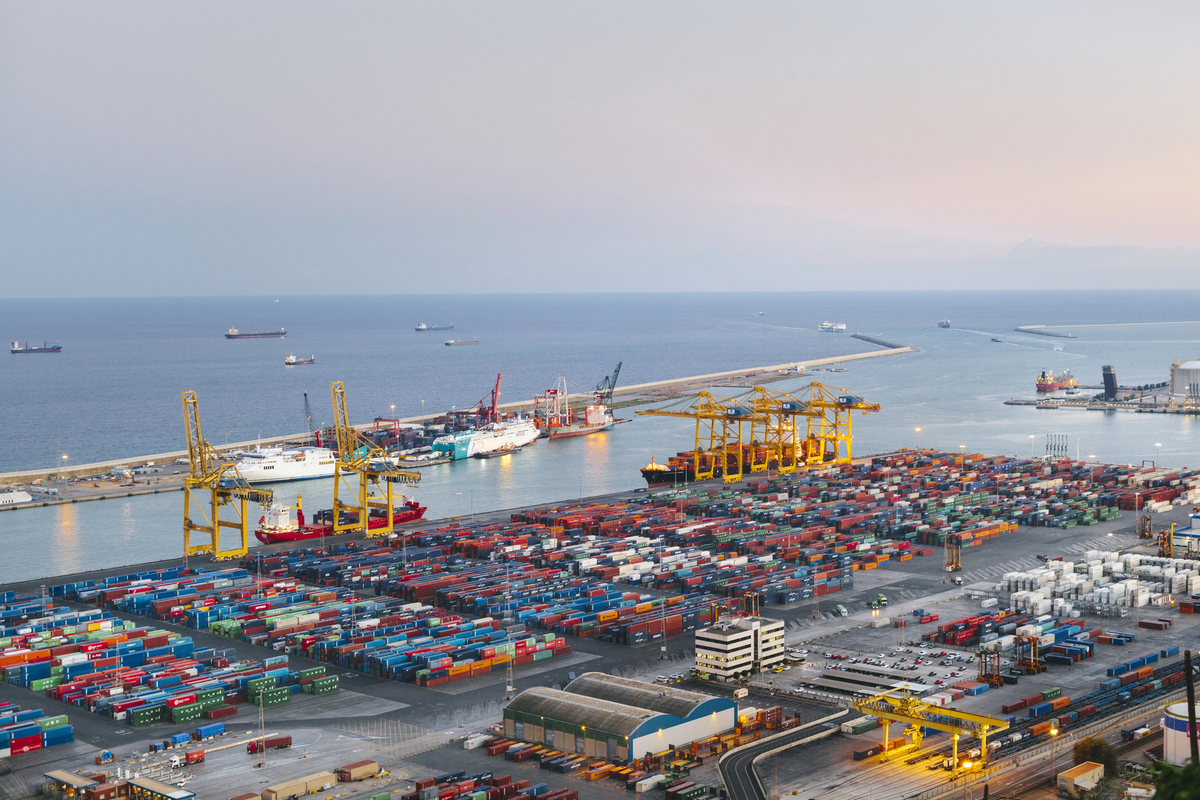 IMAGE: Aerial view of the Spanish Port of Barcelona. Getty Images
The Port of Barcelona expects its new Energy Transition Plan to cut emissions by half by 2030, trimming around 1 million mt of CO2 from 2017 levels, as it accelerates efforts to decarbonise port operations.
The plan outlines more than 150 measures spanning four areas:
- Decarbonising port activity
- Improving energy efficiency
- Strengthening supply resilience
- Supporting innovation
Key initiatives include 50% electrification of port activity by 2030. Barcelona aims to connect 65% of container and cruise vessels to shore power by 2030, rising to 90% by 2050, and to expand local energy generation.
The port plans to install 100 MWp of solar capacity by 2030 and produce about 100,000 mt/yr of alternative fuels including biomethane and other synthetic fuels.
Barcelona is also positioning itself within Europe’s emerging hydrogen corridor through the H2MED pipeline – a major European initiative to build a green hydrogen corridor, connecting Portugal and Spain's renewable hydrogen production to France and Germany.
The port intends to integrate CO2 capture systems (CCS) into its circular-economy projects to supply feedstock for synthetic fuels.
To support the transition, Barcelona will invest €1.7 billion ($1.9 billion) in energy-related infrastructure, including €920 million in private financing and €780 million in public funds, the port authority said.
By Aparupa Mazumder
Please get in touch with comments or additional info to news@engine.online