The Week in Alt Fuels: A drop in the tank
Several producers are developing small-scale low- and zero-emission fuel projects around the world. But shipping needs far greater volumes available at competitive prices and at major bunker locations.
 IMAGE: Cruise ships docked at the Port of Québec in Canada. Port of Québec
Several small-scale biofuel and e-fuel projects are being developed around the world.
Swiss startup Synhelion expects to start commercial operations at its 1,000 mt/year synthetic fuel plant in Germany in 2028. German-Brazilian startup Atlanteo is developing a modular e-methanol production concept, with its first 20 MW plant expected to produce around 10,000 mt/year.
European Energy’s Kassø e-methanol facility in Aabenraa, Denmark, which is already operating, produced 4,974 mt of e-methanol in the first half of 2026, against a planned capacity of 32,000 mt/year. The company is also planning a 48,000 mt/year e-methanol plant in Québec, Canada, with Greenfield Global.
ENGIE is planning a biomethane production facility at the HAROPA port complex in France, with an expected output of 7,000 mt/year intended for CMA CGM’s LNG-capable fleet.
Smaller-capacity projects can help developers test technologies, identify production challenges and establish commercial supply chains. But proving a concept works is one thing. Making it work at scale to meet potential demand is another.
A large ocean-going vessel can consume thousands of mt/year of fuel. That puts the output of a 1,000 mt/year plant into perspective. Even a 10,000 mt/year facility could typically serve only a limited number of vessels, depending on their size and fuel consumption.
And shipping is hardly the only customer waiting at the door. A number of low- and zero-emission fuel producers are diversifying the allocations across multiple sectors, including aviation, road transport, chemicals and fertilisers, leaving several industries competing for the same molecules.
Then comes the cost of getting that fuel to ships.
Producing renewable fuel at a competitive price doesn't automatically make it a viable marine fuel option. Transport, storage and physical delivery costs can push up the final bunker price, particularly when production facilities are located far from major bunkering ports.
Longer transport distances could also increase associated emissions, potentially reducing the environmental benefits of switching to cleaner fuels.
This is where the distinction between scaling production and scaling supply becomes important.
Some developers intend to expand existing facilities, while others are pursuing networks of smaller plants.
Atlanteo, for instance, plans to replicate its modular facilities in locations with suitable renewable energy and agricultural resources. Synhelion has outlined plans for larger plants in Germany and Morocco.
Both approaches could increase production capacity. But the real commercial test is whether that fuel can reach ocean-going vessels in sufficient quantities without logistics costs undermining its appeal.
None of this diminishes the importance of smaller projects. They provide an opportunity to test technologies and work through practical challenges before committing to larger investments.
But a successful pilot is only the beginning.
For renewable fuels to make a meaningful contribution to deep-sea shipping, producers must eventually develop supply chains capable of delivering sufficient volumes at workable prices to the ports where vessels actually bunker.
In other alt fuels news this week, Frontier Fuels has chartered a barge for B100 deliveries on the Elbe, for supplying ships at five ports, including Hamburg and Cuxhaven. The barge, Lina, will carry only B100 (100% biofuel), the company said. It will also deliver to ships in Stade, Kiel and Brunsbüttel.
The VO Chidambaranar (VOC) Port Authority will commence methanol bunkering at the port by the end of November. The port’s methanol bunker infrastructure comprises an onshore storage facility connected to a jetty through a 2.8-km pipeline for shore-to-ship fuel transfers.
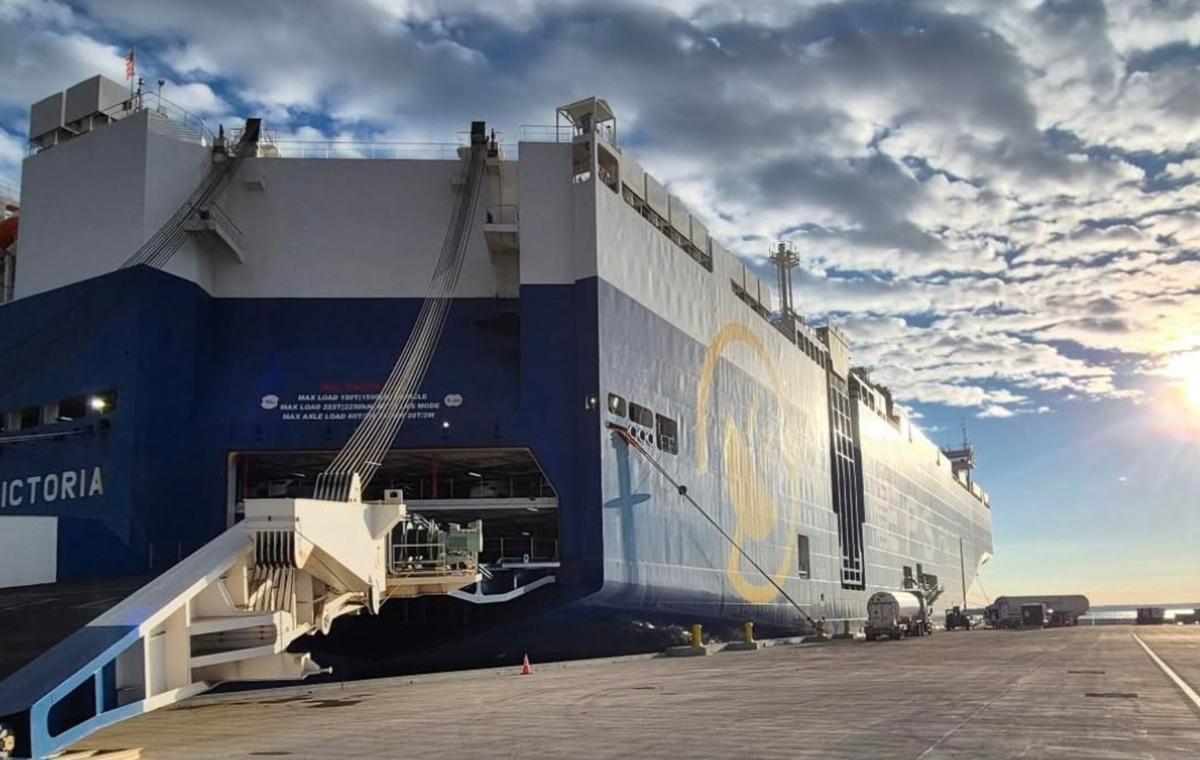
US LNG bunker supplier REV LNG completed an LNG bunkering operation for Siem Car Carriers’ vessel Aristotle, marking the first such operation at the Port of Davisville in Rhode Island. The truck-to-ship operation also marks the first LNG fuelling of a car carrier in the US Northeast, according to REV LNG.
PowerCell will supply fuel cells for an ammonia power project in Norway. The system is designed to generate 700 kW of electricity for commercial ships and will be tested in Stord ahead of commissioning in early 2028.
By Konica Bhatt
Please get in touch with comments or additional info to news@engine.online