The Week in Alt Fuels: Growth vs scale
Global methanol fleet is growing faster in percentage terms after starting from a low base, but it has a long way to go before it catches up to LNG.
US-based food company Cargill took delivery of the first of five methanol-capable vessels it has chartered on a long-term basis.
Several container liners have also advanced their methanol fleets.
Maersk launched its 19th methanol-capable vessel this week, meeting its self-imposed target for methanol newbuild deliveries. The company has ordered a further six 9,000-TEU methanol-capable vessels for delivery by 2027, which will take its total methanol fleet to 25.
South Korean shipping firm HMM has launched the fourth vessel in its series of seven methanol dual-fuel container ships. Dutch shortsea operator A2B-online launched the first of its two methanol-capable container vessels in December.
CMA CGM launched the first of its 12 methanol vessels in March last year. Hapag-Lloyd has ordered eight methanol dual-fuel container ships for delivery between 2028-2029 and is retrofitting five existing vessels for methanol propulsion by 2026.
Such deliveries have started to translate into measurable fleet growth, particularly over the past year.
Data from DNV’s Alternative Fuels Insight (AFI) database shows that methanol-capable vessel growth outpaced LNG in percentage terms in 2025.
The global operational methanol fleet recorded a stellar 130% growth in 2025, rising from 46 vessels in 2024 to 106 in 2025. In contrast, the operational LNG fleet grew around 30%, increasing from 653 vessels to 846 over the same period.
But in absolute terms, LNG dominated the alternative fuel fleet in 2025 – with nearly 200 vessels delivered compared with only around 60 methanol vessels. It should be noted that LNG comes from an established base, reflecting over a decade of deployment while methanol deployments are relatively new.
This divergence is also visible at the segment level.
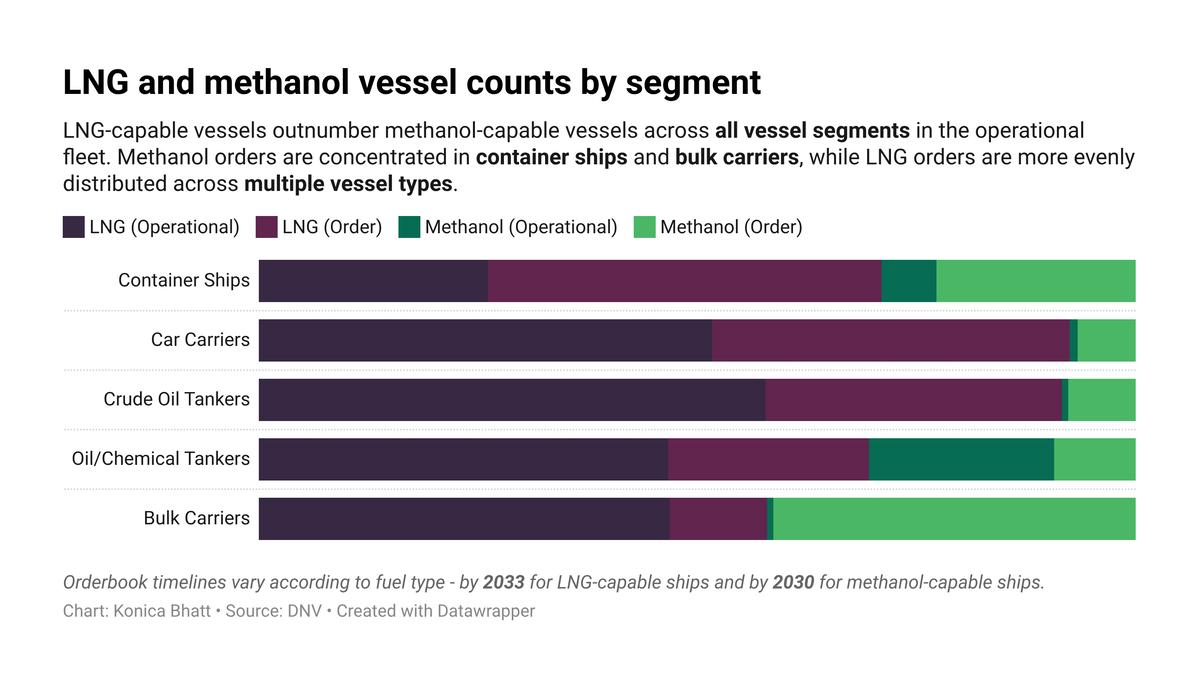
LNG-capable container ships remain ahead in numbers, with 229 vessels currently in service and 395 on order.
There are only 55 methanol-capable containerships in operation, but the orderbook of 199 vessels is almost four times that of the existing fleet, compared with roughly two times for LNG.
There are 82 LNG-capable crude oil tankers in operation and 48 on order, compared with 36 methanol-capable in operation and 16 on order. In the car carrier segment, LNG fleet comprises 124 vessels in service and 98 on order, versus just two methanol-capable vessels in operation and 16 on order.
Methanol-capable vessels hold a slight lead in bulk carrier orders, with 60 vessels on order versus 16 in the LNG segment.
Ammonia-capable vessel orders also recorded strong 70% growth on the year, increasing from 27 vessels in 2024 to 46 in 2025. However, the total numbers remain well below both LNG and methanol.
Methanol- and ammonia-capable fleets are expanding rapidly from smaller bases, while LNG continues to grow from a much larger operational fleet. But despite faster percentage growth for newer fuels, LNG remains well ahead in terms of total fleet size and near-term deployment.
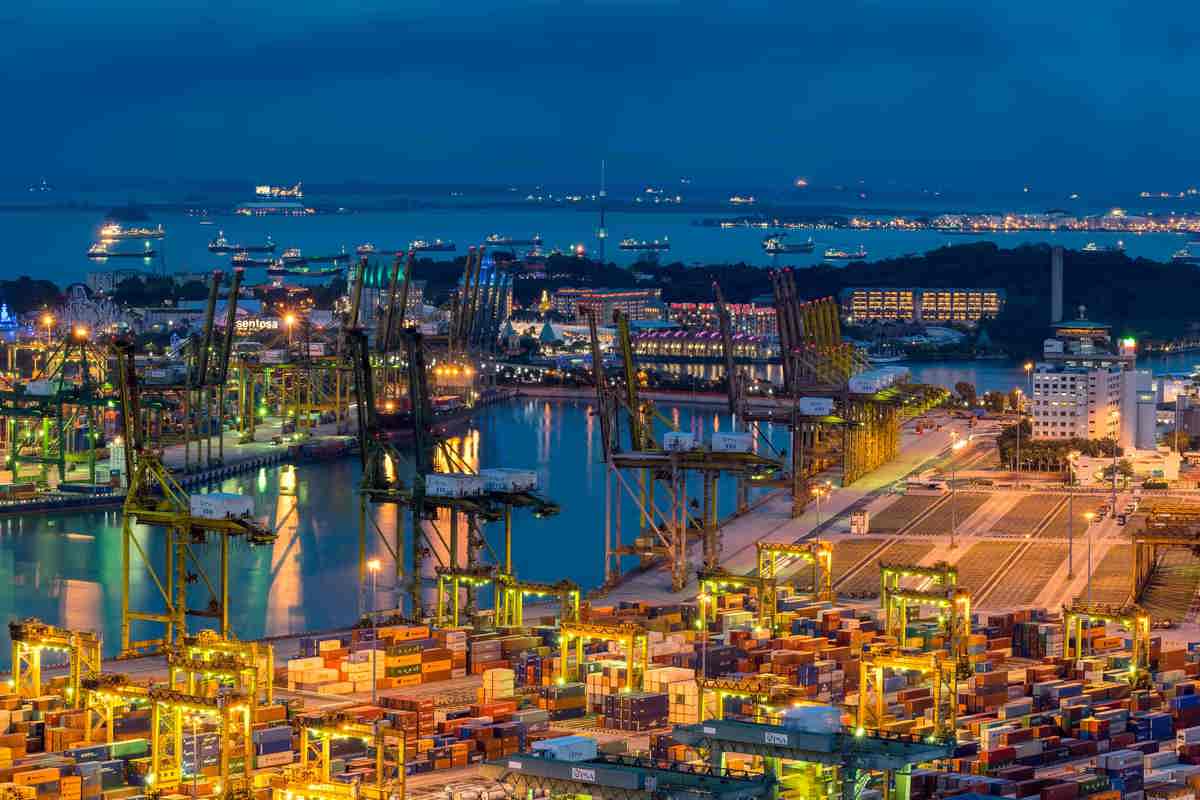
In other news this week, Singapore’s Maritime and Port Authority (MPA) has invited applications for additional licences to supply LNG as a marine fuel in the port. The call is open to both existing LNG licensees and new entrants, following recent updates to the port’s LNG bunkering licensing framework and standards. These changes now allow for sea-based LNG reloading, and supply of liquefied bio-methane (LBM) and e-methane in port.
Uniper has agreed to offtake around 500,000 mt/year of green ammonia from India’s AM Green, with shipping cited among potential end-use sectors. Uniper said green ammonia can help decarbonise sectors including chemicals, fertilisers, refining and shipping.
Chimbusco says it delivered 170,000 mt of marine biofuel blends in China last year. That was almost four times more than what the company delivered in 2024.
By Konica Bhatt
Please get in touch with comments or additional info to news@engine.online