The Week in Alt Fuels: IMO talks resume amid policy divide
Divisions over the ambition, costs and fuel pathways of the IMO's Net-Zero Framework continue as the GHG working group reconvenes for negotiations this week.
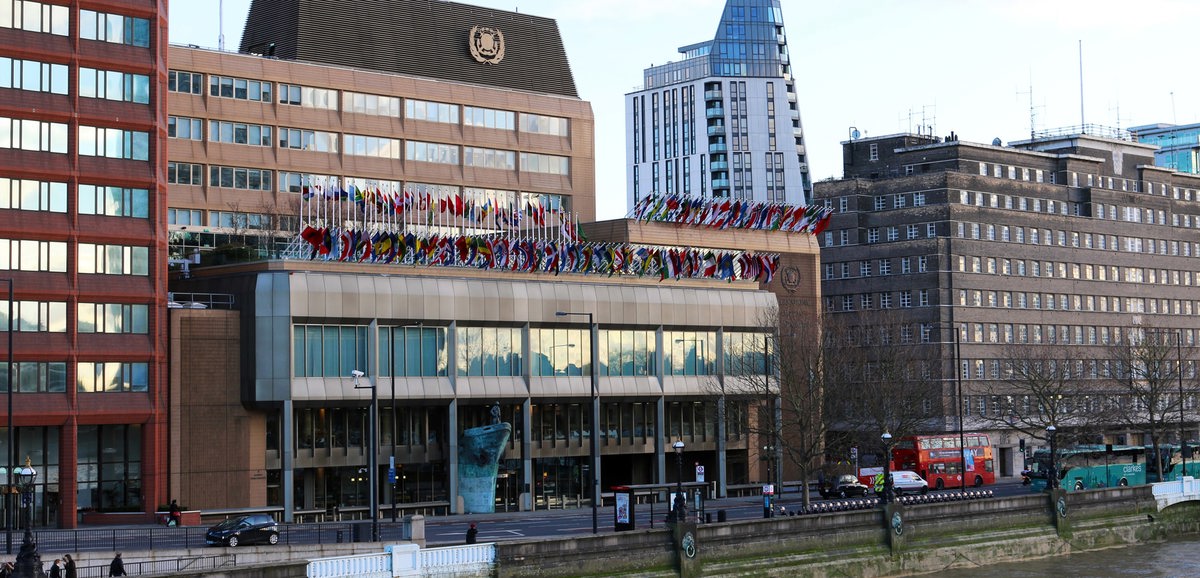 IMAGE: IMO headquarters in London. X of @IMOHQ
The IMO's 22nd Intersessional Working Group on Reduction of Greenhouse Gas Emissions from Ships (ISWG-GHG 22) is meeting in London from 1-4 September to discuss the future of the NZF.
Proposals from Liberia, Tuvalu, Brazil and a four-country group of Australia, Canada, South Africa and the UK are under consideration. Japan's later submission was not circulated six months before the session, so it cannot be adopted under the normal MARPOL rules at MEPC 85.
Panama's ambassador and permanent representative to the IMO, Ginette Testa, presented the joint Liberia-Panama proposal to African representatives during ISWG-GHG 22. The proposal seeks to remove GHG pricing and instead set GHG Fuel Intensity (GFI) reduction targets based on the affordability, availability and scalability of low-emission fuels, with the trajectory reviewed every five years.
Testa said the approach would support shipping's decarbonisation while protecting global trade and considering the challenges faced by developing countries.
Ahead of the meeting, US Federal Maritime Commissioner Laura DiBella backed LNG and liquefied biomethane (LBM) as long-term shipping fuels, arguing that LBM can use existing LNG infrastructure and vessels.
“The NZF encourages the development of fuel diversity, but some proposals would limit alternate fuel sources. Attempts to artificially limit alternate fuel options available to industry will prevent the NZF from becoming an effective substitute for the current system,” DiBella said.
“The inclusion of market-proven alternative fuels, such as bio-LNG, is key to ensuring that any emissions reduction initiatives are implemented effectively for the benefit of the shipping industry and consumers,” she said in a statement.
Meanwhile, several climate groups have pushed back against a watered-down global framework.
The Clean Shipping Coalition (CSC) has criticised the Liberia-Panama and Japanese proposals, arguing that they would weaken the financial incentives needed to move shipping away from conventional fuels.
CSC called Brazil's proposal a weaker and costlier version of the framework, and said whether the "facility" it proposes could support the worst-affected countries depends on how it is configured.
It was most supportive of the proposal from Pacific IMO members for a levy on all of shipping's GHG emissions, saying it would both give a strong incentive to cut emissions and raise enough money to fund the transition. But it still views the existing NZF as the compromise most likely to retain broad support.
Equal Routes has warned against giving LNG and LBM favourable treatment without fully accounting for their lifecycle methane emissions.
“If the IMO gives an advantage to methane-based fuels such as LNG and biomethane, as current submissions to ISWG are calling for, this would lock in shipping emissions of methane, a super pollutant, for decades to come,” Equal Routes co-director Andrew Dumbrille said.
“The LCA guidelines must include sustainability criteria that account for biodiversity and human rights impacts, real-world emissions factors for methane-based fuels, and reflect GHG emissions from indirect land-use change caused by the production of biogenic fuels,” he added.
Several fuel producer groups, meanwhile, are lobbying for rules that create enough demand to scale up low- and zero-emission fuels.
The Global Methanol Alliance said 54 green and blue methanol plants are already operational or under construction, but argued that regulatory certainty and sufficient demand are needed to scale production and lower costs.
“As discussions continue this week, we want to see Member States build on areas of common ground and move towards a framework that works in practice — for governments, for shipping and for the fuel producers that will help deliver the transition,” Felicia Mester, managing director for Europe and IMO at the Global Methanol Alliance, said.
The Climate Ethanol Alliance has called for the framework to recognise renewable ethanol, arguing that it is already produced at scale and supported by existing supply chains and marine engine technology.
While delegates, industry and climate groups are pushing their preferred approaches, the final shape of the NZF remains in the hands of IMO member states. And there is still no clear consensus on which approach will gain enough support.
After this week's discussions, negotiations will continue at the next ISWG-GHG session in November, before MEPC 85 from 30 November to 3 December. If member states agree on a final text, the amendments could then be formally adopted at the resumed extraordinary session, expected on 4 December.
In other alt fuel news this week, Danish shipping firm A.P. Moller - Maersk has joined Lloyd’s Register (LR) and the ports of Charleston and Felixstowe to model a nuclear-powered shipping corridor between the US and UK.
Swedish shipping company Wallenius Sol has started operating one of its vessels on 100% biofuel (B100) to meet tightening GHG intensity requirements under the EU’s FuelEU Maritime regulation. The company also plans to extend B100 use to its other large vessels, supported by regular bio-bunker deliveries at the Port of Terneuzen in the southwestern Netherlands.
Molgas-owned bunker supplier Titan Clean Fuels will charter a new 6,000-cbm LNG bunker vessel to expand its physical supply operations across major ports in the western Mediterranean. The vessel will be capable of running on methane and conventional fuels.
Chinese state-owned shipping firm COSCO Shipping has ordered 12 LNG dual-fuel container vessels. The 22,000-TEU vessels will be equipped with dual-fuel engines capable of running on LNG and conventional fuels. Deliveries are scheduled between 2028 and 2030, COSCO said.
By Konica Bhatt
Please get in touch with comments or additional info to news@engine.online