The Week in Alt Fuels: Methanol bunkering builds in Q1
Methanol bunkering activity picked up across several global ports in the first quarter of 2026, even as new orders for methanol-capable vessels remained subdued.
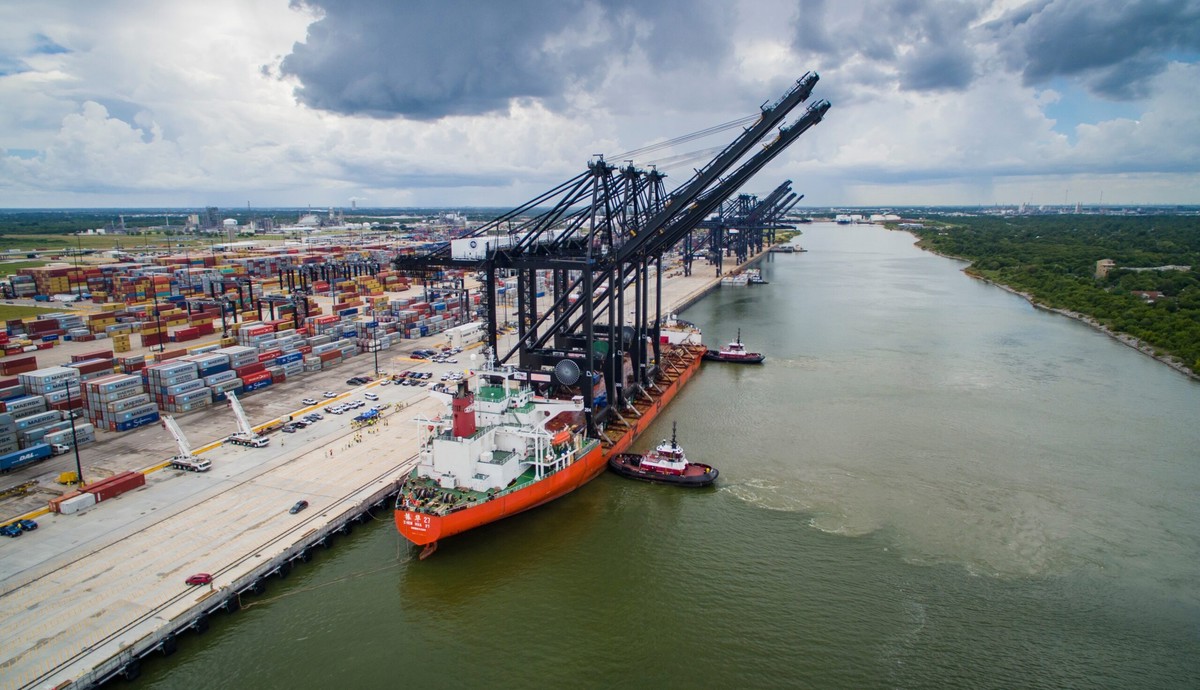 IMAGE: Vessel docked at Port of Houston in the US. Port of Houston
Data from DNV shows only two new orders for methanol-capable vessels in the first three months of 2026. The operational fleet currently stands at 123 vessels, and another 325 ships are on order with deliveries scheduled towards 2030.
At the same time, ports across the world stepped up commercial methanol bunkering in the first quarter. Some ports also recorded larger stem deliveries.
In the US, Danish shipping firm A.P. Moller-Maersk’s methanol-capable container ship Tangier Maersk was bunkered with 2,000 mt of methanol at the Port of Houston on 30 March. The fuel was supplied by Canadian producer Methanex, with the ship-to-ship delivery carried out by Kirby Marine’s tank barge Kirby 29067, according to the US Coast Guard.
Activity also picked up across Asia.
India’s first methanol bunkering pilot was recently completed at Kandla port in Gujarat, where a Stolt Tankers-owned vessel received an undisclosed quantity of grey methanol in a shore-to-ship operation. The pilot is expected to support future ship-to-ship bunkering and aligns with plans to supply around 500,000 mt/year of e-methanol by 2028-29, the country’s shipping ministry said.
Last month, Mumbai Port Authority invited proposals to supply methanol as a marine fuel. The tender caps well-to-wake emissions at 90 gCO2e/MJ and requires suppliers to specify storage, annual capacity and delivery timelines.
In Hong Kong, Chimbusco Pan Nation bunkered a COSCO Shipping Lines dual-fuel container ship with 200 mt of bio-methanol at the Port of Hong Kong in March. Around the same time, Sinopec (Hong Kong) Petroleum supplied 500 mt of bio-methanol to another vessel operated by China Merchants Energy Shipping at the same port.
Golden Island completed Singapore’s first methanol bunkering in January, delivering a 300 mt stem to a Cargill-chartered bulk carrier. The port’s methanol sales rose from zero in December 2025 to 300 mt in January 2026, before surging to 6,000 mt in February.
In China, SIPG Energy delivered a 3,643 mt of bio-methanol stem to a CMA CGM dual-fuel container ship at Yangshan port last month. Yantian Port in Shenzhen also hosted its first ship-to-ship green methanol bunkering earlier this year. In addition, the Chinese government outlined plans to expand Shanghai port’s methanol bunkering capacity to 1 million mt/year by 2030.
The uptick in activity shows that more ports are moving towards commercial methanol bunkering, but uneven scale and fragmented availability indicate that supply remains concentrated in a limited number of regions.
In other news this week, HGK Shipping, part of German shipping and logistic group HGK, has partnered with Dutch wind energy firm Econowind to install wind-assisted propulsion systems (WAPS) on its coastal vessel, Amadeus Titanium. The installation could lower the vessel’s fuel consumption by approximately 10%, according to Econowind.
US-based LNG supplier Sawgrass LNG & Power (Sawgrass) has delivered an unspecified quantity of LNG to a dual-fuel yacht at Port Everglades in Fort Lauderdale, US. The fuel was supplied to the Ritz-Carlton-operated yacht Ilma in a shore-to-ship bunkering operation, Sawgrass said.
Monaco-based shipping firm Scorpio Tankers and US-based nuclear technology firm Ampera plan to develop and commercialise nuclear technology in shipping. The partnership will focus on floating nuclear power barges in the near term and nuclear-powered vessels over the longer term.
By Konica Bhatt
Please get in touch with comments or additional info to news@engine.online