Middle East tensions prompt Red Sea reroutes, Hormuz suspensions
Several container liners, including CMA CGM, Maersk and Hapag-Lloyd, have halted trans-Suez services through the Bab el-Mandeb Strait amid escalating unrest in the Middle East.
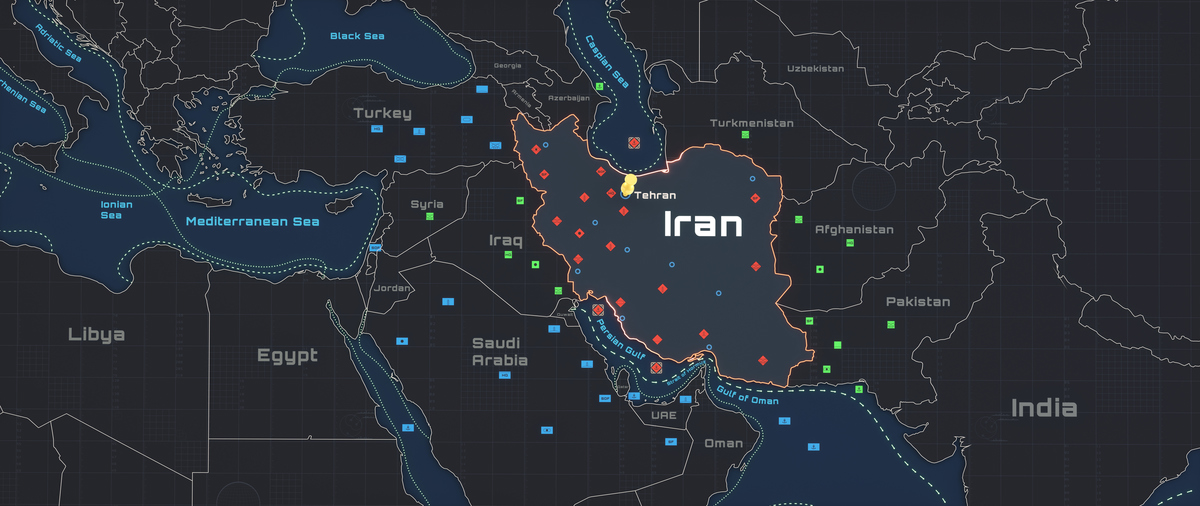
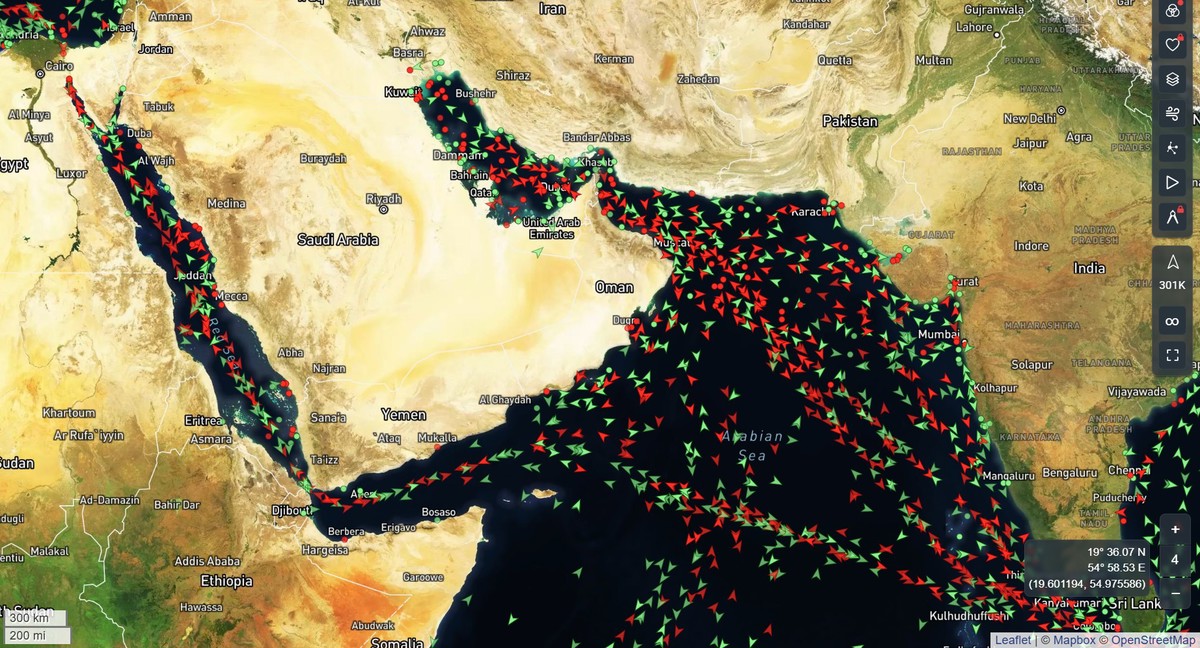 IMAGE: Live cargo (green) and tanker (red) vessel traffic around the Red Sea and Strait of Hormuz. MarineTraffic
The companies have instead rerouted affected services via the longer route around the Cape of Good Hope.
CMA CGM said it has also suspended all reefer bookings for temperature-sensitive cargo to and from several Middle Eastern and Red Sea markets, including Iraq, Bahrain, Kuwait, Yemen, Qatar, Oman, the UAE, Saudi Arabia, Jordan, Egypt’s Port of Ain Sokhna, Djibouti, Sudan and Eritrea.
Mediterranean Shipping Company (MSC) has not confirmed whether it plans to reroute trans-Suez services but has suspended all bookings for global cargo to the Middle East “until further notice”.
The operational changes come amid a sharp escalation in regional tensions following coordinated US and Israeli attack on Iran, and subsequent retaliation by Iranian forces and allied groups such as Hezbollah in Lebanon.
The IMO and several shipping-focused organisations have urged shipowners to exercise caution when operating in the region.
“I am monitoring the situation closely, and I urge all shipping companies to exercise maximum caution. Where possible, vessels should avoid transiting the affected region until conditions improve,” IMO Secretary-General Arsenio Dominguez said.
“The US/Israeli attack on Iran dramatically increases the security risk to ships operating in the Persian Gulf and adjacent waters,” Jakob Larsen, chief safety and security officer at BIMCO, told ENGINE. “Ships with business connections to US or Israeli interests are more likely to be targeted, but other ships may also be targeted deliberately or in error.”
Several shipping companies have also suspended vessel transits through the Strait of Hormuz, a critical chokepoint for global crude oil and gas trade, as Iranian forces move to restrict commercial shipping.
“In the short term it is assessed that Iran will be able to coerce commercial shipping to decide against entering the conflict area,” Larsen said.
The US Department of Transportation’s Maritime Administration has issued a warning advising US-flagged commercial vessels to steer clear of the Strait of Hormuz as geopolitical risks persist.
Data from vessel tracking platforms show a growing number of tankers inside the strait either rerouting or dropping anchor.
Looking ahead, Larsen said it was likely that US air and naval superiority would re-establish a degree of security within days, allowing commercial shipping to gradually resume operations in and out of the Persian Gulf and adjacent waters.
By Konica Bhatt
Please get in touch with comments or additional info to news@engine.online