The Week in Alt Fuels: More than methanol
Shipowners and engine makers are testing whether ethanol could complement methanol in shipping’s alternative fuel mix.
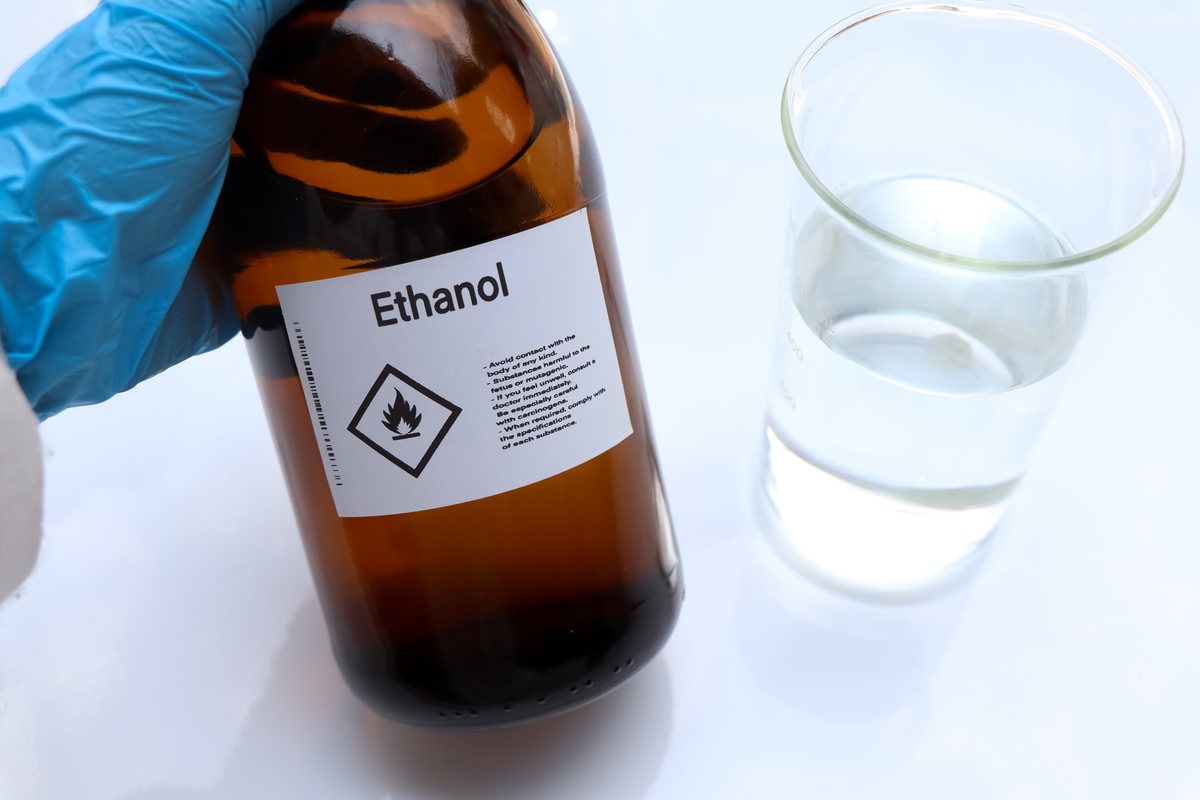 IMAGE: Getty Images
Several studies estimate that ethanol produced from sugarcane cane have a well-to-wake (WtW) greenhouse gas (GHG) intensity of 30–60 gCO2e/MJ. If the ethanol is produced from corn it can have 43–62 gCO2e/MJ, and 45–68 gCO2e/MJ if it comes from wheat.
Some assessments suggest they could be reduced further with improvements in production efficiency, carbon recovery and land-use practices.
The prospect of lower GHG intensities has prompted a small but expanding group of companies to explore ethanol’s technical and commercial viability at sea.
Early trials gather pace
A.P. Moller-Maersk is among the first shipowners to test ethanol blends.
The Danish company recently completed a trial using a 10% anhydrous ethanol (E10) blend with 90% e-methanol on its methanol-capable containership Laura Maersk. The trial assessed parameters including ignition quality, corrosion behaviour, lubricity and emissions performance.
The results “confirmed that ethanol can be safely and effectively integrated into the fuel mix” and blended with methanol “without compromising engine performance," Maersk said.
The company has now planned a second trial using a 50–50 ethanol-methanol blend on the same vessel and will consider a full run on 100% ethanol depending on the outcome.
Beyond Maersk, shipping companies including Fortitude Shipping, Purus Marine, Pacific Gas and MISC Berhad have ordered ethanol-capable vessels.
Policy support is also starting to build. The Climate Ethanol Alliance (CEA) was granted official non-government consultative status by the IMO in July, allowing the group to contribute technical input and policy recommendations on ethanol-based technologies for shipping.
Engine manufacturers are also moving to validate ethanol’s role.
Everllence has successfully tested ethanol on its methanol dual-fuel four-stroke engine, reporting stable performance across all load points. Wärtsilä is in early stages of testing ethanol on its dual-fuel methanol engine and Winterthur Gas & Diesel (WinGD) aims to commercially launch ethanol-capable two-stroke engines for both newbuilds and retrofits by 2027.
WinGD has said the new engine will be based on its existing methanol dual-fuel platform, noting that ethanol shares similar chemical and physical characteristics, including combustion principles and safety requirements.
The other alcohol
Methanol (11-12°C flash point) and ethanol (13°C flash point) are both alcohols with low flash points and they are liquid at ambient temperatures.
Their low cetane numbers mean they require a small amount of pilot fuel, typically diesel, to ignite in combustion engines.
Ethanol is also corrosive and hygroscopic in nature, meaning it readily absorbs moisture from the air. If the fuel sits in tanks for extended periods, this combination can accelerate corrosion and form sticky residues.
As fuel moves through the system, these residues can interfere with the fuel supply system and disrupt fuel flows, which can increase maintenance needs and affect vessel performance.
This technical overlap means ethanol can theoretically be used on methanol-capable dual-fuel engines.
But the two fuels do not behave identically in operation. Ethanol has about 30% higher energy content per kilogram than methanol, ignites more readily, burns at a slightly slower rate and generates a higher flame temperature.
And in practice, this means engines must be specifically calibrated for ethanol use, with adjustments to fuel injection systems, ignition timing and operating temperatures. A methanol-capable engine cannot automatically switch to ethanol unless its fuel-handling and safety systems are compatible.
Supply questions linger
Fuel availability is another challenge.
Ethanol is already heavily used in the road transport sector. E10 blends are standard in markets including the US, Brazil, India and much of the EU. Some governments are even working towards raising these blending mandates.
The US Energy Information Administration expects the country's ethanol production to average around 1.07-1.08 million b/d in 2025-2026, and forecasts that roughly 930,000 b/d will be consumed by gasoline blending alone.
In this case, it remains unclear how much ethanol could be made available for bunkering and whether supply will meet industry demand.
But if these technical and supply constraints can be addressed, ethanol could emerge as a complementary ally to methanol in shipping’s alternative fuel mix.
In other news this week, bunker supplier ScanOcean and Finnish pool maker Ahti have created a “pool-in-pool” structure to deliver compliance surpluses to third-party vessels under FuelEU Maritime’s pooling mechanism.
Houston-based renewable energy firm HyOrc has signed a non-binding 10-year offtake agreement with an undisclosed "European renewable fuels producer" for its planned e-methanol plant in Portugal.
China’s first liquefied biomethane (LBM) bunkering operation has been completed on Changxing Island in Dalian. Cosco Shipping’s 9,000 cbm LNG dual-fuel tanker Xing Sheng Yuan received an undisclosed volume of LBM in Dalian while simultaneously completing its first ethylene loading.
By Konica Bhatt
Please get in touch with comments or additional info to news@engine.online