The Week in Alt Fuels: Strength in numbers
Shipping may need to combine its fuel demand with other industries to boost low- and zero-emission fuel production.
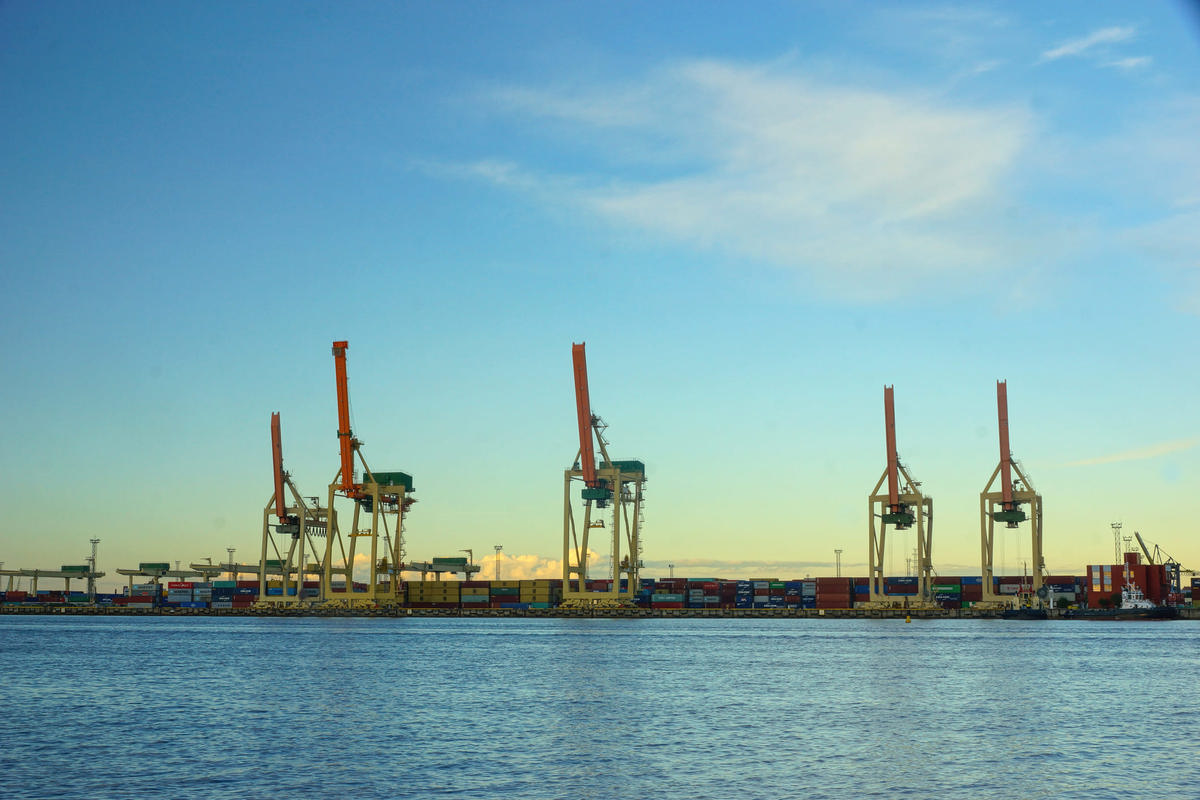
 IMAGE: Aerial view of the Port of Yokohama in Japan. Port of Yokohama
Vessel technology is no longer the main barrier to adopting zero- and near-zero-emission fuels, Daniel Bischofberger, chief executive of Accelleron argued.
"The ships are ready, the fuels are not," he said, adding that many fuel projects struggle to reach final investment decisions because demand from a single sector is often insufficient to de-risk investments and support project economics.
Instead, Bischofberger suggested that shipping should coordinate with sectors such as aviation, steel, cement, agriculture and power generation to drive up fuel demand.
"Evidence shows that these projects largely fail in sectoral isolation. Where they succeed, they do so through cross-sector coordination," he said.
Some fuel developers already appear to be following this approach.
German e-fuel producer Ineratec targets aviation and chemical customers alongside shipping. Denmark’s European Energy has secured e-methanol offtake agreements with customers ranging from A.P. Moller-Maersk to toy manufacturer LEGO and pharmaceutical company Novo Nordisk.
South African project developer Green eFuels Producers plans to supply e-methanol from its upcoming facility to fuel ships, vehicles and chemical plants.
Denmark’s Skovgaard Energy has earmarked green ammonia from its Ramme facility for ships and agriculture.
Cross-industry partnerships are also beginning to emerge among fuel users.
Earlier this year, Mitsui O.S.K. Lines (MOL) signed a strategic partnership agreement with ITOCHU to promote broader transport decarbonisation through Environmental Attribute Certificates (EACs) by using alternative fuels. Their customers will be able to cut their Scope 3 emissions by purchasing EACs.
MOL described the arrangement as a new decarbonisation model connecting the shipping and aviation sectors.
Ports as the missing link
In an April report, Accelleron noted that hydrogen and other e-fuel projects in the ports of Singapore, Yokohama, Busan and Shanghai are advancing as part of national industrial and energy decarbonisation strategies. Demand from the power generation, chemicals and heavy industries will support these plants alongside shipping, it added.
"A supply-demand dynamic architecture for hydrogen and e-fuels is forming, with ports leveraging their strengths to serve as either producers, connectors, receivers, or export sources," the report said.
This approach can improve the economics of fuel projects, said Christoph Rofka, president of Accelleron’s medium and low speed products division.
"Where e-fuel projects succeed, energy and multiple hard-to-abate industries move together. Combining demand creates contracts large enough to start building, shares risk so projects become insurable, and allows developers to build infrastructure once instead of duplicating it,” Rofka said.
Ports can also promote cross-sectoral collaboration through policy support and financial support, said Hitoshi Nakamura, director in the City of Yokohama’s port division.
The City of Yokohama is working with Japan's national government and Mizuho Bank to provide low-interest financing for companies adopting low- and zero-emission fuels and renewable energy across transport, logistics and industrial activities in the port area.
The Port of Yokohama is also working with neighbouring Kawasaki City to align regional supply of low- and zero-emission fuels with industrial energy demand.
The benefits may extend beyond fuel demand.
The World Economic Forum noted in a 2022 report that cooperation between industries can also accelerate the energy transition through exchange of expertise, experience and technological know-how.
Whether this approach becomes a defining feature of shipping's fuel transition remains unclear. But as fuel developers, ports and shipowners search for ways to improve project economics, cross-sector demand aggregation could be a path to scale green hydrogen and e-fuels.
In other alternative fuel news this week, Egypt is exploring bunkering of low- and zero-emission fuel in the country's ports as part of the IMO's GreenVoyage2050 programme. Egyptian authorities have assessed the feasibility of developing low- and zero-emission fuel production, storage and bunkering infrastructure in the ports of Ain Sokhna, Alexandria, Damietta, Dekheila and East Port Said. The findings will be presented later.
Brazil, Norway and the Netherlands have discussed a green shipping corridor between Brazil's Port of Vila do Conde and Norway’s Port of Karmøy. Another corridor was discussed between the Brazilian ports of Santos and Pecém and the Dutch Port of Rotterdam. Low- and zero-emission fuels under consideration include FAME-based biofuels, ammonia and methanol.
Shipowner Acta Marine has taken delivery of its third dual-fuel construction service operation vessel (CSOV) in four-vessel series. The Acta Gemini is fitted with a methanol dual-fuel main engine, enabling it to run on both methanol and conventional marine fuels.
A nuclear propulsion system for a cargo vessel developed by a Massachusetts Institute of Technology (MIT) consortium has been awarded an approval in principle by class society American Bureau of Shipping (ABS).
By Konica Bhatt
Please get in touch with comments or additional info to news@engine.online